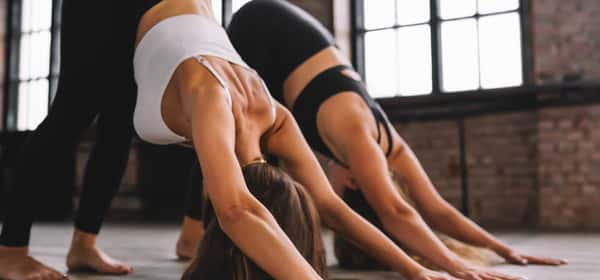
You wake up, arms reach overhead, back arches, and a satisfying stretch ripples through your body. It happens automatically, without any conscious thought. But why do we stretch? And why does it feel so good?

Stretching is one of the most fundamental movement patterns in the animal kingdom. From cats to dogs to humans, nearly every vertebrate stretches instinctively. Understanding the science behind this reflex reveals why regular stretching matters for your health—and why your body craves it.
What is pandiculation?
That involuntary stretch you do when waking up has a name: pandiculation. It’s the combination of stretching and yawning that happens during transitions between sleep and wakefulness.1
 Lose weight
 Gain muscles
 Eat healthy
 Explore new cuisines
 Chris B.
 Available on the App Store
Pandiculation isn’t just a random muscle twitch. Research suggests it plays a critical role in maintaining your myofascial system—the interconnected web of muscles and connective tissue that allows your body to move as a coordinated unit.1 When you’ve been still for hours during sleep, pandiculation helps “reset” your muscles and restore their normal resting tension.
This explains why the stretch feels so necessary. Your body is essentially rebooting its movement system after being offline all night.
Summary: Pandiculation is the involuntary stretching and yawning that occurs when waking up, helping reset muscle tension and restore coordination.
Why do we stretch when we wake up?
During sleep, especially REM sleep, your muscles experience a state of partial paralysis called atonia. This prevents you from acting out your dreams. When you wake up, your body needs to reverse this muscle relaxation and prepare for movement.1
Stretching when you wake up serves several purposes:
- Reverses sleep-related muscle stiffness - Hours of immobility cause muscles to tighten and lose their elastic properties temporarily
- Increases blood flow - Stretching promotes circulation to muscles that have been relatively inactive
- Activates the nervous system - The stretch sends signals through your nervous system that help transition from sleep to alertness
- Realigns posture - After being compressed or twisted during sleep, stretching helps restore normal spinal alignment
This is why that morning stretch feels almost compulsory. Your body is literally waking itself up through movement.
Summary: Morning stretching reverses sleep-related muscle paralysis, increases blood flow, and signals your nervous system to transition to an alert state.

The science of how stretching works
When you stretch a muscle, you’re not actually lengthening the muscle fibers themselves—at least not permanently. What changes is your nervous system’s tolerance to the stretch sensation.2
Stretch tolerance vs. structural changes
Short-term improvements in flexibility come primarily from increased stretch tolerance. Your nervous system learns to allow the muscle to extend further before signaling discomfort. Think of it as raising your body’s “alarm threshold” for muscle lengthening.2
Long-term stretching does produce structural changes. Consistent stretching over weeks and months can increase the number of sarcomeres (the contractile units within muscle fibers), allowing muscles to function effectively at longer lengths.2
What happens during a stretch
When you hold a stretch:
- Muscle spindles detect the lengthening and initially resist
- After about 30 seconds, Golgi tendon organs signal the muscle to relax
- Blood flow temporarily decreases within the stretched muscle
- Upon release, a reactive hyperemia (rush of blood) occurs3
This post-stretch blood flow response is one reason stretching leaves muscles feeling refreshed and ready for action.
Summary: Stretching works primarily by increasing your nervous system’s tolerance to stretch, with structural muscle changes occurring over longer periods.
Benefits of regular stretching
Research confirms what stretchers have known intuitively: regular stretching delivers measurable health benefits.
Suggested read: Active Stretching: Benefits, Exercises, and How to Do It
Improved flexibility and range of motion
Chronic static stretching has a large positive effect on flexibility. A systematic review found that consistent stretching programs significantly improve range of motion, with benefits appearing regardless of age or baseline flexibility.2
If you’re new to stretching, you may see faster improvements. Research shows that people with poor baseline flexibility tend to gain range of motion more quickly than those who are already flexible.2
For guided flexibility programs, check out this beginner’s guide to stretching to build a solid foundation.
Better blood flow and circulation
Daily stretching enhances blood flow to muscles, particularly during exercise. Studies show that passive stretching improves endothelial function (how well blood vessels dilate) and even promotes the growth of new capillaries in muscle tissue.3
This vascular benefit becomes increasingly important as you age, when circulation naturally declines.
Reduced stress and anxiety
A workplace stretching program significantly reduced anxiety, bodily pain, and exhaustion among employees.4 The mechanism isn’t just physical—stretching activates the parasympathetic nervous system, shifting your body from “fight or flight” to “rest and digest” mode.
Regular stretching has also been shown to lower cortisol levels, suggesting it can help manage chronic stress over time.4
Injury prevention
While the research is nuanced, stretching as part of a complete warm-up routine may help reduce injury risk. The key is timing and technique—dynamic stretching before exercise and static stretching after.5
If you’re dealing with specific issues like back discomfort, targeted stretches for lower back pain can provide relief while reducing injury risk.
Summary: Regular stretching improves flexibility, enhances blood flow, reduces stress and anxiety, and may help prevent injuries when done properly.
Types of stretching
Not all stretching is equal. Different techniques serve different purposes.
Static stretching
You move into a position and hold it for 15-60 seconds. Best used after exercise or as a standalone flexibility session when muscles are warm. Static stretching temporarily reduces muscle power output, so avoid it immediately before explosive activities.5
Dynamic stretching
Controlled movements that take joints through their full range of motion—leg swings, arm circles, walking lunges. Ideal for warm-ups because it prepares muscles for movement without the performance-reducing effects of static stretching.
PNF stretching
Proprioceptive neuromuscular facilitation involves stretching a muscle, contracting it against resistance, then stretching further. This technique produces larger flexibility gains than static stretching alone but requires proper instruction to perform safely.
Suggested read: Stretch Therapy: Benefits, Risks, and How It Works
Summary: Use dynamic stretching before exercise for warm-up and static stretching after exercise for flexibility gains.
How often should you stretch?
For meaningful flexibility improvements, research suggests stretching 3-4 times per week minimum.2 However, studies show no additional benefit beyond about 10 minutes of total stretching time per muscle group per week.
Quality matters more than quantity. A few focused minutes of proper stretching beats lengthy sessions of half-hearted effort.
Practical guidelines
- Hold static stretches for 15-30 seconds - Longer holds don’t necessarily produce better results
- Stretch warm muscles - After exercise or a brief warm-up
- Focus on tight areas - Address your personal limitations rather than following a generic routine
- Be consistent - Regular short sessions beat occasional long ones
For structured guidance, best stretching apps can help you build and maintain a routine.
Summary: Stretch 3-4 times weekly, holding positions for 15-30 seconds. Consistency matters more than duration.
Why stretching feels good
The satisfaction you feel during a good stretch isn’t just psychological. Stretching activates mechanoreceptors in your muscles and fascia that send pleasure signals to your brain. The post-stretch rush of blood creates a warm, refreshed sensation in the muscle tissue.
There’s also a release component. When muscles hold chronic tension—from stress, poor posture, or repetitive movements—stretching provides relief by temporarily overriding that tension pattern. Your nervous system essentially gets permission to let go.
Frequently Asked Questions
Why do we stretch when we wake up?
You stretch when you wake up because your body needs to reverse sleep-related muscle stiffness and partial paralysis (atonia). This instinctive stretch—called pandiculation—increases blood flow, activates your nervous system, and resets muscle tension after hours of immobility.
Making this natural reflex intentional by following a morning stretching routine amplifies the benefits and sets a positive tone for your day.
Why do we stretch involuntarily?
Involuntary stretching is a hardwired reflex found in nearly all vertebrates. Your nervous system triggers it automatically to maintain muscle function, restore blood flow, and reset the myofascial system—especially during transitions between rest and activity.
This reflex is your body’s built-in maintenance system—it happens without conscious thought because proper muscle function is that important.
Why do we stretch when tired?
Stretching when tired is your body’s attempt to fight muscle fatigue and increase alertness. The stretch activates your sympathetic nervous system briefly, boosts circulation, and sends wake-up signals to your brain through increased proprioceptive input.
Instead of reaching for another coffee, try a 5-minute stretch break. The Stretching Workout app offers quick routines perfect for desk workers needing an energy boost.
What is pandiculation?
Pandiculation is the involuntary combination of stretching and yawning that occurs when transitioning between sleep and wakefulness. It helps reset your myofascial system, restore muscle coordination, and prepare your body for movement.
Unlike passive stretching, pandiculation involves active muscle contraction followed by slow release—a pattern that researchers believe is essential for maintaining healthy muscle tone.
Suggested read: How to Start Exercising: A Beginner’s Guide to Working Out
Is stretching good for you?
Yes, regular stretching is highly beneficial. Research shows it improves flexibility, enhances blood flow, reduces stress and anxiety, and may help prevent injuries. Even 10-15 minutes of stretching 3-4 times per week produces measurable health benefits.
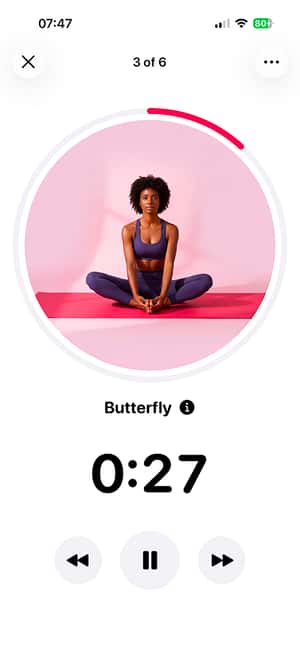
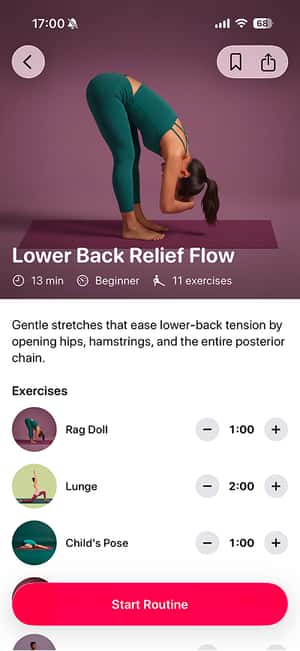
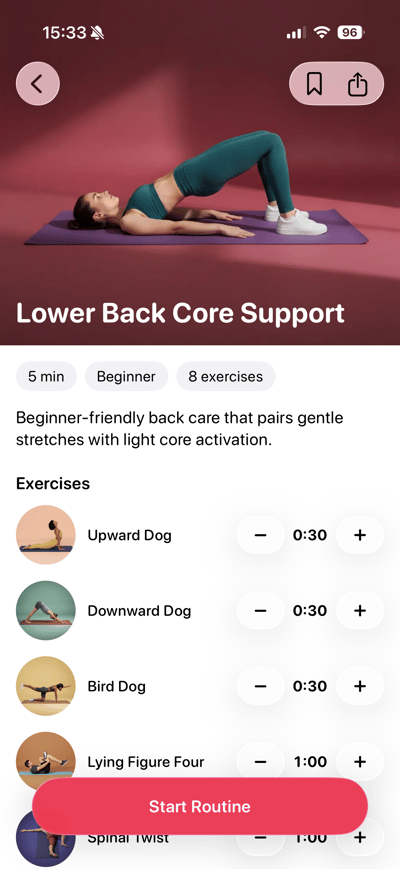
The Stretching Workout app makes it easy to build a consistent stretching habit with guided routines, voice cues, and sessions ranging from 5 to 30 minutes—all completely free.
Summary
Your body stretches instinctively because it’s essential for proper function. Pandiculation—that automatic stretch-and-yawn combo—helps reset your muscular system after sleep. Regular stretching builds on this natural reflex, improving flexibility, circulation, and stress resilience while potentially reducing injury risk.
The best stretching routine is one you’ll actually do. Start with a few minutes daily, focus on areas that feel tight, and let your body’s natural responses guide the intensity. That satisfying stretch sensation exists for a reason—it’s your body telling you that movement is medicine.
Bertolucci LF. Pandiculation: nature’s way of maintaining the functional integrity of the myofascial system? J Bodyw Mov Ther. 2011;15(3):268-80. PubMed ↩︎ ↩︎ ↩︎
Konrad A, Alizadeh S, Daneshjoo A, et al. Chronic effects of stretching on range of motion with consideration of potential moderating variables: A systematic review with meta-analysis. J Sport Health Sci. 2024;13(2):186-194. PubMed ↩︎ ↩︎ ↩︎ ↩︎ ↩︎ ↩︎
Hotta K, Behnke BJ, Arjmandi B, et al. Daily muscle stretching enhances blood flow, endothelial function, capillarity, vascular volume and connectivity in aged skeletal muscle. J Physiol. 2018;596(10):1903-1917. PubMed ↩︎ ↩︎
Montero-Marín J, Asún S, Estrada-Marcén N, Romero R, Asún R. Effectiveness of a stretching program on anxiety levels of workers in a logistic platform: a randomized controlled study. Aten Primaria. 2013;45(7):376-83. PubMed ↩︎ ↩︎
Behm DG, Blazevich AJ, Kay AD, McHugh M. Acute effects of muscle stretching on physical performance, range of motion, and injury incidence in healthy active individuals: a systematic review. Appl Physiol Nutr Metab. 2016;41(1):1-11. PubMed ↩︎ ↩︎
 Sarah M.
 Linda P.
 Maya T.
 Marcus J.
 Emma R.
 Amanda K.
 Chris B.
 David L.
 James W.
 Jennifer S.
 Kevin H.
 Lisa C.
 App Store ★★★★★