If your prescriber put you on a once-weekly shot, one of the first practical questions is the most obvious one: where does the needle actually go? Knowing where to inject GLP-1 medications, how to rotate the spot each week, and how to handle the pen or vial cleanly makes the whole routine less intimidating and easier to stick with. Here’s a plain walkthrough of sites, technique, timing, and disposal.
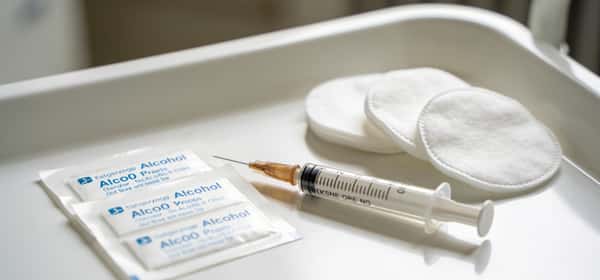
This article is educational information, not medical advice. Semaglutide, tirzepatide, and similar GLP-1 drugs are prescription-only and must be prescribed and supervised by a licensed clinician who has trained you on your specific device. Many peptides sold online are labeled “research use only,” are not FDA-approved for human use, and should never be self-injected. Talk to your doctor or pharmacist before you start, change, or stop any dose, and follow the instructions that came with your exact product. Nothing here replaces that guidance.
Quick answer: GLP-1 medications are injected just under the skin (subcutaneously), not into muscle or a vein. The three approved spots are the belly (keeping a couple of inches clear of the navel), the front or outer thigh, and the back of the upper arm. You pick a different spot within those areas each week so the same patch of fat isn’t getting poked over and over.
Choose your goal and get a meal plan that makes losing weight simpler.
Powered by DietGenie Lose weight
 Gain muscles
 Eat healthy
 Explore new cuisines
Where to inject GLP-1 medications: the three sites
GLP-1 receptor agonists are designed for the layer of fatty tissue between your skin and muscle. That subcutaneous fat absorbs the drug slowly and steadily, which is exactly what you want for a once-weekly medication1. Going deeper into muscle isn’t the plan and can sting more or change how fast it absorbs.
The standard GLP-1 injection sites are:
- Abdomen — the easiest to reach and the most common choice. Stay at least two inches (about 5 cm) away from your belly button in every direction.
- Thigh — the front and outer part, roughly the middle third between hip and knee.
- Upper arm — the fatty area at the back. Easy if someone helps you; trickier to do solo.
Whether you’re sorting out where to inject semaglutide or where to inject tirzepatide, the answer is the same three regions. The drug differs, the landing zone doesn’t. If you’re still deciding whether this class of medication fits your goals, our overview of GLP-1s for weight loss covers what they do and who they’re for.
How do I rotate sites so my skin stays healthy?
Hitting the exact same square inch week after week can leave you with lumps, hardened tissue (lipohypertrophy), or patches that absorb the drug unevenly. Rotation fixes that.
Two layers of rotation help:
- Rotate between regions — alternate among belly, thigh, and arm over the weeks rather than camping on one.
- Rotate within a region — even inside the abdomen, shift each injection at least an inch (2.5 cm) from the last one. Picture a small grid and move clockwise.
A simple way to keep track:
| Week | Region | Specific spot |
|---|---|---|
| 1 | Abdomen | Lower left |
| 2 | Thigh | Right, mid-front |
| 3 | Upper arm | Left back |
| 4 | Abdomen | Upper right |
Avoid skin that’s bruised, scarred, tender, red, or marked by stretch marks or tattoos over them. If a spot still feels firm or sore from a previous shot, skip it and choose elsewhere.
What’s the technique with a prefilled pen?
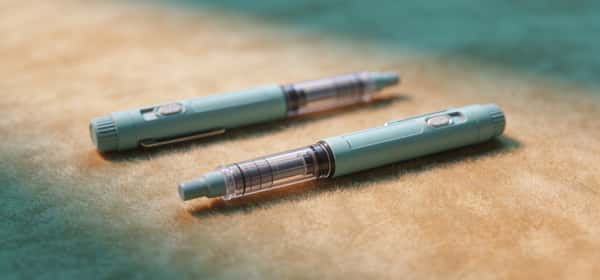
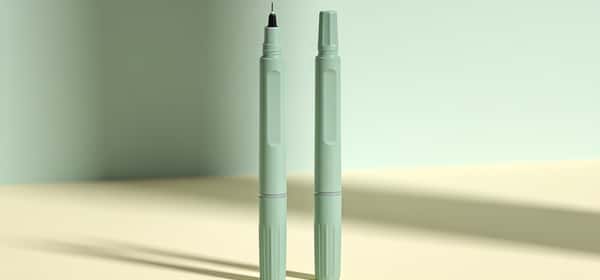
Most people on brand-name GLP-1s get a prefilled pen, and the steps your clinic teaches you should always win over anything general. The usual flow looks like this:
- Wash your hands and let the pen sit out for a few minutes if it was in the fridge — cold liquid stings more.
- Check the medicine. It should be clear and colorless. Cloudy, discolored, or particle-filled? Don’t use it.
- Clean the site with an alcohol swab and let it air-dry, so it doesn’t sting going in.
- Attach a new needle if your pen uses removable ones, and prime it if the instructions say to.
- Pinch or stretch the skin as directed, insert at the angle your device calls for (often 90 degrees), press the button, and hold it in place for the count your instructions give (commonly several seconds) so the full dose goes in.
- Pull straight out, release the skin, and press gently with gauze. Don’t rub.
That last hold matters more than people expect — pulling out early is a common reason a dose feels “short.” If you ever want the deeper mechanics of how to inject semaglutide step by step, your pharmacist can walk you through your exact pen in a couple of minutes, and it’s worth asking.
Suggested read: Ozempic vs Wegovy: Same Drug, Different Use
What about a vial and syringe?
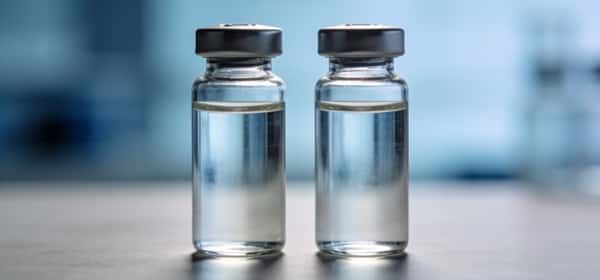
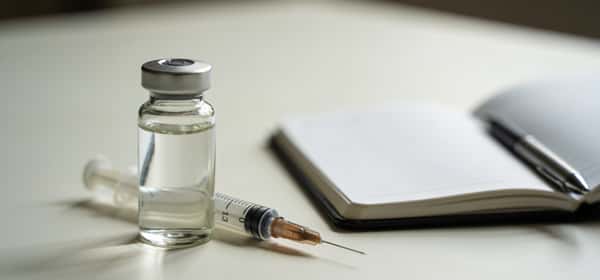
Some prescriptions, especially through compounding pharmacies under a prescriber’s supervision, come as a vial instead of a pen. The site and depth are identical — it’s still a subcutaneous shot in belly, thigh, or arm — but you’re drawing the dose yourself, which adds steps and room for error.
Key differences with vials:
- You measure the dose. Pulling the wrong volume into the syringe is the main risk, so double-check the units against what your prescriber wrote.
- Insulin-style syringes are common, and reading the markings correctly is everything. Confused units cause real harm.
- Lyophilized (freeze-dried) products must be mixed first. If your product needs reconstituting, our guide on how to reconstitute peptides explains the careful, sterile way to do it — and why guesswork here is dangerous.
Because vials hand more responsibility to you, this is exactly the situation where hands-on training from your clinic isn’t optional. The same caution applies to anything sold “research use only,” which our piece on whether peptides are safe digs into.
When should I inject, and what should I avoid?
Once-weekly GLP-1s are forgiving on timing, but a little structure keeps your levels steady and your routine sane.
- Pick a day and stick to it. Same day each week; the time of day is flexible, with or without food.
- Running late? Most labels allow some flexibility — many say you can take it within a few days of the missed day, then resume your usual schedule. Check your specific product and ask your pharmacist.
- Don’t double up to make up for a missed dose unless your prescriber tells you to.
- Skip inflamed or hardened skin, and don’t inject through clothing.
- Dose escalation is deliberate. GLP-1s start low and step up over weeks to limit nausea and other GI effects, which are the most common side effects in trials2. The site and technique don’t change as the dose goes up — only the amount does. The specifics live in our semaglutide dosage and tirzepatide dosage guides.
If a clinician has you on a smaller, more gradual approach, our explainer on microdosing GLP-1 covers what that means and the (limited) evidence behind it.
Suggested read: Saxenda (Liraglutide): How the Daily Shot Works
How do I dispose of needles and pens safely?
Used needles are sharp waste, and they shouldn’t go loose in your household trash where someone could get stuck.
- Use a sharps container — a proper FDA-cleared one, or a heavy-duty puncture-proof container like a thick laundry-detergent bottle with a screw lid if that’s what your area allows.
- Never recap by hand in a way that risks a stick; drop the needle straight in.
- Don’t overfill — close and replace the container when it’s about three-quarters full.
- Follow local disposal rules. Many pharmacies, clinics, and community programs take full sharps containers; some areas have mail-back options. A quick search for your county’s guidelines, or asking your pharmacist, sorts this out.
Storage matters too: most GLP-1 pens live in the fridge until first use, then many can stay at room temperature for a set number of days. Your product’s label gives the exact window — don’t guess, and don’t freeze them.
Why logging every dose is worth the 10 seconds
Once-weekly meds are easy to lose track of. “Did I take it Tuesday or was that last week?” A simple log answers that, helps you keep rotation honest, and gives your prescriber real data at follow-ups — which sites you used, which dose you’re on, and any reactions.
Use this tracker to record each shot, the site, and the dose so your rotation and timing stay on schedule.
Peptide & GLP-1 Dose Log
Bring that history to appointments. It makes dose adjustments faster and helps catch patterns, like a region that keeps reacting or a week you tend to forget.
Suggested read: Trulicity (Dulaglutide): Uses, Weight, Side Effects
Bottom line
Knowing where to inject GLP-1 medications comes down to three subcutaneous spots — abdomen, thigh, and the back of the upper arm — rotated so no patch of skin takes a repeat hit. Let cold pens warm up, clean the site, hold the needle in for the full count, and dispose of sharps in a proper container. Whether it’s semaglutide or tirzepatide, these drugs deliver real results in trials, with roughly 15% body-weight loss for semaglutide and up to about 21% for higher-dose tirzepatide over the study periods34, but they’re prescription medications that demand a prescriber’s supervision and your exact product’s instructions. Log your doses, ask your clinic to watch your technique once, and the weekly routine becomes a non-event.
Ghusn W, Hurtado MD. Glucagon-like Receptor-1 agonists for obesity: Weight loss outcomes, tolerability, side effects, and risks. Obes Pillars. 2024;12:100127. PubMed ↩︎
Ghusn W, Hurtado MD. Glucagon-like Receptor-1 agonists for obesity: Weight loss outcomes, tolerability, side effects, and risks. Obes Pillars. 2024;12:100127. PubMed ↩︎
Wilding JPH, et al. Once-Weekly Semaglutide in Adults with Overweight or Obesity. N Engl J Med. 2021;384(11):989-1002. PubMed ↩︎
Jastreboff AM, et al. Tirzepatide Once Weekly for the Treatment of Obesity. N Engl J Med. 2022;387(3):205-216. PubMed ↩︎