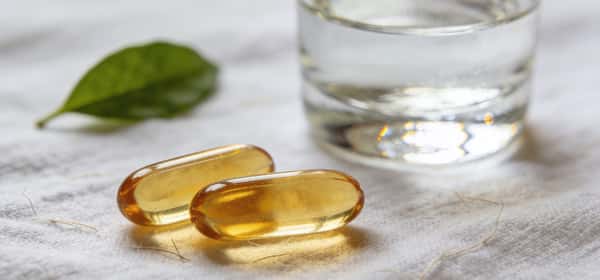
Most longevity supplements run on rodent studies and optimism. Urolithin A is one of the rare exceptions: it’s a compound with actual randomized human trials behind it, testing real-world outcomes like muscle strength. That alone puts it near the top of the credibility pile in a field full of hype. It’s not a magic anti-aging pill — nothing is — but if you’re going to pay attention to one trendy longevity molecule, this is a reasonable one. Here’s what it does and what the evidence actually shows.
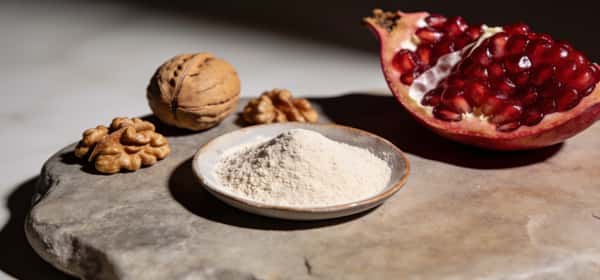
Quick answer: Urolithin A is a compound your gut bacteria make when you eat foods rich in certain polyphenols (ellagitannins), found in pomegranates, walnuts, and some berries. Its standout action is activating mitophagy — the cellular process that clears out worn-out mitochondria so fresh ones can take over. In randomized trials, urolithin A supplementation improved muscle strength, endurance, and markers of mitochondrial health in middle-aged and older adults, and it appears safe and well tolerated. The catch: many people can’t make much of it from food alone, the benefits are real but modest, and it’s been studied for muscle and mitochondria, not proven lifespan extension. For the bigger picture, see longevity supplements.
What urolithin A is and where it comes from
Urolithin A isn’t something you eat directly. It’s a postbiotic — a compound your gut microbiome produces from precursors called ellagitannins, which are abundant in pomegranates, walnuts, raspberries, and strawberries.
Real meals matter more than any supplement. Choose your goal and get your plan.
Powered by DietGenie Eat healthy
 Lose weight
 Gain muscles
 Explore new cuisines
Here’s the twist that explains why supplements exist: not everyone’s gut can make it. Producing urolithin A depends on having the right gut bacteria, and studies suggest only a minority of people convert ellagitannins into meaningful amounts. So you could eat pomegranate every day and still produce very little. That’s the gap supplements (the best-known being Mitopure) are designed to fill, by delivering urolithin A directly.
How it works: mitophagy and your mitochondria
The reason scientists got excited about urolithin A comes down to your mitochondria — the tiny power plants inside your cells that turn food into energy.
As you age, mitochondria become less efficient and damaged ones accumulate. Normally your cells clear these out through mitophagy (mitochondrial autophagy), recycling the faulty ones so healthy mitochondria can take over. But mitophagy slows with age, leaving you with a pile-up of underperforming power plants — a key driver of the energy decline and muscle loss that come with getting older.
Urolithin A’s signature trick is stimulating mitophagy, essentially helping your cells take out the mitochondrial trash. In theory, cleaner, more efficient mitochondria mean better cellular energy, especially in energy-hungry tissue like muscle. And unlike a lot of “in theory” supplement claims, this one has been tested in people.
What the human trials show
This is urolithin A’s real strength — actual randomized, placebo-controlled trials in humans, not just cell cultures and mice.
In a four-month randomized trial in middle-aged adults, urolithin A significantly improved muscle strength (around a 12% gain in one measure) and produced clinically meaningful improvements in aerobic endurance and physical performance, while lowering markers of inflammation and improving signs of mitochondrial efficiency.1 In a separate randomized trial in older adults (aged 65 to 90), urolithin A improved muscle endurance and beneficially shifted plasma biomarkers of mitochondrial and cellular health, and was safe and well tolerated — though not every primary endpoint reached statistical significance.2
The honest read: the evidence consistently points to benefits for muscle and mitochondrial markers, with a good safety profile. It’s not a dramatic, life-changing effect, and it hasn’t been shown to extend lifespan — but for a longevity supplement, having any solid human RCTs is genuinely above average.
Urolithin A at a glance
| Urolithin A | |
|---|---|
| What it is | Gut-derived postbiotic from ellagitannins (pomegranate, walnuts) |
| Main action | Activates mitophagy (clears damaged mitochondria) |
| Best human evidence | Muscle strength, endurance, mitochondrial markers |
| Typical dose in trials | ~500–1,000 mg/day |
| Safety | Safe and well tolerated in trials |
| Proven to extend lifespan? | No — healthspan markers only |
Who might benefit, and how to take it
Based on the research, urolithin A is most relevant for:
- Middle-aged and older adults concerned about age-related muscle decline and energy.
- Active people interested in mitochondrial support and recovery.
- Anyone who simply wants to target an evidence-backed mechanism of aging — with realistic expectations.
Practical notes:
- Dose: trials used roughly 500 to 1,000 mg of urolithin A daily. Follow the product’s guidance.
- Consistency: the benefits in studies built over months, not days. Give it a sustained trial.
- Food won’t reliably substitute: eating pomegranates and walnuts is healthy regardless, but if you’re a poor converter, it won’t deliver much urolithin A — which is the whole rationale for supplementing.
- Pair it with training: mitophagy supports muscle, but it works best alongside actual resistance exercise, not instead of it.
It sits alongside other mechanism-targeting longevity options like NAD+ precursors and spermidine — different mechanisms, similar “promising but not magic” status.
What to look for in a product
Because urolithin A supplements vary, a few pointers help you avoid overpaying:
- Standardized, direct urolithin A. The branded ingredient used in the trials (Mitopure) delivers urolithin A itself, rather than relying on your gut to make it from pomegranate extract. Products that just provide ellagitannin precursors leave you dependent on being a good converter — which most people aren’t.
- A real dose. The studies used roughly 500–1,000 mg/day. A pinch of pomegranate extract isn’t the same thing.
- Third-party testing. As with any supplement, independent testing is a green flag for getting what the label claims.
And a reality check on cost: urolithin A is one of the pricier supplements out there, so it’s worth deciding whether the modest, muscle-focused benefits justify the spend for you — especially since the lifestyle basics deliver more for free.
Suggested read: Spermidine: Autophagy, Longevity, and the Evidence
The bottom line
Urolithin A is one of the more credible names in the longevity-supplement world precisely because it doesn’t rely on hype: it has randomized human trials showing improvements in muscle strength, endurance, and mitochondrial health, with a clean safety record. Its mechanism — activating mitophagy to clear out damaged mitochondria — targets a genuine hallmark of aging.
Keep expectations grounded, though. The benefits are real but modest, they’re about healthspan and muscle rather than proven longevity, and supplementing makes the most sense because many people can’t produce much urolithin A from food. If you want to experiment with a longevity compound that’s actually been tested in people, urolithin A is a sensible pick — taken consistently, paired with exercise, and layered on top of the lifestyle basics that do the heavy lifting. See longevity supplements for how it fits the wider stack.
Singh A, D’Amico D, Andreux PA, et al. Urolithin A improves muscle strength, exercise performance, and biomarkers of mitochondrial health in a randomized trial in middle-aged adults. Cell Rep Med. 2022;3(5):100633. PubMed ↩︎
Liu S, D’Amico D, Shankland E, et al. Effect of Urolithin A Supplementation on Muscle Endurance and Mitochondrial Health in Older Adults: A Randomized Clinical Trial. JAMA Netw Open. 2022;5(1):e2144279. PubMed ↩︎