If you’ve shopped for a natural testosterone supplement lately, you’ve almost certainly seen tongkat ali and fadogia agrestis sold together as a “stack.” The pairing is so common that a lot of guys assume they’re two versions of the same thing. They’re not. One has a real body of human research behind it; the other is riding on rat studies and podcast buzz. If you’re going to take either, you should know which is which — so here’s the honest head-to-head.
This is educational information, not medical advice. Supplements aren’t tightly regulated and can interact with medications or conditions. Talk to a doctor before starting either of these, especially if you’re trying to conceive.
Quick answer: Tongkat ali and fadogia agrestis are both herbs marketed to raise testosterone, but they’re not in the same league on evidence. Tongkat ali has multiple human clinical trials and a meta-analysis showing it can raise testosterone, especially in men who start low. Fadogia agrestis has essentially no human trials — its reputation rests on rat studies, one of which also flagged testicular toxicity at higher doses. If you’re choosing one, tongkat ali is the clearly more sensible, better-supported, and safer pick. Both sit within the broader plan in how to increase testosterone naturally.
Real meals matter more than any supplement. Choose your goal and get your plan.
Powered by DietGenie Eat healthy
 Lose weight
 Gain muscles
 Explore new cuisines
The two herbs at a glance
Tongkat ali (Eurycoma longifolia) is a Southeast Asian plant whose root has been used for centuries for energy, libido, and male vitality. It’s thought to work partly by freeing up bound testosterone and supporting the body’s own production, and it’s also studied for stress and well-being. Crucially, it’s been tested in actual humans. Our full tongkat ali guide covers it in depth.
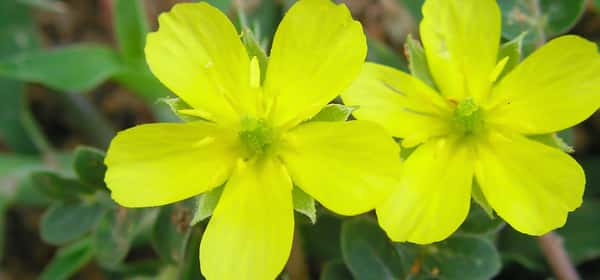
Fadogia agrestis is a West African shrub traditionally used as an aphrodisiac. The theory is that it raises luteinizing hormone to stimulate testosterone production. The problem, as we cover in our fadogia agrestis guide, is that this theory has barely been tested in people at all.
The decisive difference: human evidence
This is where the comparison is essentially settled, so it’s worth being blunt.
Tongkat ali has human trials. A systematic review and meta-analysis of clinical trials concluded that tongkat ali significantly increased total testosterone in men, with the strongest effect in those with low levels to begin with.1 That’s not one study in rodents — it’s pooled data from multiple human trials pointing the same direction. It’s the kind of evidence that justifies cautious real-world use.
Fadogia agrestis does not. Its testosterone reputation comes from a rat study showing a dose-dependent rise in serum testosterone in male rodents.2 There are essentially no published human clinical trials establishing that it works, at what dose, or for how long it’s safe. Everything beyond the rat data is extrapolation and marketing.
When one option has pooled human evidence and the other has a single animal study, that’s not a close call.
The safety gap
The evidence gap is one thing; the safety picture widens it further.
Tongkat ali has been used traditionally for a long time and is generally well tolerated in the human studies that exist, at appropriate doses. Fadogia is more worrying: the same line of rat research that found a testosterone increase also found, in a follow-up study, signs of adverse effects on testicular function — and the harm was dose-dependent, with better recovery at lower doses.3 So the organ fadogia is supposed to help showed damage at higher doses in animals, and we have no human safety data to clarify where the risk begins.
That makes fadogia a genuinely different risk proposition, not just a less-proven one.
There’s also a quality-control angle. Tongkat ali used in research is typically a standardized water extract (you’ll see figures like a 100:1 or 200:1 extract on better labels), which gives you at least some way to match what was studied. Fadogia has no such standardization — doses and extract strengths are all over the place — so even setting the evidence aside, you have far less control over what you’re actually swallowing.
Side-by-side comparison
| Tongkat ali | Fadogia agrestis | |
|---|---|---|
| Human clinical trials | Yes — meta-analysis of multiple trials | Essentially none |
| Evidence it raises testosterone | Human data, strongest in low-T men | Rat studies only |
| Safety data | Long traditional use, generally well tolerated | No human safety data; animal testicular concerns |
| Best use case | A reasonable, evidence-backed option | Hard to justify until human research exists |
| Verdict | The sensible choice | Hype outrunning evidence |
So why are they sold together?
If they’re so different, why the constant pairing? Mostly marketing. Bundling fadogia with the better-known, better-studied tongkat ali lets it borrow credibility it hasn’t earned on its own. The “stack” framing also lets brands charge more and imply a synergy that hasn’t actually been demonstrated in people. Recognizing that is half the battle — you don’t have to buy both just because they’re packaged that way.
Which should you choose?
If you’ve decided to try a testosterone-support herb, tongkat ali is the clear pick. It has human evidence, a reasonable safety record, and a plausible mechanism. Fadogia, by contrast, asks you to take on unknown safety risk for a benefit that’s only ever been shown in rats.
And remember the bigger picture: even tongkat ali is a modest add-on, not a foundation. The real testosterone levers are sleep, body fat, training, and fixing deficiencies — and other supporting supplements like shilajit and boron have more human backing than fadogia does. If you want the full hierarchy of what works, start with how to increase testosterone naturally.
Suggested read: Tongkat Ali Extract: Benefits, Side Effects, and Dosage Guide
The bottom line
Tongkat ali and fadogia agrestis look like teammates on a supplement label, but on the evidence they’re not close. Tongkat ali is backed by a meta-analysis of human trials and a sensible safety record; fadogia is backed by rat studies, one of which also raised testicular-toxicity concerns at higher doses. For anyone weighing the two, tongkat ali is the more effective, better-evidenced, and safer choice by a wide margin.
The honest move is to skip the “stack” reflex, choose the option with actual human data, and keep your expectations modest — no herb replaces the fundamentals that genuinely drive testosterone.
Leisegang K, Finelli R, Sikka SC, Panner Selvam MK. Eurycoma longifolia (Jack) Improves Serum Total Testosterone in Men: A Systematic Review and Meta-Analysis of Clinical Trials. Medicina (Kaunas). 2022;58(8):1047. PubMed ↩︎
Yakubu MT, Akanji MA, Oladiji AT. Aphrodisiac potentials of the aqueous extract of Fadogia agrestis (Schweinf. Ex Hiern) stem in male albino rats. Asian J Androl. 2005;7(4):399-404. PubMed ↩︎
Yakubu MT, Akanji MA, Oladiji AT. Effects of oral administration of aqueous extract of Fadogia agrestis (Schweinf. Ex Hiern) stem on some testicular function indices of male rats. J Ethnopharmacol. 2007;115(2):288-292. PubMed ↩︎