Your muscles weren’t designed to stay still. Whether you spend hours at a desk or push through intense workouts, regular stretching can help your body move better, feel better, and recover faster. Stretch therapy takes this further by using specific techniques to improve flexibility, prevent injuries, and enhance how your body performs during exercise and daily life.
What is stretch therapy?
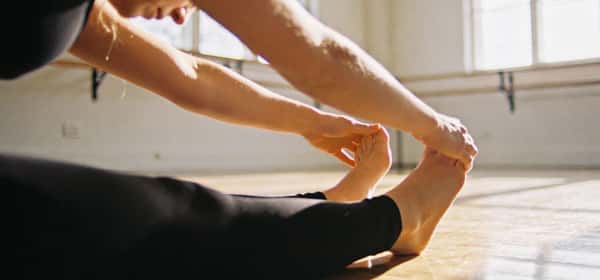
Stretch therapy goes beyond basic stretching. It’s a structured approach that uses specific techniques to improve your range of motion, balance muscle groups, and prepare your body for movement. You can do it on your own or work with a professional who guides you through targeted stretches based on your needs.
The goal is simple: help your muscles and joints move through their full range of motion without restriction or discomfort.
 Lose weight
 Gain muscles
 Eat healthy
 Explore new cuisines

 Emma R.
 Available on the App Store
Summary: Stretch therapy is a structured approach to stretching that improves range of motion, balances muscle groups, and prepares your body for movement.
Key benefits of stretch therapy
Improved flexibility and range of motion
Regular stretching trains your joints to move more freely through their natural range of motion.1 This translates to easier movement during workouts and everyday activities—whether you’re reaching for something on a high shelf or bending down to tie your shoes.
Injury prevention
Keeping your muscles elastic and your joints mobile reduces your risk of strains, sprains, and other injuries during physical activity.2 When your body can move properly, you’re less likely to compensate with poor movement patterns that lead to injury.
If you’re dealing with discomfort, check out these stretches for lower back pain for targeted relief.
Enhanced athletic performance
Flexible muscles respond better during exercise. You’ll notice improved form, better movement quality, and the ability to push harder without feeling restricted.3
Reduced muscle tension and soreness
Stretching helps release built-up tension in tight muscles and improves recovery between workouts.2 You’ll feel less stiff and sore after training sessions.

Better posture and balance
When your muscles maintain proper flexibility, your body naturally aligns better. This supports improved posture during daily activities and better stability during exercise.
Summary: Regular stretch therapy improves flexibility, prevents injuries, enhances athletic performance, reduces muscle tension, and supports better posture.
Types of stretching techniques
Static stretching
This is what most people think of when they hear “stretching.” You move into a position and hold it for 15-30 seconds. Static stretching works best after workouts when your muscles are warm and pliable.
Dynamic stretching
Dynamic stretches involve controlled movements that take your joints through their full range of motion. Think leg swings, arm circles, or walking lunges. These are ideal for warm-ups before exercise because they prepare your muscles for movement without the risks of static stretching on cold muscles.
PNF stretching
Proprioceptive neuromuscular facilitation (PNF) is more advanced. You stretch a muscle, contract it against resistance, then stretch it further. This technique can dramatically improve flexibility but requires proper form—consider working with a professional when trying PNF stretches.
Summary: The three main stretching types are static (holding positions), dynamic (controlled movements), and PNF (stretch-contract-stretch).
Getting started with stretch therapy
Warm up first
Never stretch cold muscles. Start with 5-10 minutes of light cardio—walking, easy cycling, or dynamic movements—to increase blood flow and muscle temperature.
Suggested read: Active Stretching: Benefits, Exercises, and How to Do It
Focus on major muscle groups
Target the muscles you’ll use during your workout or the areas where you feel tightness. Common focus areas include hamstrings, hip flexors, quads, shoulders, and back muscles.
Hold stretches properly
For static stretches, hold each position for 15-30 seconds without bouncing. You should feel mild tension, not pain. Breathe normally throughout.
Stay consistent
Stretch 3-4 times per week for best results.1 Flexibility improves gradually over weeks and months, not overnight.
Use the right tools
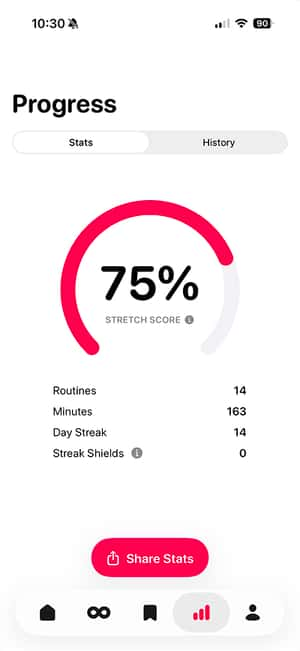
Building a consistent stretching routine is easier with guidance. Best stretching apps can provide structured programs and track your progress.
For a comprehensive introduction, read this beginner’s guide to stretching to learn the fundamentals.
Summary: Warm up before stretching, target major muscle groups, hold stretches for 15-30 seconds, and stay consistent with 3-4 sessions per week.
Potential risks and how to avoid them
Overstretching
Pushing stretches too far causes muscle strains or tears. Stretch to the point of mild tension—if you feel sharp pain, back off immediately.
Stretching cold muscles
Static stretching before warming up increases injury risk.4 Always warm your muscles with light activity first.
Improper technique
Wrong form can lead to injury instead of improvement. If you’re new to stretching, consider working with a trainer or physical therapist to learn proper mechanics. Avoid these common stretching mistakes that can undermine your progress.
Ignoring pain signals
Discomfort during stretching is normal. Sharp pain is not. Listen to your body and adjust accordingly.
Summary: Avoid overstretching, never stretch cold muscles, learn proper technique, and stop if you feel sharp pain.
When to seek professional guidance
If you have existing muscle injuries, joint problems, or chronic conditions, consult a healthcare provider or physical therapist before starting stretch therapy. They can design a program that addresses your specific needs and limitations safely.
Suggested read: Why Does Stretching Feel Good? The Science Explained
Frequently Asked Questions
What is stretch therapy?
Stretch therapy is a structured approach to stretching that uses specific techniques to improve your range of motion, balance muscle groups, and prepare your body for movement. It can be done independently or with a professional therapist.
Unlike casual stretching, stretch therapy follows a systematic approach that targets specific muscle imbalances and movement restrictions.
Is stretch therapy covered by insurance?
Stretch therapy may be covered by insurance when prescribed by a doctor and performed by a licensed physical therapist. Standalone stretch therapy studios typically are not covered.
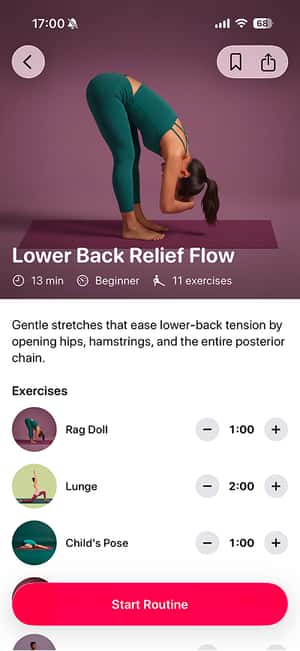
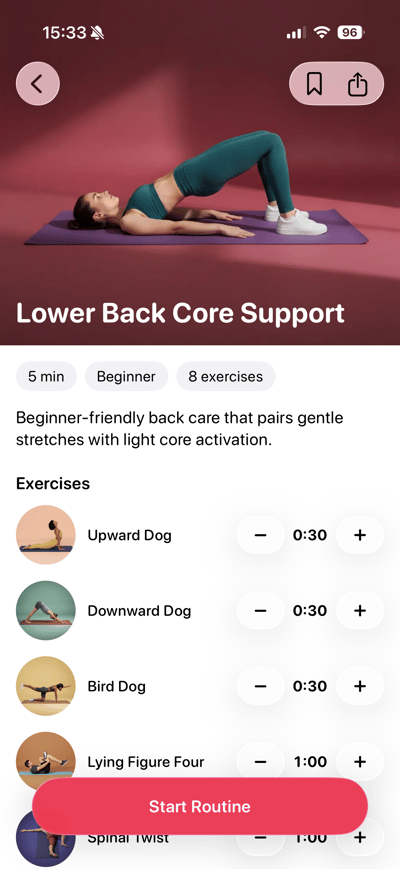
A cost-effective alternative is using the Stretching Workout app, which offers guided stretch therapy routines for free with voice guidance and timed holds.
What is fascial stretch therapy?
Fascial stretch therapy (FST) is a table-based technique where a therapist gently stretches your muscles and fascia using traction and movement. It targets the connective tissue surrounding muscles rather than just the muscles themselves.
FST typically requires a trained practitioner, though some fascial stretching principles can be applied in self-guided routines.
How often should you do stretch therapy?
For best results, aim for 3-4 stretch therapy sessions per week. Consistency is more important than session length—regular short sessions produce better flexibility gains than occasional long ones.
The Stretching Workout app makes daily practice easy with routines from 5 to 30 minutes that you can follow at home.
Can you do stretch therapy at home?
Yes, many stretch therapy techniques can be done at home without equipment. While some advanced methods like PNF stretching benefit from a partner, most static and dynamic stretches are perfectly safe to do solo.
Apps like Stretching Workout provide guided stretch therapy sessions with voice cues and timers, making home practice as effective as studio sessions.
Summary
Stretch therapy offers real benefits when done correctly: improved flexibility, reduced injury risk, better performance, and less muscle tension. Start slowly, warm up properly, and focus on consistent practice rather than pushing for dramatic improvements quickly. Your body will adapt and respond over time, giving you the mobility and movement quality you’re working toward.
Konrad A, Alizadeh S, Daneshjoo A, et al. Chronic effects of stretching on range of motion with consideration of potential moderating variables: A systematic review with meta-analysis. J Sport Health Sci. 2024;13(2):186-194. PubMed ↩︎ ↩︎
Behm DG, Blazevich AJ, Kay AD, McHugh M. Acute effects of muscle stretching on physical performance, range of motion, and injury incidence in healthy active individuals: a systematic review. Appl Physiol Nutr Metab. 2016;41(1):1-11. PubMed ↩︎ ↩︎
Simic L, Sarabon N, Markovic G. Does pre-exercise static stretching inhibit maximal muscular performance? A meta-analytical review. Scand J Med Sci Sports. 2013;23(2):131-148. PubMed ↩︎
Small K, Mc Naughton L, Matthews M. A systematic review into the efficacy of static stretching as part of a warm-up for the prevention of exercise-related injury. Res Sports Med. 2008;16(3):213-231. PubMed ↩︎
 Sarah M.
 Linda P.
 Maya T.
 Marcus J.
 Emma R.
 Amanda K.
 Chris B.
 David L.
 James W.
 Jennifer S.
 Kevin H.
 Lisa C.
 App Store ★★★★★