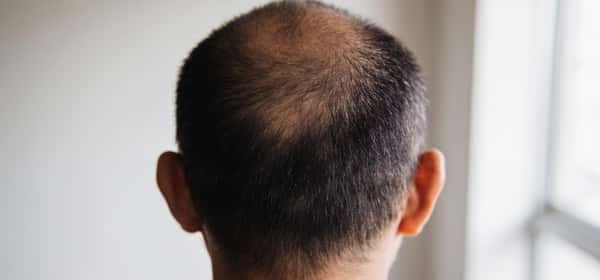
Spearmint tea is one of the few “natural” PCOS interventions that has actual randomized controlled trial evidence — not for being a cure, but specifically as a modest anti-androgen. For women with PCOS who deal with hirsutism (excess hair growth), acne, or other symptoms of androgen excess, two cups of spearmint tea daily measurably reduces testosterone levels. It’s not transformative, but it’s real, cheap, and safe.
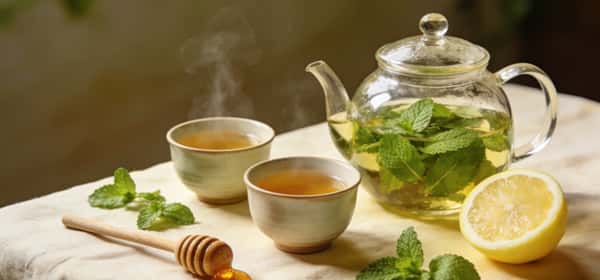
This guide covers what the trial evidence actually shows, the right dosing, how long it takes to work, and how spearmint fits alongside other PCOS interventions.
Quick answer
- Dose: 2 cups of spearmint tea daily (1 tablespoon dried spearmint leaves per cup, steeped 5–10 minutes)
- Timeline: Hormonal changes within 30 days; visible hirsutism improvements likely take 3–6+ months
- What it does: Reduces free and total testosterone; increases LH and FSH; modestly improves self-reported hirsutism
- What it doesn’t do: Address insulin resistance, restore ovulation directly, or replace medical treatment
- Safety: Excellent — well-tolerated, no significant side effects at culinary doses
- Avoid: During pregnancy (uterine effects in some traditional use); if planning conception
What the strongest study found
The landmark trial was published in Phytotherapy Research in 2010: a two-center, 30-day randomized controlled trial of spearmint herbal tea versus placebo herbal tea in 42 women with PCOS-related hirsutism.1
Choose your goal and get a meal plan that considers your hormonal health.
Powered by DietGenie Eat healthy
 Lose weight
 Gain muscles
 Explore new cuisines
Protocol:
- 2 cups of spearmint tea daily
- For 30 days
- Compared against placebo herbal tea
- Measured hormones, hirsutism, and quality of life
Results:
| Outcome | Spearmint group | Placebo group |
|---|---|---|
| Free testosterone | Significantly reduced (p < 0.05) | No change |
| Total testosterone | Significantly reduced (p < 0.05) | No change |
| LH | Significantly increased (p < 0.05) | No change |
| FSH | Significantly increased (p < 0.05) | No change |
| Self-reported hirsutism (DQLI) | Significantly improved (p < 0.05) | No change |
| Objective hirsutism score (Ferriman-Galwey) | No significant change | No change |
The hormonal changes were clear within 30 days. The objective hirsutism score didn’t change in 30 days — but the authors specifically noted this is because hair follicle cycles take longer than 30 days to respond to hormonal changes. The original Turkish studies that prompted this research were only 5 days long; even 30 days is short for visible cosmetic effects on existing hair.
The lesson: spearmint changes the underlying hormones in 30 days, but visible improvement in unwanted hair growth requires several months because hair follicles cycle slowly.
How spearmint works
The mechanism isn’t completely nailed down but likely involves multiple pathways:
- Anti-androgenic compounds in spearmint (particularly carvone and other monoterpenes)
- Possible inhibition of androgen synthesis in the ovary
- Possible modulation of androgen receptor activity
- Indirect effects via altered LH/FSH ratio — increased FSH and LH suggest pituitary-level effects
The traditional name “spearmint” refers to Mentha spicata — distinct from peppermint (Mentha piperita). The PCOS evidence is specifically for spearmint, not peppermint. Peppermint has different traditional uses and a different chemical profile.
For the broader spearmint context: health benefits of spearmint.
How to actually use it
Standard PCOS protocol
- 2 cups daily is the dose that has been studied
- Each cup made with:
- 1 tablespoon dried spearmint leaves OR
- 1 spearmint tea bag (check for actual spearmint, not “mint” blend)
- Steep 5–10 minutes in just-boiled water
- Drink hot or iced
- Consistent daily use; not “as needed”
Sourcing dried spearmint
- Loose-leaf dried spearmint is widely available — herbal/spice shops, bulk food stores, online
- Tea bags labeled “spearmint” — read ingredients; many “spearmint” blends include other ingredients (peppermint, green tea, etc.)
- Pure spearmint is what was studied
Fresh spearmint?
The trial used dried leaves brewed as tea. Fresh spearmint should also work but the active compound concentration may be different. Using fresh: 2–3 tablespoons of fresh leaves per cup, lightly bruised, steeped 5–10 minutes.
Suggested read: CoQ10 Benefits: What Science Shows About Coenzyme Q10
Timing
- One cup with breakfast, one with dinner is a reasonable pattern
- Or one in the afternoon, one in the evening
- Don’t take all at once — splitting maintains more consistent blood levels
Realistic timeline
What to expect:
| Timeframe | What changes |
|---|---|
| Week 1–4 | Hormonal changes begin (not visible without bloodwork) |
| Month 1 | Bloodwork shows reduced testosterone |
| Month 1–3 | Subjective hirsutism improvement (per the DQLI score in the study) |
| Month 3–6 | Objective hair growth changes start to be visible |
| Month 6+ | Continued gradual improvement; new hair growth in untreated areas may decrease |
The key insight: hair you already have doesn’t disappear — but new hair growing in may be finer, slower-growing, or less pigmented. The cosmetic benefit accumulates over months as hair follicles cycle.
For existing unwanted hair, you’ll still need cosmetic management (waxing, laser, electrolysis, etc.) — spearmint helps prevent new growth and slow regrowth more than removing what’s there.
How spearmint compares to other PCOS anti-androgens
| Intervention | Mechanism | Effect size | Notes |
|---|---|---|---|
| Spironolactone (Rx) | Anti-androgen, aldosterone antagonist | Strong | Prescription, daily |
| Combined oral contraceptives | Suppress androgen production | Strong | Prescription |
| Finasteride (Rx) | 5-alpha-reductase inhibitor | Strong | Off-label for women |
| Spearmint tea | Anti-androgen, mechanism partial | Modest | OTC, food-grade |
| Saw palmetto | Mild anti-androgen | Weak in women | Limited evidence in PCOS |
Spearmint is the gentlest, lowest-risk anti-androgen option but also the smallest effect. It’s most useful as:
- A first-line natural option before considering medication
- An adjunct to other interventions (diet, inositol, exercise)
- For women who want to avoid medication or are sensitive to side effects
- For mild-to-moderate hirsutism rather than severe
For severe hirsutism, medical anti-androgens work much better. Spearmint tea is reasonable to try first or alongside.
Suggested read: Berberine for Weight Loss: Does It Actually Work?
What spearmint won’t do
A few things to be clear about:
- Doesn’t address insulin resistance. Spearmint’s effects are on androgens directly. Insulin resistance — the metabolic driver of PCOS — needs separate intervention (diet, inositol for PCOS, exercise, metformin).
- Doesn’t restore ovulation directly. While reducing androgens might indirectly help over time, spearmint isn’t an ovulation induction agent.
- Doesn’t reverse cosmetic damage. Existing hair, scarring acne, or established hair loss patterns need their own management.
- Not a substitute for medical care. PCOS has long-term cardiometabolic implications. Address the whole picture.
Side effects and safety
Spearmint tea at the studied dose (2 cups/day) is remarkably safe:
- Most common: Mild GI relaxation (it’s traditionally used for digestive comfort)
- Less common: Headache, allergic reaction (rare)
- Caution: Heartburn can be worsened in some people (spearmint relaxes the lower esophageal sphincter)
Important contraindications:
- Pregnancy: Avoid. Some traditional uses include uterine stimulation; the data isn’t clear enough to recommend during pregnancy
- Trying to conceive: The effects on LH/FSH/androgen levels in the trial are useful for PCOS but could theoretically interfere with conception. Many practitioners recommend stopping when actively trying.
- Hormone-sensitive cancers: Discuss with a doctor first
- Severe GERD/reflux: May worsen symptoms
No significant drug interactions at culinary doses. At higher concentrated extract doses (spearmint essential oil capsules), more caution is warranted — but those weren’t what the PCOS studies used.
Spearmint tea as part of a broader PCOS approach
The realistic frame: spearmint is one of multiple tools, not the answer. A sensible PCOS approach combines:
- PCOS diet — DASH or Mediterranean pattern, the foundation
- Exercise — resistance training + aerobic
- Inositol for PCOS — for insulin sensitivity and ovulation (the highest-evidence supplement)
- Vitamin D correction if deficient
- Omega-3 — anti-inflammatory and lipid effects
- Spearmint tea — for the androgen-driven symptoms specifically
- Medical care as needed for the broader condition
For the supplement landscape: PCOS supplements. For broader inflammation/anti-androgen context, the diets to lower estrogen framework also applies to managing hormones from the food side.
Suggested read: CoQ10 for Fertility: Dose, Evidence, and Timing
What about spearmint capsules or essential oil?
These deliver concentrated spearmint compounds but weren’t what the RCT used. Two considerations:
- Spearmint essential oil capsules could theoretically deliver more active compound, but at higher concentration the side effect risk is higher (particularly GI effects)
- The standardization isn’t established for PCOS dosing
- Tea is what has the evidence
Stick with the tea form unless you specifically can’t tolerate it. The cost is low ($5–15/month) and the evidence is what it is.
Common questions
Can I drink more than 2 cups per day? Probably fine, but the evidence base is for 2 cups. More may not help proportionally. Up to 4 cups/day is generally considered safe for daily use.
Decaf or regular? Spearmint tea is naturally caffeine-free. Be careful with “mint blends” that contain green tea or other caffeinated ingredients.
Hot or cold? Either works. The active compounds are extracted by hot water; you can then cool the tea and drink it iced.
Does spearmint candy or gum work? No — the concentration of active compounds is too low, and most products use spearmint flavoring rather than actual spearmint extract.
Can men with high androgens use spearmint? Some have tried it, but the effects in men aren’t well studied. Reducing androgens in men has different implications than in women.
Bottom line
Spearmint tea for PCOS has actual randomized controlled trial evidence as a mild anti-androgen — it reduces free and total testosterone within 30 days at 2 cups daily. The catch: visible improvements in hirsutism take 3–6+ months because hair follicles cycle slowly. It’s safe, cheap, and well-tolerated. It complements but doesn’t replace insulin-targeting interventions like inositol for PCOS, the PCOS diet, and exercise. Skip during pregnancy or active conception attempts. For the broader supplement framework: PCOS supplements. For the cause picture: what causes PCOS.