You can have a perfectly normal total testosterone number on a lab report and still feel like your hormones are off. The reason is often a protein most people have never heard of: sex hormone binding globulin, or SHBG. It acts like a sponge in your bloodstream, soaking up testosterone and estrogen so they can’t reach your cells. How much SHBG you have determines how much of your sex hormones are actually free to do their job — which is why understanding SHBG often explains symptoms that “total” hormone numbers can’t.
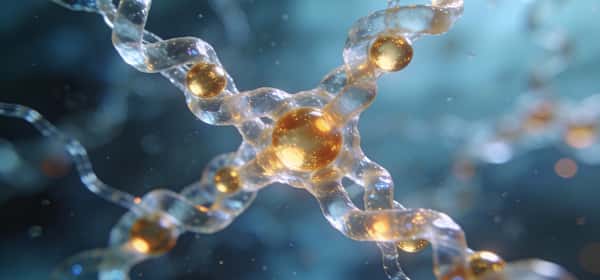
Here’s what SHBG does, what pushes it up or down, and why the “free” fraction is the number that really counts.
Quick answer
- What it is: a protein made by your liver that binds testosterone and estradiol in the blood
- What it controls: the amount of “free” (usable) sex hormone available to your tissues
- High SHBG: more hormone locked up, less free testosterone — can mean low-T symptoms despite normal total levels
- Low SHBG: more free hormone, but it’s a red flag for insulin resistance and metabolic problems
- Main levers: insulin, thyroid hormone, estrogen, liver health, and body weight
- Why it matters: free and bioavailable hormone levels often explain symptoms better than total testosterone alone
What SHBG actually does
SHBG is a transport protein secreted by your liver. It travels through your bloodstream grabbing onto sex steroid hormones — primarily testosterone and estradiol — and holding them tightly. While a hormone is bound to SHBG, it’s essentially out of service. It can’t enter cells or act on tissues.
Choose your goal and get a meal plan that considers your hormonal health.
Powered by DietGenie Eat healthy
 Lose weight
 Gain muscles
 Explore new cuisines
Your total testosterone splits into three buckets:
| Fraction | Roughly how much | Usable? |
|---|---|---|
| Bound to SHBG | ~40–60% | No — locked up tightly |
| Bound to albumin | ~40–50% | Loosely bound, mostly available |
| Free (unbound) | ~1–3% | Yes — fully active |
The free fraction plus the loosely albumin-bound fraction make up your bioavailable hormone — the part that actually reaches your cells. SHBG, by deciding how much gets locked away, sets the size of that usable pool. This is exactly why two people with identical total testosterone can feel completely different.
Free vs total hormones
This is the concept that ties everything together. When a doctor measures “total testosterone,” they’re counting everything — bound and free. But your body only responds to what’s free or loosely bound.
If your SHBG is high, a large slice of your testosterone is held captive. You can post a normal or even good total number while running low on the free hormone that matters, and feel the classic symptoms: low libido, fatigue, poor recovery. If your SHBG is low, more of your testosterone is free, so a modest total can translate into adequate function.
That’s why, when symptoms and total levels don’t match, a good workup includes free or calculated bioavailable testosterone, not just the total. If you’re working on your levels, our guides on ways to increase testosterone and testosterone-boosting food cover the inputs — but SHBG is the filter those hormones have to pass through.
What raises SHBG
| Cause | Why it raises SHBG |
|---|---|
| Aging | SHBG tends to drift upward with age, lowering free testosterone in older men |
| Estrogen | Higher estrogen (including some oral contraceptives and HRT) increases SHBG production |
| Thyroid hormone | Hyperthyroidism and thyroid hormone strongly raise SHBG |
| Low calorie intake / leanness | Very lean states and caloric restriction can push SHBG up |
| Liver conditions | Some liver disease raises SHBG |
| Certain drugs | Anti-estrogens like tamoxifen and some other medications increase it |
The liver is the control center here. Estrogenic and thyroid signals turn up SHBG gene expression in liver cells, which is why thyroid status and estrogen levels move SHBG so reliably.1
What lowers SHBG
| Cause | Why it lowers SHBG |
|---|---|
| Insulin resistance | High insulin suppresses liver SHBG production — the biggest driver |
| Obesity | Strongly associated with low SHBG, largely via insulin |
| Type 2 diabetes risk | Low SHBG is a recognized marker and predictor of metabolic disease |
| High androgens | Excess testosterone or anabolic steroids lower SHBG |
| Hypothyroidism | Underactive thyroid reduces SHBG |
| Sugar-heavy diets | High glucose and fructose intake reduce SHBG expression in the liver |
The standout here is insulin. When the liver is exposed to high insulin and ramps up fat production, it makes less SHBG.1 This is the same mechanism at play in polycystic ovary syndrome, where compensatory hyperinsulinemia suppresses hepatic SHBG and amplifies free androgens.2 Low SHBG isn’t just a hormone quirk — it’s an early warning sign. Low plasma SHBG is an established risk factor for developing high blood sugar and type 2 diabetes, especially in women.1 In other words, a low SHBG on a routine panel can be your first hint of brewing insulin resistance, sometimes before glucose looks abnormal.
Suggested read: What Causes PCOS? The Real Drivers Explained Clearly
When SHBG numbers can mislead you
A few situations trip people up:
- High SHBG masking low free-T: total testosterone looks fine, but so much is bound that you feel low — the fix is to look at free or bioavailable levels, not chase the total.
- Low SHBG inflating the picture: total testosterone looks low, but a lot of it is free, so function may be okay — and the low SHBG itself is the thing to investigate metabolically.
- Oral estrogen effects: starting an oral estrogen-containing contraceptive or HRT can raise SHBG enough to drop free testosterone, which sometimes explains a dip in libido.
The practical move whenever a symptom and a total hormone level disagree: check SHBG and calculate the free fraction. Then the picture usually makes sense.
What to do about it
You don’t treat SHBG directly — you treat what’s driving it. Because insulin is the dominant lever, the most useful changes are the metabolic ones:
- Improve insulin sensitivity. Lose excess fat, build muscle, and cut refined sugar — this is the single biggest move for low SHBG. Our guide on the health benefits of exercise covers why resistance training matters here.
- Check your thyroid. Both over- and under-active thyroid shift SHBG; correcting thyroid status normalizes it.
- Review your medications. Oral estrogen and certain drugs raise SHBG; if free testosterone dropped after starting one, that’s worth discussing.
- Support liver health. Since the liver makes SHBG, anything straining it can distort levels.
- Interpret in context. Always read SHBG alongside total and free hormones, not in isolation.
Bottom line
SHBG is the gatekeeper for your sex hormones — it decides how much testosterone and estrogen is locked away versus free to work. That’s why your free and bioavailable levels often explain symptoms better than total testosterone alone. High SHBG can leave you functionally low despite a normal total; low SHBG frees up more hormone but flags insulin resistance and metabolic risk. Insulin, thyroid hormone, estrogen, and liver health are the main dials. You don’t target SHBG itself — you fix the metabolic and hormonal drivers behind it, and you always read it in context. For the rest of this hormone family, see DHEA, pregnenolone, and IGF-1.
Pugeat M, Nader N, Hogeveen K, Raverot G, Déchaud H, Grenot C. Sex hormone-binding globulin gene expression in the liver: drugs and the metabolic syndrome. Mol Cell Endocrinol. 2010;316(1):53-9. PubMed | DOI ↩︎ ↩︎ ↩︎
Goodarzi MO, Dumesic DA, Chazenbalk G, Azziz R. Polycystic ovary syndrome: etiology, pathogenesis and diagnosis. Nat Rev Endocrinol. 2011;7(4):219-31. PubMed | DOI ↩︎