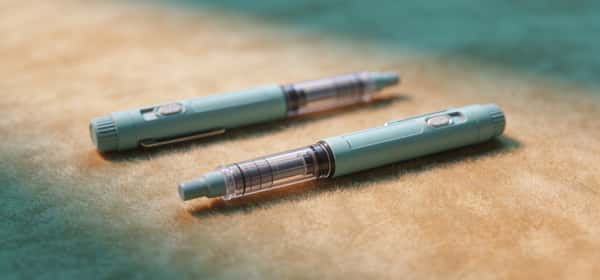
Two injectable drugs dominate every conversation about medical weight loss right now, and people keep asking which one is better. This is the tirzepatide vs semaglutide breakdown you’ve been looking for: how each one actually works, the weight loss you can realistically expect, what they cost, and the side effects that trip people up. By the end you’ll know which questions to bring to your doctor.

This is educational information, not medical advice. Semaglutide (Ozempic, Wegovy) and tirzepatide (Mounjaro, Zepbound) are prescription-only medications that must be prescribed and supervised by a licensed clinician. Some versions sold online are labeled “research use only” and are not FDA-approved for human use. Never start, change, or stop a dose on your own, and never source or self-inject either drug outside of legitimate medical care. Talk to a doctor or pharmacist before you do anything, especially if you take other medications or have a chronic condition.
Quick answer: In head-to-head and parallel trials, tirzepatide produces more weight loss on average than semaglutide. Tirzepatide hits one extra hormone receptor (GIP) on top of GLP-1, and at its top dose people lost around 21% of body weight versus roughly 15% for high-dose semaglutide. Both work well, both can be hard on your stomach, and the “right” one depends on your goals, your insurance, and how your body tolerates each.
Choose your goal and get a meal plan that makes losing weight simpler.
Powered by DietGenie Lose weight
 Gain muscles
 Eat healthy
 Explore new cuisines
How tirzepatide and semaglutide actually work
Both belong to a family called GLP-1 medications for weight loss, but they aren’t identical.
Semaglutide is a single-target drug. It mimics GLP-1, a gut hormone your body releases after eating. That signal slows how fast your stomach empties, tamps down appetite in the brain, and helps regulate blood sugar. The result is that you feel full sooner and stay full longer, so you eat less without white-knuckling it.
Tirzepatide is a dual agonist. It copies GLP-1 and a second hormone called GIP (glucose-dependent insulinotropic polypeptide). The GIP arm appears to improve how your body handles fat and insulin, and it may blunt nausea somewhat. Adding that second lever is the leading theory for why tirzepatide tends to outperform semaglutide on the scale. The practical upshot is that both drugs quiet the same hunger and fullness signals, but tirzepatide pulls two of those levers at once instead of one.

Tirzepatide vs semaglutide for weight loss: the numbers
This is where most people want hard figures, so here they are from the major trials.
In STEP 1, adults with overweight or obesity (no diabetes) lost a mean of 14.9% of body weight over 68 weeks on semaglutide 2.4 mg, versus about 2.4% on placebo.1
In SURMOUNT-1, a similar population on tirzepatide lost 15.0% at 5 mg, 19.5% at 10 mg, and 20.9% at 15 mg over 72 weeks.2
The cleanest comparison is SURPASS-2, a true head-to-head in people with type 2 diabetes. Tirzepatide beat semaglutide 1 mg on both blood sugar control and weight loss across all three tirzepatide doses.3 These trials used different doses and slightly different groups, so treat the gap as “tirzepatide tends to win,” not an exact spread.
| Semaglutide (2.4 mg) | Tirzepatide (15 mg) | |
|---|---|---|
| Receptors hit | GLP-1 only | GLP-1 + GIP |
| Avg. weight loss (obesity trials) | ~15%1 | ~21%2 |
| Trial | STEP 1, 68 wks | SURMOUNT-1, 72 wks |
| Dosing | Weekly injection | Weekly injection |
| Brand names | Wegovy, Ozempic | Zepbound, Mounjaro |
| Pill version | Yes (oral semaglutide) | No (injection only) |
Want a personalized estimate instead of trial averages? This calculator projects your potential loss based on your starting weight.
GLP-1 Weight Loss Projection
Just remember that trial averages hide a wide range. Some people lose far more, some far less, and a meaningful fraction don’t respond strongly to either drug.
Suggested read: Wegovy vs Zepbound: Which Wins for Weight Loss?
Side effects: where they’re similar and where they differ
Both drugs share the same core side-effect profile, and it’s mostly gastrointestinal. A review of GLP-1 agonists found nausea, vomiting, diarrhea, and constipation are the most common complaints, usually worst when you start or step up a dose and easing over time.4
What to know:
- GI symptoms are the main reason people quit. Slow dose escalation is the standard way to keep them manageable, and smaller, lower-fat meals tend to help while your gut adjusts.
- Rare but serious risks include pancreatitis and gallbladder problems, and both carry a thyroid C-cell tumor warning based on rodent data; they’re contraindicated if you have a personal or family history of medullary thyroid carcinoma or MEN2.4
- Muscle loss is a real concern with rapid weight loss on either drug. Up to a quarter of the weight you lose can be lean mass.5 Protecting muscle through enough protein and resistance training matters more than which drug you pick.6
For drug-specific details, see semaglutide side effects and tirzepatide side effects, since the exact frequencies and warnings differ a little between the two.
Dosing: how each one ramps up
Neither drug starts at its full strength. You begin low and step up every four weeks or so to let your gut adjust.
- Semaglutide typically starts at 0.25 mg weekly and climbs over months toward a 2.4 mg maintenance dose for weight management. Full details are in our semaglutide dosage guide.
- Tirzepatide usually starts at 2.5 mg weekly and steps up toward 5, 10, or 15 mg. See tirzepatide dosage for the full schedule.
Both are once-weekly subcutaneous injections you give yourself in the belly, thigh, or upper arm. Semaglutide also comes in an oral tablet form; tirzepatide is injection-only. Skipping the slow titration to “get there faster” is the classic mistake that lands people in misery with nausea.
Suggested read: Microdosing GLP-1: What It Means and the Risks
Cost and access
Price often decides this more than the data does. In the US, both run roughly $1,000-$1,350 per month at list price without insurance, though manufacturer savings cards, cash-pay programs, and coverage swing the real number enormously. Coverage for the weight-loss brands (Wegovy, Zepbound) is patchier than for the diabetes brands (Ozempic, Mounjaro).
A few practical points:
- Diabetes indications are more likely to be covered than obesity alone.
- Compounded versions exist but carry quality and legality questions; the “research use only” market in particular is not approved for human use.
- Supply has been tight at times, so availability of a specific dose can steer the choice as much as your own preference.
Who might pick which?
Neither is universally “best.” A reasonable way to think about it:
- Lean toward tirzepatide if maximum weight loss is the priority and you tolerate it, since the average loss is higher.2
- Lean toward semaglutide if you want the option of a daily pill, want the drug with the longest real-world track record, or it’s simply the one your insurance covers. Semaglutide also has strong cardiovascular outcome data: in the SELECT trial it cut major cardiovascular events by about 20% in people with obesity and existing heart disease.7
- Either works as a tool, not a cure. The moment you stop, appetite returns and weight tends to come back, so both pair best with durable habits. Our guide to maintaining weight loss covers the part that keeps the results.
What about the newer drugs?
The field isn’t standing still. Retatrutide is a triple-receptor agonist (GLP-1, GIP, and glucagon) that produced up to roughly 24% weight loss at 48 weeks in a phase 2 trial.8 It’s not approved yet, but it hints that the tirzepatide-over-semaglutide pattern, more targets meaning more loss, may keep going. On the other end, liraglutide vs semaglutide shows how the older daily GLP-1 drug stacks up against the weekly newcomers.
Bottom line
In the tirzepatide vs semaglutide matchup, tirzepatide generally produces more weight loss thanks to its dual GLP-1/GIP action, with top-dose averages near 21% versus about 15% for semaglutide. But semaglutide brings a daily-pill option, a longer track record, and proven heart benefits. Side effects, dosing, and especially cost and coverage are similar enough that the deciding factor is usually personal. Both are powerful, both are prescription-only, and both work best alongside protein, resistance training, and habits you can keep. Bring this comparison to your doctor and decide together.
Wilding JPH, et al. Once-Weekly Semaglutide in Adults with Overweight or Obesity. N Engl J Med. 2021;384(11):989-1002. PubMed ↩︎ ↩︎
Jastreboff AM, et al. Tirzepatide Once Weekly for the Treatment of Obesity. N Engl J Med. 2022;387(3):205-216. PubMed ↩︎ ↩︎ ↩︎
Frias JP, et al. Tirzepatide versus Semaglutide Once Weekly in Patients with Type 2 Diabetes. N Engl J Med. 2021;385(6):503-515. PubMed ↩︎
Ghusn W, Hurtado MD. Glucagon-like Receptor-1 agonists for obesity: Weight loss outcomes, tolerability, side effects, and risks. Obes Pillars. 2024;12:100127. PubMed ↩︎ ↩︎
Neeland IJ, Linge J, Birkenfeld AL. Changes in lean body mass with glucagon-like peptide-1-based therapies and mitigation strategies. Diabetes Obes Metab. 2024;26 Suppl 4:16-27. PubMed ↩︎
Nunn E, et al. Antibody blockade of activin type II receptors preserves skeletal muscle mass and enhances fat loss during GLP-1 receptor agonism. Mol Metab. 2024;80:101880. PubMed ↩︎
Lincoff AM, et al. Semaglutide and Cardiovascular Outcomes in Obesity without Diabetes. N Engl J Med. 2023;389(24):2221-2232. PubMed ↩︎
Jastreboff AM, et al. Triple-Hormone-Receptor Agonist Retatrutide for Obesity - A Phase 2 Trial. N Engl J Med. 2023;389(6):514-526. PubMed ↩︎