If you’ve just been handed a prescription, the numbers can feel cryptic: 0.25, then 0.5, then up and up. This is the part nobody explains well at the pharmacy counter. Here you’ll get the full semaglutide dosage chart for both weight loss and diabetes, the reasoning behind each step, the mg-to-units math for compounded vials, and a plan for when you miss a shot.
This is educational information, not medical advice. Semaglutide (Wegovy, Ozempic, Rybelsus) is a prescription-only medication and must be started, adjusted, and stopped under the supervision of a licensed prescriber. Some semaglutide is sold “for research use only” and is not FDA-approved for use in people. Don’t use this article to obtain or self-dose any unapproved product. Talk to your doctor or pharmacist before changing anything about your regimen, especially if you have a personal or family history of medullary thyroid cancer, MEN2, pancreatitis, or gallbladder disease.
The quick answer
For weight loss (Wegovy), the standard semaglutide dosing schedule climbs through five steps over about 16-20 weeks: 0.25 mg → 0.5 mg → 1.0 mg → 1.7 mg → 2.4 mg, holding each dose for four weeks before moving up. The 2.4 mg dose is the maintenance target. For type 2 diabetes (Ozempic), the schedule is shorter and tops out lower. The starting 0.25 mg dose isn’t really “treatment” — it’s a primer that lets your gut adjust before the doses that actually drive results.
Choose your goal and get a meal plan that makes losing weight simpler.
Powered by DietGenie Lose weight
 Gain muscles
 Eat healthy
 Explore new cuisines
The Wegovy semaglutide dosage chart for weight loss
This is the schedule the STEP 1 trial used, where adults averaged about 14.9% body-weight loss at 68 weeks on 2.4 mg.1 Each step lasts four weeks unless your prescriber says otherwise.
| Step | Weekly dose | Typical weeks | Purpose |
|---|---|---|---|
| 1 | 0.25 mg | Weeks 1-4 | Gut adjustment, minimal weight effect |
| 2 | 0.5 mg | Weeks 5-8 | First real appetite suppression |
| 3 | 1.0 mg | Weeks 9-12 | Building toward target |
| 4 | 1.7 mg | Weeks 13-16 | Near-maintenance |
| 5 | 2.4 mg | Week 17 onward | Maintenance dose |
A few things worth knowing:
- The full ramp takes around four months before you reach the maintenance dose. Most people don’t see their biggest changes until they’re settled on 1.7 mg or 2.4 mg.
- If 2.4 mg is too much to tolerate, 1.7 mg is a recognized maintenance dose too.
- This is a once-weekly injection on the same day each week, with or without food. For where to put the shot, see where to inject GLP-1 medications.
To see roughly where you land in the schedule and what each step delivers, plug your details into the tracker below.
GLP-1 Dose Escalation Tracker
The Ozempic schedule for diabetes
Ozempic is the same molecule prescribed for type 2 diabetes, and its escalation is gentler and lower. Many people are managed at 0.5 mg or 1.0 mg; the 2.0 mg dose was added later for tighter glucose control.
| Step | Weekly dose | Typical timing |
|---|---|---|
| 1 | 0.25 mg | Weeks 1-4 (starting dose) |
| 2 | 0.5 mg | Weeks 5-8 |
| 3 | 1.0 mg | Week 9 onward, if needed |
| 4 | 2.0 mg | Optional, for added glycemic control |
The big practical point: Ozempic and Wegovy are not interchangeable by dose. The pens deliver different fixed amounts, so you can’t simply swap one for the other to hit a weight-loss target. That’s a conversation for your prescriber, not a swap you make at home.
Why the dose climbs so slowly
The slow taper isn’t bureaucratic caution. Nausea, and the other GI side effects that make people quit, are dose-dependent. Step up too fast and your stomach revolts.
Semaglutide is a GLP-1 receptor agonist. It slows how fast your stomach empties and dials down appetite signaling in the brain, which is great for eating less but also why food can sit heavy and queasy early on. In efficacy and tolerability reviews of GLP-1 drugs, nausea, vomiting, diarrhea, and constipation are the most common complaints, and they cluster around dose increases.2 Gradual titration gives your gut receptors time to adapt, so each jump lands softer.
If you want the bigger picture on how these drugs work and who they’re for, the overview of GLP-1 medications for weight loss is a good companion read, and the rundown of semaglutide side effects covers what to expect and when to call your doctor.
Suggested read: Liraglutide vs Semaglutide: Daily vs Weekly GLP-1
What to do if a step isn’t tolerated
Hitting a wall at a dose step is common and usually fixable. Options your prescriber may use:
- Hold the current dose longer. Staying on 0.5 mg or 1.0 mg for an extra four weeks (or more) before climbing again is standard and perfectly fine.
- Step back down. If 1.0 mg makes you miserable, dropping to 0.5 mg for a while and re-attempting later is reasonable.
- Don’t rush to maintenance. There’s no prize for reaching 2.4 mg quickly. The dose that you can actually keep taking is the one that works.
- Manage the symptoms. Smaller meals, easing off greasy and very rich foods, and staying hydrated all blunt the queasiness. Several natural appetite suppressants and fiber-forward habits also pair well with the appetite changes the drug is already producing.
Persistent severe abdominal pain, repeated vomiting, or signs of gallbladder trouble are not “tough it out” situations — those warrant a call to your prescriber.
Semaglutide dosage in units: the compounded-vial math
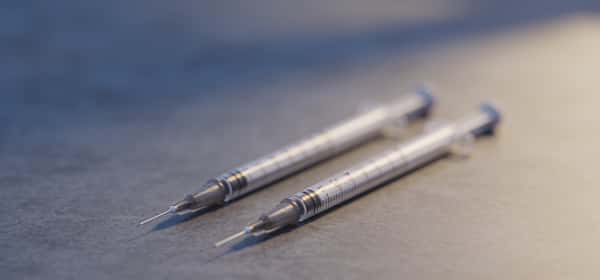
Brand pens are pre-set, so you never think in units. But compounded semaglutide usually comes as a multi-dose vial drawn up with an insulin syringe, and that’s where people get confused — and where dosing errors happen.
The key fact: insulin syringe “units” measure volume, not the drug. On a U-100 syringe, 100 units = 1 mL. How many milligrams sit in each unit depends entirely on the vial’s concentration, which the compounding pharmacy sets.
Here’s the conversion for a common concentration. Always confirm your own vial’s strength on the label.
| Prescribed dose | If vial is 1 mg/mL | If vial is 2.5 mg/mL |
|---|---|---|
| 0.25 mg | 25 units (0.25 mL) | 10 units (0.10 mL) |
| 0.5 mg | 50 units (0.50 mL) | 20 units (0.20 mL) |
| 1.0 mg | 100 units (1.00 mL) | 40 units (0.40 mL) |
The math is simple: units to draw = (dose in mg ÷ concentration in mg/mL) × 100. Get the concentration wrong and you can be off by 2-3x without noticing, which is exactly why this belongs in a pharmacist’s hands. The realities and legal gray areas of compounded GLP-1 products are worth understanding before you go this route, and if you’re handling lyophilized powder, the step-by-step on how to reconstitute peptides explains why your final concentration is whatever you make it.
Suggested read: Tirzepatide Side Effects: GI, Risks & Hair Loss
Missed a dose? Here’s the rule
Semaglutide’s long half-life (about a week) gives you a generous window.
- If it’s been fewer than 5 days since your scheduled day, take it as soon as you remember, then resume your normal weekly day.
- If more than 5 days have passed, skip the missed dose entirely and take your next one on the regular day. Don’t double up.
- If you miss two or more weeks in a row, check with your prescriber. You may need to restart at a lower step to avoid a nausea flare, since your gut loses some of its tolerance during a gap.
Picking a consistent weekly day — and setting a phone reminder — prevents most of this.
How dosing compares to tirzepatide
People often ask whether to climb further or switch. Tirzepatide (Zepbound, Mounjaro) is a different molecule with its own titration ladder and somewhat higher average weight loss in trials — roughly 15-21% across doses in SURMOUNT-1.3 It also escalates slowly for the same nausea reasons.
| Semaglutide (Wegovy) | Tirzepatide (Zepbound) | |
|---|---|---|
| Start dose | 0.25 mg/week | 2.5 mg/week |
| Maintenance options | 1.7 or 2.4 mg | 5, 10, or 15 mg |
| Titration interval | ~4 weeks/step | ~4 weeks/step |
| Trial avg. weight loss | ~14.9%1 | up to ~20.9%3 |
If you’re weighing the two, the semaglutide vs tirzepatide comparison digs into the trade-offs, and the tirzepatide dosage guide lays out its full ladder. Beyond the scale, semaglutide also lowered major cardiovascular events by about 20% in people with obesity and existing heart disease in the SELECT trial — a benefit that’s part of why some prescribers favor it.4
Bottom line
The semaglutide dosage chart isn’t complicated once you see the logic: start low at 0.25 mg, climb one step every four weeks, and land at a maintenance dose (1.7 or 2.4 mg for weight loss) you can actually live with. Slow titration is the whole point — it’s what keeps nausea manageable. With compounded vials, the mg-to-units conversion is where care matters most, so confirm your concentration and let a pharmacist check your math. And whatever the chart says, your prescriber’s plan for your body wins.
Wilding JPH, et al. Once-Weekly Semaglutide in Adults with Overweight or Obesity. N Engl J Med. 2021;384(11):989-1002. PubMed ↩︎ ↩︎
Ghusn W, Hurtado MD. Glucagon-like Receptor-1 agonists for obesity: Weight loss outcomes, tolerability, side effects, and risks. Obes Pillars. 2024;12:100127. PubMed ↩︎
Jastreboff AM, et al. Tirzepatide Once Weekly for the Treatment of Obesity. N Engl J Med. 2022;387(3):205-216. PubMed ↩︎ ↩︎
Lincoff AM, et al. Semaglutide and Cardiovascular Outcomes in Obesity without Diabetes. N Engl J Med. 2023;389(24):2221-2232. PubMed ↩︎