Most people who try retinol for the first time do one of two things: they go too hard and end up red and peeling for a month, or they get scared by the early irritation and quit before it ever pays off. Both are avoidable. Retinol rewards patience and a slow start more than almost any other skincare ingredient. This is the beginner’s playbook — which strength to buy, how often to use it, the sandwich method to soften the blow, and how to read the adjustment period so you don’t bail too early.
Quick answer
- Start low: a 0.25%–0.5% retinol, not the strongest one you can find
- Start slow: one or two nights a week, increasing gradually over weeks
- Apply at night only, to dry skin, a pea-sized amount for the whole face
- Use the sandwich method if your skin is sensitive
- Moisturize and wear daily SPF — both are part of the routine, not optional
- Give it 8–12 weeks before judging results, and expect some early flaking
Step 1: Pick the right starter product
The instinct to buy the highest percentage is the wrong one. For a beginner, a 0.25% to 0.5% retinol is the sweet spot — enough to work, gentle enough that your skin can adapt without a meltdown. Stronger formulas don’t deliver proportionally better results; they mostly deliver more irritation, and irritation is what makes people quit. If even low-strength retinol feels harsh, retinyl esters are a gentler entry point, and we map out the full range in retinol vs retinoid.
Step 2: Start once or twice a week
This is the part beginners skip, and it’s the most important. Don’t use retinol every night out of the gate. Dermatologists advise easing in with the least-intense formula every other night — or less — and building up slowly.1 A reasonable ramp:
Glow starts with what you eat. Choose your goal and get your plan.
Powered by DietGenie Eat healthy
 Lose weight
 Gain muscles
 Explore new cuisines
| Weeks | Frequency |
|---|---|
| 1–2 | Once a week |
| 3–4 | Twice a week |
| 5–6 | Every other night |
| 7+ | Nightly, if your skin tolerates it |
If any step causes too much irritation, hold at the previous frequency longer. There’s no prize for getting to nightly fast. Plenty of people get great results using retinol just three or four nights a week long-term.
Step 3: Apply it correctly
The mechanics matter more than people expect:
- Cleanse gently in the evening. If you double cleanse, keep it mild so you’re not stripping skin before an active.
- Wait until skin is fully dry — about 10–20 minutes. Applying to damp skin increases absorption and irritation.
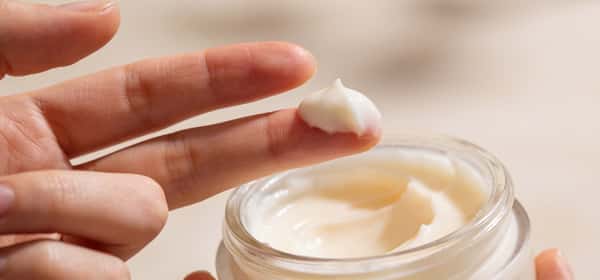
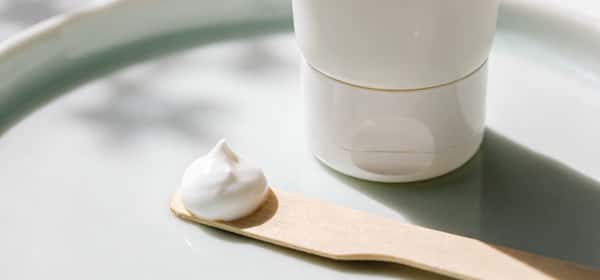
- Use a pea-sized amount for your whole face. That’s genuinely enough.
- Avoid the corners of the eyes, nostrils, and lip edges, where skin is thinnest and most reactive.
- Moisturize afterward to support your skin barrier.
Step 4: The sandwich method
If your skin is sensitive or the straight application stings, the sandwich method is the single best beginner trick. It buffers the retinol so it works more gently:
- Apply a thin layer of moisturizer to clean, dry skin.
- Apply your pea-sized retinol on top.
- Apply another layer of moisturizer to seal it in.
The moisturizer slows how fast the retinol penetrates, which cuts irritation without canceling the benefit. Ceramides in your moisturizer make this even more effective, and niacinamide layered in is calming. A simpler version — just moisturizer first, then retinol — is sometimes called “buffering” and works on the same principle.
Step 5: Wear sunscreen every morning
This isn’t a side note. Retinol makes skin more sensitive to the sun and breaks down in light, so it’s a nighttime-only ingredient, and daytime sun protection is part of the deal.1 Beyond preventing burns, sunscreen protects the collagen-rebuilding work retinol is doing overnight — unprotected UV exposure degrades collagen and undoes the gains.2 Get a broad-spectrum SPF you’ll actually wear daily; see best sunscreen ingredients and SPF explained.
Suggested read: Glycolic Acid: Benefits, Uses & How to Start
What the first three months feel like
Knowing the timeline keeps you from quitting:
- Weeks 1–4: likely dryness, flaking, maybe a few extra breakouts. This is the adjustment period (retinization), and it’s expected. Details in retinol side effects.
- Weeks 4–8: skin calms down and starts looking smoother and more even.
- Weeks 8–12: fine lines soften, tone evens out, texture improves.
- 6+ months: the deeper collagen benefits accumulate.
Retinol works by speeding cell turnover and boosting collagen over time — it’s a long game, not a quick fix.3 If you quit during the rough early weeks, you never reach the part that’s worth it.
Building retinol into your existing routine
A common beginner worry is how retinol fits with everything else on the shelf. Keep it simple at the start. A workable evening routine looks like: gentle cleanse, let skin dry, retinol (or the sandwich version), then moisturizer. That’s it — you don’t need a six-step layering ritual for retinol to work, and fewer products means fewer things irritating your skin while it adjusts.
The actives to be careful with are the other strong ones. Exfoliating acids (glycolic, lactic, salicylic) and benzoyl peroxide all do real work but stack irritation when piled onto retinol in the same application. If you want to keep using them, put them on the nights you’re not using retinol. Hydrating and soothing ingredients are different — niacinamide, ceramides, hyaluronic acid, and a plain moisturizer all play nicely with retinol and actually make it easier to tolerate.
In the morning, the routine is short and non-negotiable: cleanse if you like, moisturize, sunscreen. The sunscreen is the part that protects the work retinol is doing overnight, so it’s the one step you can’t skip.
Suggested read: Azelaic Acid: For Acne, Rosacea & Dark Spots
How to tell if it’s working
Because retinol is slow, it’s easy to feel like nothing is happening. A few honest markers that it’s doing its job: skin texture feels smoother to the touch before it looks obviously different; makeup sits better; tone looks slightly more even in photos over months rather than days. Taking a plain, well-lit photo at the start and again at 12 weeks is more reliable than your day-to-day memory, which adjusts too gradually to notice. What you should not expect is a dramatic overnight change — that’s not how the ingredient works.
Common beginner mistakes
- Going too strong, too fast. The fastest route to quitting.
- Using too much product. More than a pea-sized amount just increases irritation.
- Stacking actives. Don’t layer strong exfoliating acids or benzoyl peroxide in the same routine while starting out.
- Skipping moisturizer or SPF. Both are load-bearing, not optional.
- Expecting overnight results. Judge it at 8–12 weeks, not 8–12 days.
Who should hold off
Retinol isn’t the right starting point for everyone. If your barrier is already inflamed, fix that first — see damaged skin barrier. If you have rosacea or very reactive skin, start at the lowest strength and frequency, or look at gentler retinol alternatives such as bakuchiol or azelaic acid. And if you’re pregnant or breastfeeding, skip retinol entirely — dermatology guidance is that retinoids should not be used during pregnancy.1 This is general information, not medical advice; a dermatologist can tailor a plan to your skin.
Bottom line
Starting retinol the right way is mostly about restraint. Pick a low strength (0.25%–0.5%), begin once or twice a week, apply a pea-sized amount to dry skin at night, and ramp up only as your skin tolerates it.1 Use the sandwich method to buffer irritation, keep your barrier healthy, and wear daily SPF to protect the collagen work happening overnight.2 Expect an early adjustment phase of dryness and flaking, and judge results at 8–12 weeks rather than days.3 Slow and steady genuinely wins here — and if you’re pregnant or your skin stays irritated, hold off and reconsider.
American Academy of Dermatology. Retinoid or retinol? aad.org. Link ↩︎ ↩︎ ↩︎ ↩︎
Yaar M, Gilchrest BA. Photoageing: mechanism, prevention and therapy. Br J Dermatol. 2007;157(5):874-887. PubMed | DOI ↩︎ ↩︎
Kang S. The mechanism of action of topical retinoids. Cutis. 2005;75(2 Suppl):10-13. PubMed ↩︎ ↩︎