Walk into any pharmacy and you’ll see a wall of prenatal vitamins, each one claiming to be the most comprehensive, the most absorbable, the most fertility-supporting. Most of them contain the same core ingredients at similar doses. A few differ in ways that genuinely matter. Knowing which is which saves money and matters more than the brand on the bottle.
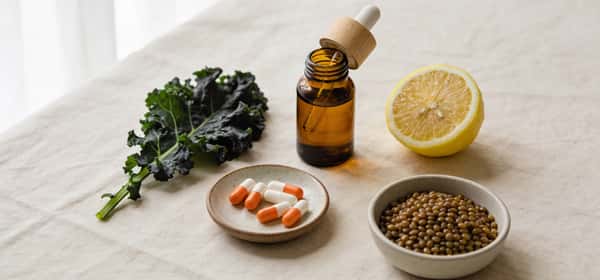
This guide covers what’s actually inside a good prenatal vitamin, why some ingredients are non-negotiable, when to start taking one, and how to read a label without getting lost in the marketing.
Quick answer
A good prenatal vitamin should contain, at minimum:
Choose your goal and get a meal plan that's right for your pregnancy.
Powered by DietGenie Eat healthy
 Lose weight
 Gain muscles
 Explore new cuisines
- Folate (as L-methylfolate or folic acid): 400–800 mcg
- Iron: 27 mg (the RDA for pregnancy)
- Iodine: 150 mcg
- Vitamin D: 600–1,000 IU
- Choline: 450 mg (often missing — check)
- DHA (omega-3): 200–300 mg
- B12: 2.6 mcg (more if you’re vegetarian/vegan)
- Calcium: 200–300 mg (intentionally low — the rest from food)
When to start: Ideally 3 months before trying to conceive, definitely as soon as you know you’re pregnant. The first 28 days after conception are when neural tube development happens — folate has to be in place before you know you’re pregnant for full protection.
Why prenatal vitamins matter
The case for prenatal supplementation rests on one large piece of evidence and a stack of smaller ones.
The big one: Folic acid supplementation in the periconceptional period reduces neural tube defects (NTDs) — conditions like spina bifida and anencephaly — by 50–70%. A 2023 systematic review published in JAMA, supporting the US Preventive Services Task Force’s grade-A recommendation, confirmed that folic acid supplementation taken before and during pregnancy significantly reduces NTD risk (adjusted relative risk 0.49–0.62 across studies).1
The newer signal: A 2019 meta-analysis of 9 studies and 231,163 children found that maternal multivitamin supplementation during the prenatal period was associated with a 38% lower risk of autism spectrum disorder (RR 0.62, 95% CI 0.45–0.86) in children.2 The mechanism isn’t fully clear, but the association is robust across studies.
These two findings alone make prenatal supplementation worthwhile. Everything else is incremental.

When to start
Most pregnancies are diagnosed at 4–6 weeks after the last period — which is roughly 2–4 weeks after conception. By that point, the neural tube has already closed (it closes by day 28 post-conception). If you start folic acid only after a positive pregnancy test, you’ve potentially missed the most important window for it.
Practical recommendations:
- Trying to conceive: Start 3 months before active trying. This gives you a folate buffer plus time for iron, B12, and other key nutrients to reach steady state.
- Not actively trying but possibly pregnant in next 6–12 months: Take a daily prenatal. The downside is minimal; the upside is full protection if conception happens earlier than planned.
- Confirmed pregnancy: Start immediately if you haven’t already.
- Breastfeeding: Continue throughout — nutrient demands are still elevated.
This is why some doctors say “if you’re sexually active and not using reliable contraception, taking a daily prenatal makes sense.” It’s not paranoia — it’s basic neural tube biology.
What to look for: the non-negotiables
Folate (400–800 mcg)
The single most evidence-backed ingredient. Two forms:
- Folic acid — synthetic form, very well studied, extremely effective for NTD prevention
- L-methylfolate (5-MTHF) — the bioactive form, useful if you have MTHFR gene variants that reduce folic acid conversion (10–15% of people have a relevant variant)
Either form works for most women. If you’ve had multiple miscarriages or a child with a neural tube defect, ask about higher doses (typically 4 mg/day, prescription only). For more on the difference, see folate vs folic acid.
Suggested read: Iron Supplements for Women: Forms, Dose, and Side Effects
Iron (27 mg)
Pregnancy iron requirements roughly double — blood volume increases ~45% and the placenta and fetus need iron. The pregnancy RDA is 27 mg/day, almost twice the non-pregnancy 18 mg.
Iron in prenatals is usually ferrous sulfate, ferrous fumarate, or ferrous bisglycinate. Bisglycinate tends to cause less constipation and stomach upset — worth the slightly higher cost if you’re sensitive.
Check ferritin (your iron stores) before pregnancy if you can. Heavy periods often leave women with low ferritin entering pregnancy, which is hard to correct quickly once you’re pregnant. See iron deficiency symptoms, high-iron foods, and ways to increase iron absorption.
Iodine (150 mcg)
Critical for fetal thyroid and brain development. Iodine deficiency in early pregnancy is associated with reduced IQ in offspring. About one-third of US women of childbearing age have insufficient iodine intake.
Check the label — some prenatals omit iodine, which is a real gap. The American Thyroid Association recommends 150 mcg daily from pregnancy through breastfeeding.
Vitamin D (600–1,000 IU)
Vitamin D supports fetal bone development and may reduce risk of preeclampsia and gestational diabetes. The IOM recommends 600 IU/day for pregnant women; many obstetricians push for 1,000–2,000 IU to compensate for widespread deficiency.
If you live above 40°N latitude, work indoors, or have darker skin, get vitamin D tested — supplementation amounts often need to be higher than what’s in a standard prenatal.
Choline (450 mg)
The most underappreciated nutrient in prenatal nutrition. Choline supports fetal brain development, particularly the hippocampus. The American Medical Association in 2017 specifically recommended that prenatal vitamins contain choline — but most still don’t.
If your prenatal doesn’t contain choline (check the label), get it from food: 2 eggs/day delivers ~300 mg, beef liver delivers ~350 mg per 3 oz serving, soybeans and chicken also contribute.
Suggested read: Postpartum Nutrition: What to Eat to Heal After Birth
DHA / omega-3 (200–300 mg)
DHA supports fetal brain and eye development. Many prenatals don’t include DHA — you can buy a separate algal or fish oil DHA supplement. The standard recommendation is at least 200 mg/day during pregnancy, ideally from a low-mercury source. See omega-3 for fertility and pregnancy for more.
B12 (2.6 mcg)
Critical for neural development and red blood cell formation. Vegetarians and vegans need higher doses — typically a separate B12 supplement plus the amount in a prenatal, since plant-based diets are the primary B12 deficiency risk.
Calcium (intentionally low: 200–300 mg)
Counterintuitive but correct: prenatals usually contain less than the pregnancy RDA of 1,000 mg calcium because:
- Calcium interferes with iron absorption — high calcium in the same pill reduces iron uptake
- Most women can hit 800+ mg from food (dairy, leafy greens, fortified plant milk)
See calcium-rich foods if you’re not sure you’re getting enough from diet.
What to look out for (red flags)
- No iodine listed — gap; either pick a different prenatal or add iodine separately
- No choline — gap; add eggs to your diet or supplement separately
- Vitamin A as retinol > 5,000 IU — too much preformed vitamin A is teratogenic. Beta-carotene is fine in any amount.
- Massive doses of “extras” — high-dose B6, B12, or other vitamins beyond the RDA add cost without proven benefit
- “Whole food” or “raw” marketing without ingredient detail — if the label doesn’t tell you milligrams of each nutrient, you don’t know what you’re getting
- Single doses with too much in one pill — prenatals split across 2–3 pills/day often deliver better absorption and gentler GI effects
Common myths
“You need a ’natural’ prenatal.” Synthetic folic acid is one of the best-studied nutrients in medicine. “Natural” isn’t a regulatory category — it’s marketing. The form (methylfolate vs folic acid) matters more than the source.
“More is better.” It isn’t. Megadose vitamins increase side effects without benefit. Most prenatals hit doses based on actual research — going higher rarely helps.
“Gummies are fine.” Most prenatal gummies skip iron (it tastes bad and oxidizes in a gummy) and often have lower doses of folate. Pills are usually better for actual nutrient delivery; gummies are a fallback if you can’t tolerate pills.
“If I eat a perfect diet, I don’t need a prenatal.” Not really. Folic acid intake from food alone rarely hits the 400 mcg threshold consistently, and pregnancy iron and iodine requirements are difficult to meet from food in the typical Western diet. Even people eating very well benefit from supplementation.
Suggested read: Iron Deficiency in Women: Causes, Diagnosis, Treatment
Side effects and what to do about them
The most common complaints:
- Nausea — switch to taking it with food, or at night before bed
- Constipation — almost always from iron. Try iron bisglycinate, split the dose, drink more water, eat more fiber, or try a non-iron prenatal + separate iron supplement
- Heartburn — large pills are sometimes the trigger; switch to smaller pills or a 2–3 pill split format
- Dark stools — normal with iron; not a problem
What about pre-pregnancy fertility-specific support?
The same prenatal vitamin works for the preconception phase. The dietary picture for fertility is broader — see the preconception fertility diet for what the research supports beyond supplements. Specific compounds like CoQ10 for fertility and omega-3 for fertility have their own evidence base. For specifically increasing your chances of conception with broader lifestyle factors, 16 natural ways to boost fertility covers the field.
For women not actively planning but possibly pregnant in the near future, supplements during pregnancy covers what’s safe versus what to avoid once pregnancy is confirmed.
Bottom line
A good prenatal vitamin contains 400–800 mcg of folate, 27 mg iron, 150 mcg iodine, 600–1,000 IU vitamin D, 450 mg choline, 200–300 mg DHA, and adequate B12. Start three months before trying to conceive — neural tube closure happens before most women know they’re pregnant. Skip the marketing extras and check the label for the gaps (especially choline and iodine). If you’ve had previous pregnancy losses or NTD-affected pregnancies, talk to a doctor about higher-dose folate. Otherwise, almost any pharmacy prenatal that hits the basics works fine.
Viswanathan M, Urrutia RP, Hudson KN, Middleton JC, Kahwati LC. Folic Acid Supplementation to Prevent Neural Tube Defects: Updated Evidence Report and Systematic Review for the US Preventive Services Task Force. JAMA. 2023;330(5):460-466. PubMed | DOI ↩︎
Guo BQ, Li HB, Zhai DS, Ding SB. Maternal multivitamin supplementation is associated with a reduced risk of autism spectrum disorder in children: a systematic review and meta-analysis. Nutrition Research. 2019;65:4-16. PubMed | DOI ↩︎