A long beach day leaves your skin dealing with a lot at once: salt drying it out, sand scuffing the surface, sunscreen and sweat sitting on top, and UV inflaming everything underneath. No wonder it feels tight, rough, and a little angry by evening. Good post-beach skincare is really just three moves — cleanse, rehydrate, soothe — done in the right order. Here’s the simple reset that gets your skin back to comfortable.
Quick answer
- Step 1 — Cleanse: rinse off salt, sand, and chlorine, then use a gentle cleanser to lift away sunscreen and sweat.
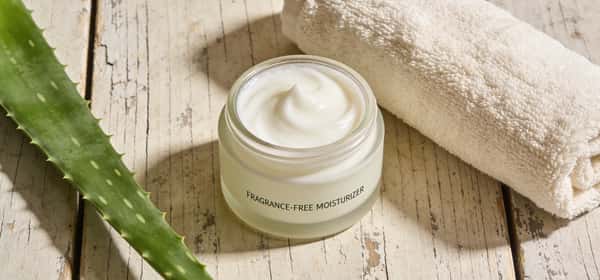
- Step 2 — Rehydrate the barrier: moisturize on damp skin with ceramides, glycerin, and other barrier-repair ingredients to replace lost lipids and water.
- Step 3 — Soothe sun exposure: cool, hydrating after-sun care for any pink or warm areas; act fast on sunburn.
- The principle: the beach strips and inflames your skin — your job afterward is to clean it gently and put moisture and lipids back before it dries out.
Why your skin needs a reset after the beach
A few things gang up on your skin at the beach:
- Salt water dries crystals onto the skin that pull moisture out as they dry.
- Sand abrades the surface, roughing up the outer layer (more in sand and skin).
- Sun drives inflammation and water loss; UV is the core driver of sunburn, photoaging, and longer-term skin damage.1
- Sunscreen, sweat, and chlorine (if you also hit the pool — see chlorine and skin) leave residue that’s worth washing off.
Underneath all of it, your stratum corneum — the brick-and-mortar barrier of cells and lipids — keeps water in and irritants out, and dryness goes hand in hand with that barrier being disrupted.2 Post-beach care is about restoring that barrier, not stripping it further.
Glow starts with what you eat. Choose your goal and get your plan.
Powered by DietGenie Eat healthy
 Lose weight
 Gain muscles
 Explore new cuisines
Step 1: Cleanse without stripping
You want the salt, sand, sunscreen, and sweat gone, but you don’t want to scour your skin raw.
- Rinse first with fresh water. A cool-to-lukewarm shower carries off most of the loose sand, salt, and chlorine. The sooner after the beach, the better.
- Use a gentle, fragrance-free cleanser. This lifts the leftover sunscreen and sweat that a plain rinse leaves behind. Skip harsh, foaming, “squeaky-clean” soaps — they strip more oil from skin that’s already short on it.
- Lukewarm, not hot. Hot water feels great on tired skin but pulls out even more oil.
- Pat dry, don’t rub. Rubbing drags any leftover grit across already-roughed-up skin.
Step 2: Rehydrate the barrier
This is the step most people skip, and it’s the one that matters most. Apply moisturizer within about three minutes of patting dry, while skin is still slightly damp, so you trap water against it instead of letting it evaporate.
Reach for barrier-repair ingredients. Moisturizers built around physiological lipids and functional ingredients are specifically designed to restore barrier function and treat the dry, irritated skin a beach day creates.3 The workhorses:
| Ingredient | What it does |
|---|---|
| Ceramides | Replace the exact lipids that salt and sun strip — see ceramides |
| Glycerin / hyaluronic acid | Pull water back into the outer layer |
| Petrolatum | Has an immediate barrier-repairing effect on stripped skin2 |
| Niacinamide | Supports the barrier and calms redness — see niacinamide benefits |
A ceramide-containing lipid mixture has been shown to improve barrier disorders and reduce water loss through the skin, which is exactly what you’re countering after sun and salt.2 Go richer on the driest spots — shins, forearms, hands — and don’t forget your lips. If your barrier already took a beating, damaged skin barrier covers how to nurse it back.
Step 3: Soothe sun-exposed skin
Even with diligent sunscreen, skin that’s spent hours outdoors benefits from cooling, hydrating after-sun care. For any areas that look pink or feel warm:
- Cool it down. A cool (not ice-cold) shower or a cool damp cloth eases the heat.
- Hydrate generously. A light, fragrance-free after-sun lotion or gel — aloe-based ones feel soothing — adds moisture to inflamed skin.
- Layer a barrier cream on top to lock that moisture in.
- Drink water. Sun and heat dehydrate you from the inside; rehydrating supports your skin too. On hot, sweaty days, replace electrolytes as well — see electrolytes for sweating and hydration during exercise.
If it’s an actual sunburn
For genuine sunburn — red, hot, tender, maybe a little swollen — care is supportive: cool compresses, gentle moisturizer, plenty of fluids, and an over-the-counter pain reliever if needed. Don’t pop any blisters, don’t use harsh products on burned skin, and stay covered until it heals.
The honest reminder: after-sun care soothes damage that’s already done. The real protection is sunscreen and shade before and during the day. No supplement or lotion replaces it — see do supplements replace sunscreen, and for choosing one, mineral vs chemical sunscreen.
Suggested read: Skin Barrier: What It Is and How to Protect It
Do and don’t
Do
- Rinse and cleanse soon after leaving the beach
- Moisturize on damp skin with barrier-repair ingredients
- Cool and hydrate any sun-exposed areas
- Drink water and replace salts on hot, sweaty days
- Reapply lip balm and care for hands and feet, which dry out most
Don’t
- Scrub or exfoliate the same day you got sun and sand
- Take long, hot showers afterward
- Pick at peeling or blistered skin
- Treat after-sun care as a substitute for sunscreen
- Ignore a burn that blisters widely or comes with fever and chills
When to see a doctor
Get medical attention for:
- Severe sunburn with extensive blistering, fever, chills, nausea, or faintness (possible sun poisoning)
- Signs of skin infection — increasing redness, warmth, swelling, pus, or red streaks
- A rash or hives that flare after sun or products and won’t settle
- Any new, changing, or non-healing spot on sun-exposed skin, which deserves a dermatologist’s look given UV’s long-term role in skin cancer1
Bottom line
Post-beach skincare is a three-step reset: cleanse off the salt, sand, sunscreen, and chlorine without stripping your skin; rehydrate the barrier on damp skin with ceramides, glycerin, and petrolatum; and soothe any sun-exposed areas with cool, hydrating after-sun care. The throughline is that a beach day strips and inflames your skin, and your job afterward is to clean gently and put moisture and lipids back before it dries out. Keep your sun protection up front, where it actually prevents damage. For the rest of the cluster, see chlorine and skin, sand and skin, and best sunscreen ingredients.
Abdel Azim S, Bainvoll L, Vecerek N, DeLeo VA, Adler BL. Sunscreens part 1: Mechanisms and efficacy. J Am Acad Dermatol. 2025;92(4):677-686. PubMed | DOI ↩︎ ↩︎
Lodén M. Role of topical emollients and moisturizers in the treatment of dry skin barrier disorders. Am J Clin Dermatol. 2003;4(11):771-788. PubMed | DOI ↩︎ ↩︎ ↩︎
Madnani N, Deo J, Dalal K, et al. Revitalizing the skin: Exploring the role of barrier repair moisturizers. J Cosmet Dermatol. 2024;23(5):1533-1540. PubMed | DOI ↩︎