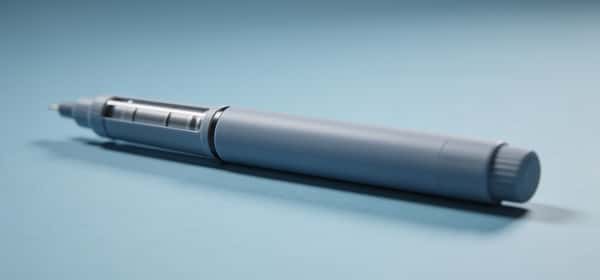
You’ve seen both names everywhere, and you’ve probably heard them used like they’re the same thing. They’re not. Ozempic and Mounjaro are two different drugs, made by two different companies, that happen to work in overlapping ways. If you’re trying to figure out which one your doctor might bring up, the differences actually matter.

This is educational information, not medical advice. GLP-1 and GLP-1/GIP medicines — including semaglutide (Ozempic, Wegovy, Rybelsus), tirzepatide (Mounjaro, Zepbound), liraglutide (Saxenda, Victoza), and dulaglutide (Trulicity) — are prescription-only and must be prescribed and supervised by a licensed clinician. Versions sold online as “research use only” are not FDA-approved for human use. Never start, change, or stop a dose on your own, and never source or self-inject these drugs outside of legitimate medical care. Talk to your doctor or pharmacist first, especially if you take other medications, could become pregnant, or have a health condition.
Quick answer: Ozempic is semaglutide, made by Novo Nordisk. Mounjaro is tirzepatide, made by Eli Lilly. Both are weekly injections approved for type 2 diabetes, and both cause meaningful weight loss as a side effect. The big mechanical difference: Ozempic works on one hormone pathway (GLP-1), while Mounjaro works on two (GLP-1 and GIP). In head-to-head and separate trials, tirzepatide tends to come out ahead on both blood sugar and weight — but that doesn’t automatically make it the right pick for any given person.
Choose your goal and get a meal plan that makes losing weight simpler.
Powered by DietGenie Lose weight
 Gain muscles
 Eat healthy
 Explore new cuisines
They’re different molecules, not different brands of the same thing
This trips people up constantly, so it’s worth being precise. Ozempic and Mounjaro aren’t the same drug with different logos. They contain entirely different active ingredients.
Ozempic is the brand name for semaglutide, which mimics a single gut hormone called GLP-1. GLP-1 nudges your body to release insulin when blood sugar rises, slows how fast your stomach empties, and dials down appetite signals in the brain. Semaglutide does all of that, just longer-lasting than the natural hormone, which is why one injection covers a full week.
Mounjaro is tirzepatide, and it does something semaglutide can’t: it activates two receptors at once. It hits the same GLP-1 pathway, plus a second hormone pathway called GIP. The thinking is that pairing the two produces a bigger effect on appetite and blood sugar than GLP-1 alone. Whether that dual action is the whole story is still being studied, but the dual mechanism is the headline difference between these two drugs. If you want to go deeper on the molecules themselves, we break that down in semaglutide vs tirzepatide.
One more thing that confuses people: both of these are technically diabetes drugs. The dedicated weight-loss versions of the exact same molecules go by different names. Wegovy is semaglutide approved for weight management, and Zepbound is tirzepatide approved for weight management. Same active ingredients, different labels and dosing. We cover those splits in Ozempic vs Wegovy and Mounjaro vs Zepbound.
The side-by-side
Here’s the quick comparison if you just want the shape of it.
| Ozempic | Mounjaro | |
|---|---|---|
| Active ingredient | Semaglutide | Tirzepatide |
| Maker | Novo Nordisk | Eli Lilly |
| How it works | GLP-1 receptor agonist (single pathway) | GLP-1 + GIP receptor agonist (dual pathway) |
| FDA-approved for | Type 2 diabetes | Type 2 diabetes |
| Form | Weekly self-injection | Weekly self-injection |
| Dose range | Up to 2.0 mg per week | 2.5 mg starter, up to 15 mg per week |
| Weight-loss sibling | Wegovy | Zepbound |
| Typical side effects | Mostly GI (nausea, etc.) | Mostly GI (nausea, etc.) |
A couple of notes on the table. The dosing numbers aren’t directly comparable — 2.0 mg of semaglutide and 15 mg of tirzepatide aren’t measuring the same thing, since these are different molecules with different potencies. Both drugs also start low and step up gradually over weeks or months, which is the part that actually matters for how you feel. More on Mounjaro’s specific ramp in tirzepatide dosage.
Suggested read: Saxenda (Liraglutide): How the Daily Shot Works
Weight loss: tirzepatide tends to win
This is the question most people actually care about, so let’s be honest about what the data shows and what it doesn’t.
There’s a real head-to-head trial here, which is rare and useful. In SURPASS-2, researchers put tirzepatide directly against semaglutide 1 mg in people with type 2 diabetes. All three tirzepatide doses beat semaglutide on both blood sugar control and weight loss.1 That’s about as clean a comparison as you get in this space, and tirzepatide came out on top.
When you look at the dedicated weight-loss trials, the gap shows up again, though you have to read it carefully. Tirzepatide produced around 20.9% average body-weight loss over 72 weeks in the SURMOUNT-1 obesity trial.2 Semaglutide 2.4 mg produced around 14.9% over 68 weeks in the STEP 1 trial.3 Those are two separate studies with different participants, different durations, and different doses — so you can’t subtract one number from the other and call it the exact difference. The honest read is “tirzepatide tends to lose more weight on average,” not “tirzepatide beats semaglutide by exactly six points.”
Worth saying plainly: averages aren’t promises. Some people on semaglutide lose more than the tirzepatide average, and plenty of people on either drug land well below the headline figures. The numbers also come from trials where the medication sat on top of diet and activity changes, not in place of them. If you want the bigger picture on how these drugs fit into actual weight management, we wrote about that in GLP-1 for weight loss.
Here’s a rough projection of how weight loss can play out over time on a GLP-1 medication:
GLP-1 Weight Loss Projection
Side effects feel about the same
If you were hoping one of these drugs comes with an easy ride and the other doesn’t, that’s not really how it shakes out. The side-effect profiles are broadly similar, and they’re driven by the same GLP-1 mechanism both drugs share.
The common complaints are gastrointestinal: nausea, vomiting, diarrhea, constipation, and that “too full, slightly queasy” feeling. For most people these show up at the start and flare again each time the dose steps up, then tend to settle as the body adjusts.4 That’s exactly why both drugs ramp slowly instead of starting at a full dose — going too fast is what turns manageable nausea into a miserable week.
Because tirzepatide tends to drive a larger overall effect, some people reasonably wonder whether it brings more side effects too. In practice the tolerability is in the same ballpark for most people, and the worst of it lands at the same moments — the first few weeks and each dose increase.4 How any individual reacts varies a lot, which is part of why a clinician supervises the whole thing rather than handing you a fixed schedule.
There are also rarer but more serious considerations with this whole drug class — things like pancreatitis risk, gallbladder issues, and specific personal or family medical history that can rule a drug out entirely. None of that is something to sort out from a blog post. It’s a conversation with the person writing the prescription.
Suggested read: Rybelsus: Oral Semaglutide Pill Explained
Cost, access, and switching
Price and availability often end up mattering as much as the clinical differences, and they’re frustratingly hard to pin down because they depend on your insurance, your location, manufacturer programs, and whatever supply situation exists at the moment.
A few things that are generally true. Both drugs carry high list prices in the US, and what you actually pay swings enormously based on coverage. Insurance is far more likely to cover these for type 2 diabetes than for weight loss alone, which is one reason the diabetes-branded Ozempic and Mounjaro get used the way they do. Both manufacturers run savings programs, but eligibility is narrow and changes often, so anything specific you read could be out of date by the time you act on it. Check current details directly with the manufacturer and your pharmacy rather than trusting a number you saw somewhere.
People also switch between these drugs — usually because of side effects, cost changes, supply gaps, or a weight-loss plateau. That’s a real and common path, but it’s not a casual swap. The doses don’t translate one-to-one, and you generally restart the ramp rather than matching your old level. We walk through what that move actually involves in switching from Ozempic to Mounjaro. The short version: it’s a clinician-guided decision, not a DIY one.
Suggested read: Liraglutide vs Semaglutide: Daily vs Weekly GLP-1
So which should you ask about?
If you boil it down, tirzepatide has the stronger weight and blood-sugar data, and that’s a fair reason to bring up Mounjaro with your doctor. But “stronger on average in trials” is only one input. The right choice for you depends on what you’re treating, what your insurance will actually cover, how your body tolerates each one, your medical history, and which drug you can reliably get.
Plenty of people do great on semaglutide. Plenty do better on tirzepatide. The only way to know is to start the conversation with someone who can see your full picture — and then go slow, with supervision, from there.
Bottom line
Ozempic is semaglutide and Mounjaro is tirzepatide — different molecules, different makers, both weekly injections approved for type 2 diabetes that also drive weight loss. The core mechanical split is single-pathway (GLP-1) versus dual-pathway (GLP-1 plus GIP). Across head-to-head and separate trials, tirzepatide tends to come out ahead on both weight and blood sugar, while side effects look broadly similar and hit hardest at the start and at each dose increase. Which one fits you isn’t something to settle from an article — it’s a decision to make with a clinician who knows your history, your coverage, and your goals.
Frias JP, et al. Tirzepatide versus Semaglutide Once Weekly in Patients with Type 2 Diabetes. N Engl J Med. 2021;385(6):503-515. PubMed ↩︎
Jastreboff AM, et al. Tirzepatide Once Weekly for the Treatment of Obesity. N Engl J Med. 2022;387(3):205-216. PubMed ↩︎
Wilding JPH, et al. Once-Weekly Semaglutide in Adults with Overweight or Obesity. N Engl J Med. 2021;384(11):989-1002. PubMed ↩︎
Ghusn W, Hurtado MD. Glucagon-like Receptor-1 agonists for obesity: Weight loss outcomes, tolerability, side effects, and risks. Obes Pillars. 2024;12:100127. PubMed ↩︎ ↩︎