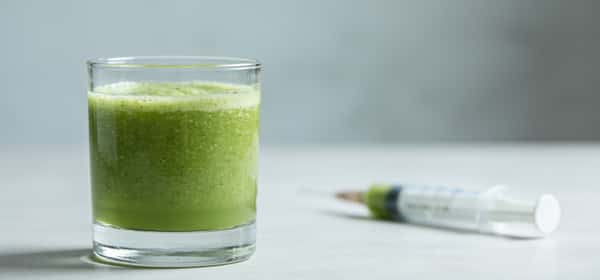
Every week there’s a new “natural Ozempic” drink going viral — blended oats, chia in water, vinegar shots, green smoothies promising to crush your appetite. Some are genuinely useful, some are harmless, and a few are just flavored water with a great marketing team. Rather than chase each new recipe, it helps to understand the one mechanism nearly all of them share, then judge each on its merits. Here’s an honest rundown of the most popular natural Ozempic drinks.
Quick answer: Almost every “natural Ozempic” drink works through the same basic mechanism: soluble fiber that expands in your stomach to make you feel full, plus swapping in a low-calorie drink for higher-calorie food. That can modestly curb appetite and help you eat less — but none of them mimic the drug. The most legit options are fiber-based (oatzempic, chia water, psyllium drinks); others like apple cider vinegar have only minor effects. Treat them as small, optional tools, not weight-loss solutions. For the full picture, see natural Ozempic.
The one thing they (mostly) have in common
Before the rundown, here’s the pattern: the drinks that actually do anything do it through fiber and fullness, not anything drug-like.
Choose your goal and get a meal plan that makes losing weight simpler.
Powered by DietGenie Lose weight
 Gain muscles
 Eat healthy
 Explore new cuisines
Viscous, soluble fiber absorbs water and swells in your stomach, slowing digestion and triggering satiety signals — research on viscous fiber shows it can cut between-meal calorie intake by around 20%.1 Add the fact that a glass of fiber-and-water is low in calories, and the result is simple: you feel fuller and eat less. That’s the genuine, if gentle, benefit. Anything claiming more than that is overselling.
Oatzempic (oat + lime)
The most famous one: blended oats, water, and lime. The oats provide beta-glucan, a soluble fiber that fills you up, and the drink is low-calorie. It works the way any fiber drink works — modest appetite control — and the dramatic results people report come from using it to replace meals and slash calories, not from magic. A reasonable filling snack; not a miracle. Full breakdown in oatzempic.
Chia water (“internal shower”)
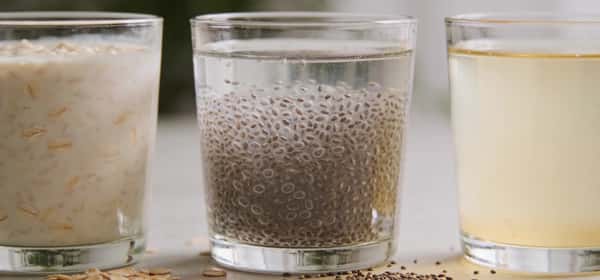
Chia seeds soaked in water with lemon. Chia is loaded with soluble fiber and swells into a gel that expands in your stomach, which can genuinely promote fullness and help with regularity. It’s one of the more legitimate options mechanically — it’s basically a fiber delivery system. Just ramp up slowly (chia absorbs a lot of water) and drink enough fluids. More on the seed itself in chia seeds.
Apple cider vinegar drinks
A tablespoon of ACV in water, often before meals. ACV has a small body of research suggesting minor effects on appetite and blood sugar, but the effect is modest and easy to overstate, and acidic vinegar drinks can bother your teeth and stomach. It’s the weakest “real mechanism” of the bunch — fine if you like it, not worth forcing down. See apple cider vinegar for weight loss for the honest detail.
Psyllium and glucomannan drinks
Stirring a viscous fiber supplement (psyllium husk or glucomannan) into water. These are arguably the most potent fiber drinks for fullness, because they’re extremely viscous — glucomannan in particular expands dramatically. They have the clearest appetite-suppressing mechanism of any drink here. The catch: they must be taken with plenty of water (they can be a choking/obstruction risk if not), and they can cause bloating. See glucomannan.
Green tea and lemon water
Often lumped in, these are the weakest. Green tea has a tiny effect on metabolism from caffeine and catechins; lemon water is just water (which itself can help fullness and hydration). Neither meaningfully curbs appetite. Harmless and healthy, but not “natural Ozempic” in any real sense.
The drinks, rated honestly
| Drink | Real mechanism | Verdict |
|---|---|---|
| Oatzempic (oats + lime) | Beta-glucan fiber + low calories | Modest, legit |
| Chia water | Soluble fiber gel, expands in stomach | Modest, legit |
| Psyllium / glucomannan | Very viscous fiber, strong fullness | Most potent fiber option (use with water) |
| Apple cider vinegar | Minor appetite/blood-sugar effect | Weak, optional |
| Green tea / lemon water | Tiny metabolic effect / hydration | Minimal |
How to use them sensibly
- Pick one fiber-based drink you actually enjoy, rather than rotating through every trend.
- Use it before or with a meal, or as a snack — not as a meal replacement.
- Always with enough water, especially with psyllium or glucomannan.
- Add protein elsewhere. Drinks skew toward fiber; protein is just as important for fullness, so make sure your meals deliver it. See foods that mimic Ozempic.
- Ramp fiber up slowly to avoid bloating and gas.
For more weight-loss beverage options beyond this trend, see weight loss drinks.
How to build a better “natural Ozempic” drink
If you want to actually maximize the fullness effect rather than follow a viral recipe, build your drink on these principles:
- Lead with viscous fiber. Chia, psyllium, or oats provide the stomach-filling gel that does the real work.
- Add protein. This is the big upgrade most viral drinks miss. Blending in Greek yogurt or a scoop of protein powder makes the drink far more satisfying, since protein is even more filling than fiber.
- Keep it low in added sugar. A drink loaded with juice or honey undoes the calorie advantage.
- Use enough water. Fiber needs water to expand and to move through you comfortably.
- Have it before a meal, not instead of one, so it takes the edge off your appetite without leaving you undernourished.
A chia-and-Greek-yogurt blend, for example, beats plain oatzempic on both fullness and nutrition — same idea, better execution.
Don’t forget the simplest “drink”
Plain water deserves a mention, because it’s genuinely underrated for appetite. Drinking a glass of water before meals can take the edge off hunger and helps people eat a bit less, and mild dehydration is sometimes mistaken for hunger. It’s free, side-effect-free, and a sensible habit to pair with any of the above — no viral name required.
Suggested read: Oatzempic: Does the Viral Oat Drink Actually Work?
The bottom line
“Natural Ozempic” drinks are, almost without exception, fiber-and-fullness tricks dressed up in viral names. The fiber-based ones — oatzempic, chia water, and especially psyllium or glucomannan — genuinely expand in your stomach and help you feel full on fewer calories, which can modestly support eating less. Apple cider vinegar is weaker, and green tea or lemon water barely register.
None of them mimic the medication; they help by gently nudging your appetite and swapping a low-calorie drink for higher-calorie food. Pick one you like, take it with plenty of water, keep protein in your meals, and treat it as a small tool rather than the main event. The drink isn’t the strategy — your overall eating pattern is. If a particular drink makes it easier for you to stick to that pattern, it’s earning its place; if it’s just one more thing to choke down, you lose nothing by skipping it.