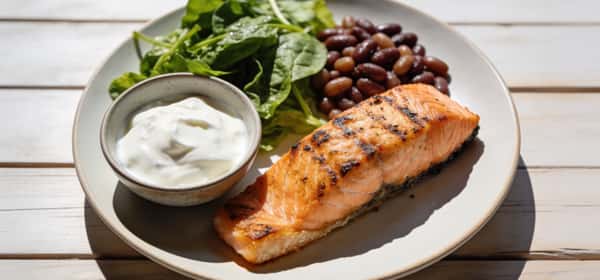
You’ve probably seen the ads: a powder or capsule promising “natural GLP-1” without a prescription. The hook makes sense, because GLP-1 is the gut hormone that tells your brain you’re full and slows your stomach down. The honest version of the story is more interesting than the marketing: you really can nudge your own GLP-1 up with food and a few habits, but the effect is a fraction of what the injectable drugs do. Here’s what actually moves the needle, what to skip, and how to eat for a steadier, fuller feeling.
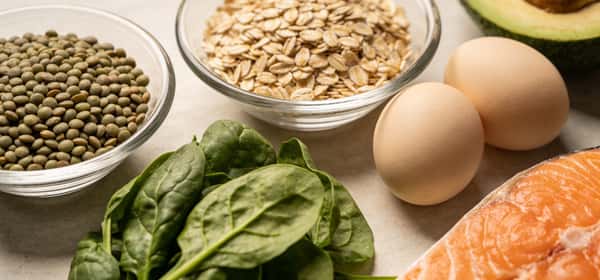
This is educational information, not medical advice. Semaglutide, tirzepatide, and similar GLP-1 drugs are prescription-only and must be supervised by a licensed prescriber who manages your dose and monitors you. Many “GLP-1 boosting” peptides and powders are sold “for research use only,” which means they are not FDA-approved for human use and are not quality-controlled. This article does not tell you how to obtain or inject any of them. Talk to your doctor or pharmacist before you start, change, or stop any medication or supplement, especially if you have diabetes, take blood-sugar drugs, or have a history of gut or thyroid disease.
The quick answer
You can raise your own GLP-1 naturally, and the levers are simple: eat protein and soluble fiber, add fermented foods, include some healthy fat, and put the vegetables and protein on your fork before the bread and rice. These are real, measurable effects in human studies. They are also modest. A meal-driven GLP-1 bump lasts a couple of hours and helps you feel satisfied; it does not reshape appetite the way a once-weekly injection does. Food-based GLP-1 is a genuine tool for steadier hunger and better blood sugar, not a needle-free Ozempic.
Choose your goal and get a meal plan that considers your blood sugar.
Powered by DietGenie Eat healthy
 Lose weight
 Gain muscles
 Explore new cuisines
What GLP-1 is and why food can move it
GLP-1 (glucagon-like peptide-1) is released by L-cells in your gut when food, especially protein, fat, and fermentable fiber, reaches the lower small intestine and colon. It does three useful things: it slows how fast your stomach empties, it nudges insulin out at the right moment, and it signals fullness in the brain.
Your body makes GLP-1 in short bursts after meals, then breaks it down within minutes. That fast breakdown is exactly why the drugs are engineered to resist it and last a week. So when a food “boosts GLP-1,” it’s triggering that natural post-meal burst more strongly, not creating a steady high level. If you want the deeper background on the hormone itself and the medications built around it, the overview in our GLP-1 for weight loss guide is a good companion to this one.
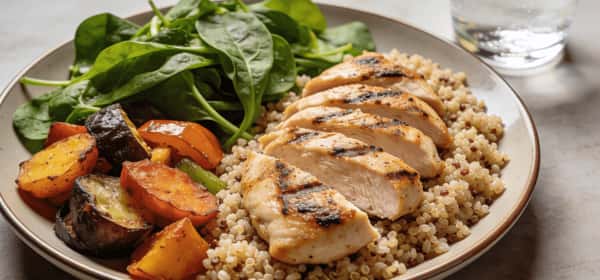
Protein: the strongest food lever
Protein is the most reliable natural trigger for GLP-1 release, and it stacks two appetite hormones at once (GLP-1 plus PYY). It also has the highest “thermic effect,” meaning you burn more digesting it than carbs or fat.
Practical targets:
- Aim for roughly 25 to 40 g of protein per meal, spread across the day rather than dumped into dinner.
- Front-load breakfast. A 30 g protein breakfast tends to blunt mid-morning cravings better than a carb-heavy one.
- Good sources: eggs, Greek yogurt, cottage cheese, fish, chicken, tofu, tempeh, lentils, and whey.
For a shopping list of the densest options, see high-protein foods. Protein also happens to be one of the most dependable natural appetite suppressants, which is a big part of why it works here.
Soluble fiber and fermented foods
Soluble and fermentable fiber feeds your gut bacteria, which produce short-chain fatty acids (mainly butyrate and propionate). Those compounds directly stimulate the L-cells to release more GLP-1, often hours after the meal. This is the slow-burn lever, and it’s where consistency beats intensity.
Best sources of fermentable, GLP-1-friendly fiber:
- Oats and barley (beta-glucan)
- Beans, lentils, and chickpeas
- Apples, citrus, and berries (pectin)
- Onions, garlic, leeks, asparagus (inulin)
- Psyllium husk, if you want a concentrated dose
Fermented foods such as yogurt, kefir, sauerkraut, kimchi, and miso add live bacteria that support the same SCFA-producing ecosystem. For a fuller breakdown of which foods carry the most fermentable fiber, see high-fiber foods, and for the blood-sugar angle there’s foods to lower blood sugar.
One practical note: ramp fiber up slowly and drink water. Going from 15 g to 40 g of fiber overnight is a recipe for bloating, which makes people quit before they see the benefit.
Suggested read: Retatrutide: The Triple Agonist Explained
Healthy fats and meal order
Fat, especially monounsaturated fat (olive oil, avocado, nuts) and the omega-3s in oily fish, triggers GLP-1 too, partly by slowing stomach emptying. You don’t need much; a tablespoon of olive oil on a salad or a small handful of nuts does the job. The goal is satiety, not a fat bomb, since fat is calorie-dense.
Meal order is the cheapest trick on this list. Eating vegetables and protein before the starchy carbs leads to a bigger GLP-1 response and a flatter blood-sugar curve from the same meal. In small human studies, this “veggies and protein first, carbs last” sequence lowered post-meal glucose noticeably. It costs nothing and changes nothing about what you eat, only the order. It also supports better insulin sensitivity over time.
Do “GLP-1 supplements” actually work?
This is where you should keep your hand on your wallet. The phrase “GLP-1 supplement” is doing a lot of marketing work for ingredients that, at best, mildly support natural GLP-1 release. None of them come close to a drug.
Here’s an honest read of the common ingredients:
| Ingredient / claim | What the evidence actually shows | Verdict |
|---|---|---|
| Berberine (“nature’s Ozempic”) | Modest blood-sugar and small weight effects in some trials; not a true GLP-1 drug, and GI side effects are common | Mildly helpful at best, overhyped name |
| Psyllium / glucomannan fiber | Real fiber, real satiety and SCFA support; this is just concentrated soluble fiber | Works as fiber, not magic |
| Probiotics / fermented blends | Can support SCFA production; effects are small and strain-dependent | Reasonable, modest |
| “GLP-1 activator” proprietary powders | Usually fiber + caffeine + minerals with no GLP-1-specific human data | Skip the hype |
| Research peptides sold online (e.g. unapproved GLP-1 analogs) | Not FDA-approved for human use, no quality control, real safety risk | Avoid |
A few honest takeaways. First, most “GLP-1 supplements” are repackaged soluble fiber, and you’d get the same effect (more cheaply and with food) from oats and beans. Second, berberine is the one with the most clinical interest, but calling it “nature’s Ozempic” oversells small effects and ignores its frequent stomach upset. Third, anything marketed as a research peptide GLP-1 analog sold without a prescription sits in a genuinely risky and unregulated category; you can read more about that grey zone in are peptides safe. Educational interest is fine; self-sourcing unapproved injectables is not something to do on your own.
Suggested read: Tirzepatide vs Semaglutide: Honest Comparison
Natural GLP-1 vs the drugs: the honest gap
To set expectations, it helps to see the two approaches side by side. The numbers below come from major obesity trials.
| Approach | Typical effect on body weight | How it works |
|---|---|---|
| Natural GLP-1 foods and habits | Modest; supports satiety and fewer calories over time | Stronger natural post-meal GLP-1 bursts |
| Semaglutide 2.4 mg (STEP 1) | About -14.9% at 68 weeks 1 | Long-acting GLP-1 receptor agonist |
| Tirzepatide (SURMOUNT-1) | -15% to -20.9% at 72 weeks by dose 2 | Dual GIP/GLP-1 receptor agonist |
That gap is the whole point. The drugs flood the GLP-1 receptor at levels food simply cannot reach, and in cardiovascular outcomes work that translated into roughly a 20% lower risk of major heart events in people with obesity 3. They also come with trade-offs: nausea and other GI side effects are the most common reason people stop 4, and rapid weight loss on these drugs carries some loss of lean muscle unless you eat enough protein and do resistance training 5. Natural strategies won’t match the scale, but they won’t nauseate you either, and the protein-and-strength habits that protect muscle on the drugs are good ideas for everyone.
A simple day of eating to raise GLP-1
You don’t need a complicated plan. A realistic day looks like this:
- Breakfast: Greek yogurt with berries and a tablespoon of chia or ground flax (protein + soluble fiber + fermented food).
- Lunch: A big salad with olive oil, plus chicken, salmon, or chickpeas, and eat the greens and protein before any bread.
- Snack: A small handful of almonds or an apple with peanut butter.
- Dinner: Vegetables and protein first, then a fist-sized portion of beans, lentils, or whole grains last.
- Daily: A serving of fermented food (kefir, sauerkraut, kimchi), and water alongside the fiber.
Walking for 10 to 15 minutes after meals helps the same goals by steadying blood sugar, even though it isn’t a direct GLP-1 trigger. And avoid the patch shortcuts you’ll see advertised; topical “GLP-1” products can’t deliver a peptide through skin in any meaningful amount, which is why GLP-1 patches don’t hold up to scrutiny.
Bottom line
Natural GLP-1 is real, useful, and free. Protein, soluble and fermentable fiber, fermented foods, a little healthy fat, and eating your vegetables and protein before the carbs all push your own GLP-1 higher and help you feel full on fewer calories. What it isn’t is a needle-free version of the drugs. The effect is modest by design, because your body breaks GLP-1 down in minutes. Most “GLP-1 supplements” are just soluble fiber with a better marketing budget, and unapproved research peptides aren’t worth the risk. Eat for steady fullness, keep your expectations realistic, and if you’re considering the medications, that’s a conversation to have with a prescriber, not a supplement bottle.
Wilding JPH, et al. Once-Weekly Semaglutide in Adults with Overweight or Obesity. N Engl J Med. 2021;384(11):989-1002. PubMed ↩︎
Jastreboff AM, et al. Tirzepatide Once Weekly for the Treatment of Obesity. N Engl J Med. 2022;387(3):205-216. PubMed ↩︎
Lincoff AM, et al. Semaglutide and Cardiovascular Outcomes in Obesity without Diabetes. N Engl J Med. 2023;389(24):2221-2232. PubMed ↩︎
Ghusn W, Hurtado MD. Glucagon-like Receptor-1 agonists for obesity: Weight loss outcomes, tolerability, side effects, and risks. Obes Pillars. 2024;12:100127. PubMed ↩︎
Neeland IJ, Linge J, Birkenfeld AL. Changes in lean body mass with glucagon-like peptide-1-based therapies and mitigation strategies. Diabetes Obes Metab. 2024;26 Suppl 4:16-27. PubMed ↩︎