Scroll through sleep content online for five minutes and you’ll hit it: a strip of tape over the lips, sold as a cheap fix for snoring, sleep apnea, and everything in between. The pitch is that taping your mouth shut forces you to breathe through your nose, and nasal breathing is better for you. Part of that is true. But taping your mouth when you have sleep apnea is a very different — and potentially dangerous — proposition from taping it because you’re a mild snorer. Let’s separate the trend from the evidence.
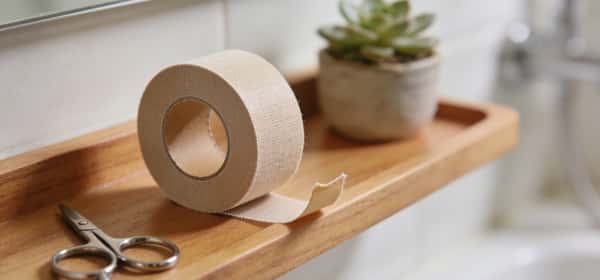
Quick answer: Mouth taping for sleep apnea is not a proven treatment, and for many people with obstructive sleep apnea (OSA) it can be actively harmful. A small study in people with mild OSA who were mouth-breathers found taping cut their AHI by about half, so there may be a narrow benefit in that specific group. But a systematic review of the practice found most studies showed no benefit and flagged a real risk of asphyxiation if you have any nasal obstruction. Bottom line: never tape your mouth if you have moderate-to-severe OSA, a blocked nose, or undiagnosed apnea, and never treat it as a replacement for CPAP or an oral appliance. Fix the nose and treat the apnea properly instead.
The theory (and where it’s half-right)
The idea starts from something legitimate. Breathing through your nose filters, warms, and humidifies air, and chronic mouth breathing is associated with worse sleep-disordered breathing — a mouth-open posture lets the jaw drop and the tongue slide back, narrowing the airway. So “breathe through your nose at night” is reasonable advice for a lot of people.
What you eat affects how you sleep. Choose your goal and get your plan.
Powered by DietGenie Eat healthy
 Lose weight
 Gain muscles
 Explore new cuisines
The leap that doesn’t hold is the assumption that taping the mouth is a safe or sufficient way to get there. Forcing your lips shut doesn’t address why you’re mouth breathing in the first place — usually a blocked nose from allergies, a deviated septum, or congestion. If your nose can’t move enough air, your body opened your mouth for a reason, and overriding that with tape doesn’t make the underlying obstruction go away. And critically, if your airway collapses during an apnea, an open mouth can be a last-ditch route for air. Sealing it in someone with real OSA removes that escape valve. There’s also a difference between a light, porous strip that a person could easily break through and a full seal — but the marketing rarely draws that line, and neither do most people applying it half-asleep.

What the evidence actually shows
The research is thin, and it splits sharply by who’s being taped.
On the encouraging side, a small preliminary study looked at 20 people with mild OSA who were known mouth-breathers. With a hypoallergenic tape sealing the lips at night, the median AHI dropped from about 8.3 to 4.7 events per hour — roughly a 47% reduction — and snoring and oxygen dips improved too.1 Taken alone, that sounds promising.
But zoom out and the picture gets cautious fast. A 2025 systematic review pulled together ten studies covering 213 patients and reached a blunt conclusion: only two studies showed meaningful improvement in apnea markers, the rest showed no difference, and the authors specifically warned of a serious risk of harm — including asphyxiation — for people practicing this indiscriminately, especially anyone with nasal obstruction. Many of the studies had even excluded people with nasal problems, which is exactly the population most likely to try taping.2 In other words, the one small win came in a carefully selected group (mild OSA, confirmed nasal breathers), and the broader evidence doesn’t support taping as a general apnea fix.
The real risks
This is where the trend earns its warning label. The problems with mouth taping for sleep apnea:
- Blocked nose plus taped mouth equals no airway. If you have congestion, a cold, allergies, or a deviated septum, you may not be able to breathe adequately through your nose alone. Sealing the mouth can leave you genuinely short of air.
- It masks, rather than treats, real apnea. If snoring quiets down, you might feel reassured while the underlying breathing pauses and oxygen dips continue unmonitored.
- Undiagnosed OSA is dangerous to experiment on. Plenty of people who’d try this have never had a sleep study, so they have no idea how severe their apnea is or whether their airway is collapsing.
- Skin irritation from adhesive on the lips is minor by comparison but common.
None of this means nasal breathing is bad — it’s the taping shut that’s the problem, particularly for the people most drawn to the hack.
Suggested read: GLP-1 for Sleep Apnea: Does Zepbound Help?
Who should never try it
Draw a hard line here. Do not use mouth taping if you:
- Have moderate-to-severe OSA
- Have any nasal congestion, allergies, or a structural nasal blockage
- Have never been evaluated for sleep apnea but suspect you have it
- Have been drinking alcohol or taking a sedative (both worsen airway collapse)
- Have heart or lung conditions, or are prone to nausea/vomiting at night
If your snoring or tiredness is bad enough that you’re reaching for tape, that’s the signal to get assessed, not to self-experiment. Learn the sleep apnea symptoms worth acting on and get a sleep study rather than gambling on a viral fix.
What to do instead
If the real goal is to stop mouth breathing and sleep better, go at the cause:
- Treat your nose. Address allergies, congestion, or a deviated septum with proper treatment so nasal breathing becomes easy and automatic — no tape required.
- Train the airway muscles. Myofunctional (mouth and throat) exercises have real evidence for reducing snoring and apnea severity and encourage better tongue posture, unlike a strip of tape. They feature in our roundup of CPAP alternatives.
- Treat the apnea properly. If you’re diagnosed, use a treatment that keeps the airway open — CPAP or a fitted oral appliance — rather than one that just clamps your lips.
- Fix the basics. Side-sleeping, avoiding late alcohol, and a consistent routine do more than any hack. Our guides to falling asleep faster and sleeping better overall cover the fundamentals.
The bottom line
Mouth taping for sleep apnea is a case where a viral hack outran the evidence. Nasal breathing is a fine goal, and there’s a sliver of data suggesting taping might help a narrow group — mild, confirmed mouth-breathers with clear noses. But for the broader population of people with OSA, the practice is unproven and carries a genuine risk of harm, up to asphyxiation, if your nose is blocked or your apnea is more than mild. It also risks quieting the snoring while the dangerous breathing pauses roll on unaddressed. If you’re tempted to tape, take that as your cue to get a real diagnosis and treat the cause — fix your nose, train the airway, and use a proven therapy — rather than sealing your mouth and hoping.
Lee YC, Lu CT, Cheng WN, Li HY. The impact of mouth-taping in mouth-breathers with mild obstructive sleep apnea: a preliminary study. Healthcare (Basel). 2022;10(9):1755. PubMed ↩︎
Rhee J, Iansavitchene A, Mannala S, Graham ME, Rotenberg B. Breaking social media fads and uncovering the safety and efficacy of mouth taping in patients with mouth breathing, sleep disordered breathing, or obstructive sleep apnea: a systematic review. PLoS One. 2025;20(5):e0323643. PubMed ↩︎