The mineral vs chemical sunscreen question gets argued like a moral debate, but the truth is calmer than the internet suggests: both types protect your skin well when you apply enough and reapply on time. The real differences are about how they sit on your skin, how they feel, and a few open questions around one group’s ingredients. Here’s the honest comparison so you can pick the one you’ll actually wear.
Quick answer
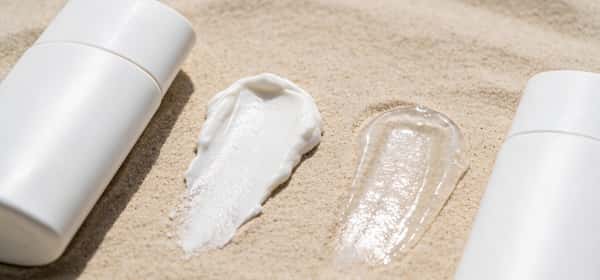
- Mineral (zinc oxide, titanium dioxide): sits on top of the skin, gentle, photostable, can leave a white cast. The only filters the FDA classifies as generally recognized as safe and effective.
- Chemical (avobenzone, octinoxate, octocrylene, etc.): absorbs into the skin’s surface, feels lighter and rubs in clear, blends well into daily moisturizers and makeup.
- Protection: comparable when both are broad spectrum and applied correctly.
- Best pick for sensitive skin, kids, rosacea, melasma: mineral.
- Best pick for everyday wear under makeup or for darker skin tones: often a well-formulated chemical or a tinted mineral.
How each one actually works
The old “mineral reflects, chemical absorbs” line is a simplification. In reality:
- Mineral filters sit on top of the skin and work mostly by absorbing UV, with some scattering. Zinc oxide covers UVB and the entire UVA range, which is unusual breadth for a single ingredient. Titanium dioxide is strong on UVB and short UVA.
- Chemical filters soak into the outermost skin layer and absorb UV, releasing it as a trace of heat. No single one covers everything, so they’re blended — avobenzone for UVA, octinoxate and the salates for UVB, octocrylene to keep avobenzone stable.
For the full filter-by-filter rundown, see best sunscreen ingredients.
Glow starts with what you eat. Choose your goal and get your plan.
Powered by DietGenie Eat healthy
 Lose weight
 Gain muscles
 Explore new cuisines
Side-by-side comparison
| Feature | Mineral | Chemical |
|---|---|---|
| Active ingredients | Zinc oxide, titanium dioxide | Avobenzone, octinoxate, octisalate, octocrylene, homosalate, oxybenzone |
| How it sits | On top of skin | Absorbs into skin surface |
| Texture / feel | Thicker, can leave white cast | Lighter, rubs in clear |
| Works immediately? | Yes, on application | Needs ~15 min to set |
| Photostability | High | Varies; avobenzone needs stabilizers |
| Sensitive skin | Excellent | Can irritate some people |
| FDA GRASE status | Yes (both) | More safety data requested |
| Reef concern | Low | Oxybenzone/octinoxate flagged |
The absorption question
This is the part that fuels most of the worry. In 2019 and 2020, the FDA ran controlled trials applying chemical sunscreens under maximal-use conditions and measured blood levels. Six common filters — avobenzone, oxybenzone, octocrylene, homosalate, octisalate and octinoxate — all showed up in plasma above the FDA’s 0.5 ng/mL testing threshold, often after a single day of use.1 Oxybenzone reached the highest concentrations by far.
Here’s the careful read, because nuance matters:
- “Absorbed into the blood” is not the same as “proven harmful.” The studies were designed to test whether absorption clears the threshold that triggers more safety studies. It did. That’s the finding.
- The FDA and the study authors both stated plainly that the results are not a reason to stop using sunscreen — the known benefit of UV protection is well established, while the risk of absorption is unknown rather than demonstrated.
- Mineral filters (zinc, titanium) sit on the surface and aren’t absorbed in the same way, which is part of why they’re the FDA’s go-to recommendation.
If absorption bothers you, mineral is the simple answer. If you find mineral too heavy and skip it, a chemical sunscreen you’ll actually wear protects you more than a mineral one sitting in the drawer.
White cast, feel, and skin tone
The single most common reason people abandon mineral sunscreen is the white or ashy cast, which is most noticeable on medium and deep skin tones. The fixes:
- Tinted mineral formulas add iron oxides that match a range of skin tones and, as a bonus, help block visible light involved in melasma.
- Micronized zinc spreads more sheer than older formulas.
- Chemical or hybrid sunscreens rub in fully clear, which is why they dominate daily-wear and makeup-friendly products.
For oily or acne-prone skin, lightweight chemical or fluid mineral formulas labeled non-comedogenic tend to work best. For rosacea, eczema, or reactive skin, plain zinc oxide is the gentlest option.
Suggested read: Retinol vs Retinoid: Strength Ladder Made Simple
Which protects better?
When both are broad spectrum and applied at the right amount, protection is comparable — there’s no meaningful winner on UV blocking alone. The American Academy of Dermatology says any properly formulated broad-spectrum sunscreen protects you, and specifically recommends mineral for sensitive skin.2 What actually determines your protection in real life:
- Did you apply enough? (About a shot glass for the body, a teaspoon for the face.)3
- Did you reapply every two hours, and after swimming or sweating?4
- Is it labeled broad spectrum and SPF 30+?
Those three questions decide your outcome far more than the mineral-vs-chemical label. The proof that consistent use works: a randomized trial found daily sunscreen users developed fewer melanomas than discretionary users.5
The environmental angle
Oxybenzone and octinoxate — both chemical filters — are the ingredients flagged for coral reef damage, and some regions have restricted them.6 Mineral filters using non-nano zinc oxide are generally considered the safer environmental choice. “Reef-safe” isn’t a regulated claim, so if this matters to you, read the actual active ingredient list rather than trusting the sticker.
So which should you use?
- Choose mineral if: you have sensitive, reactive, or acne-prone skin; you’re buying for a child; you have melasma; you want to avoid the absorption question; or you care about reefs.
- Choose chemical (or hybrid) if: you want a weightless feel, no white cast, something that layers under makeup, or you simply won’t wear a heavier mineral product.
- Choose tinted mineral if: you have a deeper skin tone or melasma and want both no-cast wear and visible-light protection.
The best sunscreen is the one you’ll reapply without complaining.
Bottom line
In the mineral vs chemical sunscreen debate, there’s no clear loser. Mineral (zinc oxide, titanium dioxide) is gentle, photostable, sits on the surface, and is the FDA’s recommended category — ideal for sensitive skin and kids, at the cost of a possible white cast. Chemical filters feel lighter and wear invisibly but absorb into the bloodstream above the FDA’s testing threshold, which prompted requests for more data, not proof of harm. Both protect comparably when you use enough and reapply every two hours. Pick the texture and skin-type fit you’ll stick with. Then make sure it says broad spectrum, SPF 30+. For more, see best sunscreen ingredients, SPF explained, and do supplements replace sunscreen.
Matta MK, Florian J, Zusterzeel R, et al. Effect of Sunscreen Application on Plasma Concentration of Sunscreen Active Ingredients: A Randomized Clinical Trial. JAMA. 2020;323(3):256-267. PubMed | DOI ↩︎
American Academy of Dermatology. Sunscreen FAQs. AAD.org. Link ↩︎
U.S. Food and Drug Administration. Sunscreen: How to Help Protect Your Skin from the Sun. FDA.gov. Link ↩︎
American Cancer Society. How to Use Sunscreen. Cancer.org. Link ↩︎
Green AC, Williams GM, Logan V, Strutton GM. Reduced melanoma after regular sunscreen use: randomized trial follow-up. J Clin Oncol. 2011;29(3):257-263. PubMed | DOI ↩︎
DiNardo JC, Downs CA. Dermatological and environmental toxicological impact of the sunscreen ingredient oxybenzone/benzophenone-3. J Cosmet Dermatol. 2018;17(1):15-19. PubMed | DOI ↩︎