People reach for matcha expecting a gentle, zen kind of energy — and then wonder why it can feel surprisingly strong. The truth is matcha packs a real caffeine punch, often more than you’d guess, yet it genuinely feels different from coffee: alert without the jitters, focused without the crash. That’s not just marketing or placebo. There’s a specific compound in matcha that reshapes how the caffeine hits you. Here’s how much caffeine matcha actually has, and the science behind its famously smooth buzz.
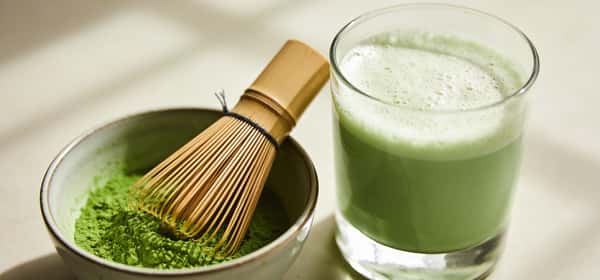
Quick answer: A typical serving of matcha (1 teaspoon, about 2 grams) contains roughly 60–80 mg of caffeine — more than a cup of steeped green tea, and getting toward a small cup of coffee (which has ~95 mg). Because you drink the whole powdered leaf, matcha is more caffeinated than regular green tea. What makes it feel different is L-theanine, an amino acid in matcha that promotes calm focus and smooths out caffeine’s jittery edge — the combination delivers steady alertness without the spike-and-crash. For matcha overall, see our matcha tea benefits guide.
How much caffeine is in matcha?
Caffeine content varies with how much powder you use and the matcha’s quality, but a standard serving lands in a predictable range:
Choose your goal and get a meal plan full of foods you actually like.
Powered by DietGenie Eat healthy
 Lose weight
 Gain muscles
 Explore new cuisines
- 1 teaspoon (≈2 g) matcha: roughly 60–80 mg caffeine
- Steeped green tea (1 cup): roughly 30–50 mg
- Coffee (1 cup): roughly 95 mg
- Espresso (1 shot): roughly 65 mg
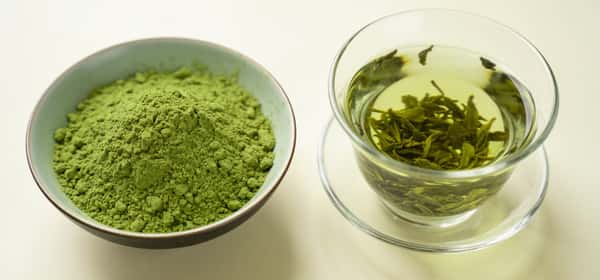
So matcha sits between regular green tea and coffee — more than a teabag, a bit less than a mug of drip coffee, and comparable to a shot of espresso. The reason it beats steeped green tea is the same reason it’s richer in antioxidants: with matcha you consume the whole ground leaf, so you get more of everything in it, caffeine included.1 Use a heaped serving or a strong café preparation and you can edge closer to coffee levels.
Why matcha feels different from coffee
This is the genuinely interesting part, and it’s not hype. Matcha contains a notable amount of L-theanine, an amino acid (boosted by the shade-growing process) that has a calming, focus-promoting effect — and it changes the entire caffeine experience.
Research on the caffeine–L-theanine combination is consistent:
- L-theanine promotes relaxation without sedation, and notably reduces the arousal and jitteriness that caffeine alone can cause.2
- Together, caffeine and L-theanine improve attention — studies found the combination enhanced attention-switching and reduced susceptibility to distraction better than caffeine on its own.3
- A second randomized trial similarly found L-theanine plus caffeine improved performance on attention tasks.4
The upshot: coffee tends to give a sharp, sometimes jittery spike followed by a crash, while matcha’s caffeine arrives alongside L-theanine for a calmer, more sustained, focused alertness. Same stimulant, very different feel. We compare the two head-to-head in matcha vs coffee.
Matcha vs coffee caffeine, side by side
| Matcha | Coffee | |
|---|---|---|
| Caffeine per serving | ~60–80 mg | ~95 mg |
| L-theanine | Yes (calming) | No |
| Energy feel | Steady, calm, focused | Sharp, can be jittery |
| Crash | Minimal | More common |
| Onset | Gradual | Faster |
Does the buzz last longer?
Many people report matcha’s energy feeling more even and longer-lasting than coffee’s, and the L-theanine pairing is the likely reason — it tempers the rapid peak and the subsequent dip, smoothing the curve. It’s less “jolt” and more “steady hum.” That makes matcha popular for sustained focus work, where you want alertness without the mid-morning crash that can follow a strong coffee.
How much matcha is too much?
Matcha is healthy, but caffeine is still caffeine, so moderation applies:
- General caffeine guidance for healthy adults is up to about 400 mg per day — roughly 4–5 servings of matcha, though most people drink far less.
- Watch for the usual signs of too much: jitteriness, a racing heart, anxiety, or trouble sleeping. See caffeine side effects.
- Time it sensibly. Matcha’s caffeine can still disrupt sleep if you have it late; afternoon or evening servings may be worth skipping if you’re caffeine-sensitive.
- Pregnancy and sensitivity: the same caffeine cautions that apply to any source apply here — more in caffeine in tea vs coffee.
The L-theanine softens the feel of the caffeine, but it doesn’t cancel the caffeine itself, so don’t treat matcha as limitless just because it’s gentler.
What changes matcha’s caffeine level
If you want to dial the caffeine up or down, a few factors are in your control:
- Amount of powder. The biggest lever — a heaped teaspoon delivers noticeably more than a level one.
- Grade and harvest. Younger, first-harvest leaves (ceremonial grade) can be higher in caffeine; see matcha grades.
- Water temperature. Hotter water extracts a bit more, though very hot water also makes matcha bitter, so there’s a trade-off.
- Usucha vs koicha. “Thin” matcha (more water) is lighter; traditional “thick” matcha uses more powder per serving and packs more caffeine.
Use a level teaspoon with not-quite-boiling water for a moderate, balanced cup.
Getting the most even energy
A few practical tips for that smooth matcha lift:
- Don’t overdo the powder. One teaspoon is plenty for most; piling it on pushes caffeine up.
- Have it with or after food if caffeine on an empty stomach bothers you.
- Quality helps the experience. Better matcha (more L-theanine from proper shading) tends to taste smoother and feel calmer — see ceremonial vs culinary matcha.
- Mind what you mix it with. A sugary matcha latte can add a sugar spike-and-crash on top of the caffeine, undoing some of the “steady energy” appeal.
Suggested read: Matcha vs. Coffee: Differences, Benefits, Pros, and Cons
The bottom line
Matcha carries a real caffeine load — around 60–80 mg per serving, more than steeped green tea and not far off a small coffee — because you drink the whole powdered leaf. But its signature comes from L-theanine, the calming amino acid that pairs with the caffeine to produce steady, focused alertness instead of a jittery spike and crash. That caffeine–L-theanine combination, well supported by research on attention and calm, is exactly why matcha feels different from coffee.
Enjoy it for that smooth, sustained energy, but respect the caffeine: keep servings reasonable, watch the timing if you’re sensitive, and don’t let a sugary latte sabotage the steadiness. Used well, matcha is one of the nicest ways to stay alert without the coffee crash.
Kochman J, Jakubczyk K, Antoniewicz J, Mruk H, Janda K. Health Benefits and Chemical Composition of Matcha Green Tea: A Review. Molecules. 2020;26(1):85. PubMed ↩︎
Dietz C, Dekker M. Effect of Green Tea Phytochemicals on Mood and Cognition. Curr Pharm Des. 2017;23(19):2876-2905. PubMed ↩︎
Owen GN, Parnell H, De Bruin EA, Rycroft JA. The combined effects of L-theanine and caffeine on cognitive performance and mood. Nutr Neurosci. 2008;11(4):193-198. PubMed ↩︎
Einöther SJL, Martens VEG, Rycroft JA, De Bruin EA. L-theanine and caffeine improve task switching but not intersensory attention or subjective alertness. Appetite. 2010;54(2):406-409. PubMed ↩︎