If your doctor has told you to watch your potassium, your first question is probably the practical one: which foods are actually low in it? Here’s a clear, usable list — the low-potassium foods to build meals around and the high-potassium ones to keep an eye on. But there’s an important question to answer first, because plenty of people are restricting potassium who don’t need to.
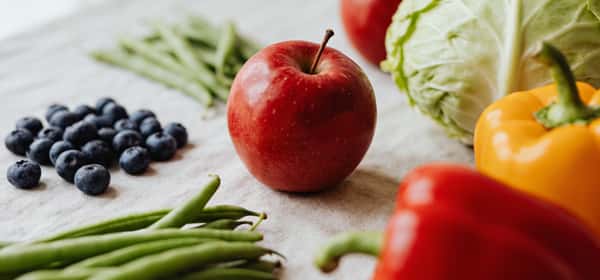
Quick answer: Low-potassium foods include apples, berries, grapes, white bread and rice, green beans, cucumber, cabbage, and cauliflower. Higher-potassium foods to limit include potatoes, tomatoes, bananas, oranges, avocado, beans, and dairy. But whether you need to limit potassium at all depends on your kidney stage and blood tests — many people with early kidney disease don’t, and cutting healthy produce unnecessarily has its own downsides.1 Always base a potassium restriction on your labs and your care team’s advice, not on fear.
First: do you even need to restrict potassium?
This matters, so it goes first. Potassium is essential — it runs your heart, muscles, and nerves — and it comes packaged in some of the healthiest foods there are. You only need to limit it if your blood potassium is running high (hyperkalemia) or is at risk of doing so, which typically happens in more advanced kidney disease, or with certain blood pressure medications.
What you eat matters for your kidneys. Choose your goal and get your plan.
Powered by DietGenie Eat healthy
 Lose weight
 Gain muscles
 Explore new cuisines
People with early-stage CKD and normal potassium levels usually don’t need a low-potassium diet at all. Restricting it anyway means cutting fruits, vegetables, and legumes that benefit your heart and gut for no reason. Even in more advanced disease, research on plant-forward, lower-protein diets suggests they don’t automatically cause the high potassium many people fear.2 So the right first move isn’t to slash potassium — it’s to check your blood test and ask your team whether restriction applies to you.
Low-potassium foods to build meals around
If you do need to keep potassium down, these are your reliable staples (portion sizes still matter — even a low-potassium food adds up in large amounts):
Fruit
- Apples
- Berries (blueberries, strawberries, raspberries)
- Grapes
- Pineapple
- Peaches (fresh, in moderation)
- Watermelon (small portions)
Vegetables
- Green beans
- Cucumber
- Cabbage
- Cauliflower
- Bell peppers
- Lettuce
- Onions
- Zucchini and eggplant
Grains and protein
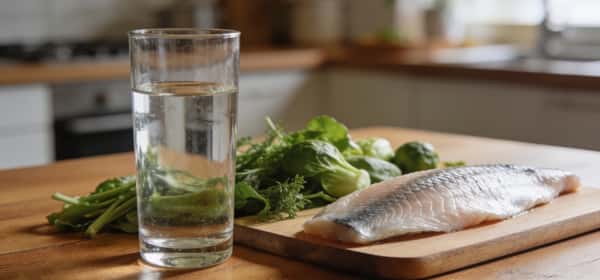
- White bread, white rice, white pasta
- Cornflakes, cream of wheat
- Eggs, chicken, fish (potassium is moderate — portion matters)
Higher-potassium foods to limit
These are healthy foods for most people — the issue is only their potassium load if you need to restrict:
| Category | Higher-potassium foods |
|---|---|
| Vegetables | Potatoes, sweet potatoes, tomatoes and tomato sauce, spinach, mushrooms, squash |
| Fruit | Bananas, oranges and orange juice, avocado, dried fruit, melon (large amounts) |
| Protein | Beans, lentils, nuts |
| Dairy | Milk, yogurt |
| Other | Chocolate, salt substitutes (often potassium chloride!) |
One that surprises people: salt substitutes. Many “no-salt” seasonings replace sodium with potassium chloride, which is exactly what you don’t want if you’re limiting potassium. Read the label.
The leaching trick: keep the potatoes
You don’t have to banish higher-potassium vegetables entirely. Leaching pulls a good portion of the potassium out:
- Peel the vegetable and slice it thin or dice it small.
- Soak it in a large amount of warm water for at least a couple of hours (longer is better).
- Drain, then cook in fresh water — not the soaking water.
It works because potassium is water-soluble and leaches into the water you throw away. It won’t make a potato potassium-free, but it can turn an off-limits food into an occasional portion-controlled one. Boiling in general lowers potassium more than roasting or frying, since the mineral escapes into the cooking water.
Canned, dried, and juiced: the sneaky ones
How a food is processed changes its potassium, sometimes in ways that catch people out:
- Canned fruits and vegetables can actually be lower in potassium than fresh, because some leaches into the liquid — but only if you drain and rinse them and skip the syrup or brine.
- Dried fruit (raisins, apricots, dates) is the opposite: drying concentrates the potassium into a small serving, so a little goes a long way.
- Fruit and vegetable juices — especially orange, tomato, and prune — pack the potassium of several pieces of fruit into one glass, with none of the filling fiber. If you’re restricting, whole low-potassium fruit beats juice.
- Tomato products (paste, sauce, ketchup) concentrate potassium as they reduce, which is why pizza and pasta sauces add up fast.
Portions still count
A subtle point people miss: “low-potassium” isn’t the same as “unlimited.” Eat enough of any food and the potassium adds up. A small apple is low-potassium; a huge fruit salad of “low-potassium” fruits can still push your total up. If you’re restricting, watch portion sizes as well as choices — your dietitian can give you a daily potassium target to aim for.
Where this fits in the bigger picture
Potassium is just one of four nutrients a renal diet manages, alongside sodium, phosphorus, and protein. For the full framework, see our guide to the renal diet. To round out your food choices, pair this with foods for people with kidney disease and foods to avoid with kidney disease, and put it into practice with the renal diet meal plan.
Suggested read: 17 Foods to Avoid if You Have Kidney Disease
The bottom line
Low-potassium foods — apples, berries, grapes, green beans, cabbage, cauliflower, white grains — make it easy to eat well if you need to keep potassium down, while potatoes, tomatoes, bananas, beans, and dairy are the higher-potassium foods to limit. Leaching lets you keep some of the higher ones in smaller portions, and watching portion sizes keeps your total in check. But the most important step comes before any of this: confirm with your blood tests and your care team whether you actually need to restrict potassium, because many people with early kidney disease don’t — and giving up healthy produce without cause helps no one.
Ikizler TA, Burrowes JD, Byham-Gray LD, et al. KDOQI Clinical Practice Guideline for Nutrition in CKD: 2020 Update. Am J Kidney Dis. 2020;76(3 Suppl 1):S1-S107. PubMed ↩︎
Sakaguchi Y, Kaimori JY, Isaka Y. Plant-dominant low protein diet: a potential alternative dietary practice for patients with chronic kidney disease. Nutrients. 2023;15(4):1002. PubMed ↩︎