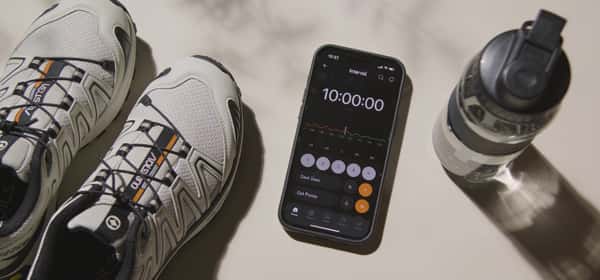
Longevity habits are the small, repeatable things you do most days that, stacked up over decades, shape how long and how well you live. The research here is reassuring and a little dull: there’s no secret routine, no exotic protocol. The habits that the largest studies link to a longer life are the ones your grandmother probably nagged you about — move your body, eat real food, sleep enough, and stay close to people you care about. This guide turns those into concrete daily practices you can actually keep.

The goal isn’t perfection. It’s a handful of habits you repeat so often they stop requiring willpower.
Quick answer
The daily habits with the strongest evidence behind them:
Choose your goal and get a personalized meal plan in minutes.
Powered by DietGenie Eat healthy
 Lose weight
 Gain muscles
 Explore new cuisines
- Move every day — a mix of walking, some cardio, and strength training twice a week
- Eat mostly plants — vegetables, legumes, whole grains, nuts, fish
- Stop eating before you’re stuffed — modest portions, fewer late-night calories
- Protect your sleep — 7-9 hours, consistent schedule
- Stay socially connected — regular contact, a sense of belonging
- Don’t smoke, drink moderately or not at all
- Have a reason to get up — purpose and routine matter more than they sound
Combine several of these at mid-life and you can add close to a decade of disease-free years.1
Build movement into your day
The people who stay healthiest into old age rarely “work out” in the gym sense — they’re just active all day. Walking, gardening, chores, stairs. That background movement matters as much as structured exercise.
A simple daily framework:
- Walk daily. Aim for a brisk 20-40 minutes. It counts toward the ~150 weekly minutes of moderate activity tied to lower mortality
- Add easy aerobic base work. Zone 2 cardio — easy enough to hold a conversation — builds cardiovascular fitness efficiently
- Strength train twice a week. Muscle and bone loss is one of the biggest threats in older age; resistance work directly counters it
- Break up sitting. Stand and move for a couple of minutes every hour
You don’t need all of this on day one. Start with the daily walk and build from there. The wider case is in the health benefits of exercise.

Eat like the long-lived do
The dietary habit that matters most isn’t a specific food — it’s the overall shape of your plate. Long-lived populations and the diets tied to lower mortality all lean the same way: plant-forward, minimally processed, modest in red and processed meat.2
Daily practices that make this easy:
- Eat a serving of legumes most days — beans, lentils, chickpeas
- Fill half your plate with vegetables and fruit
- Default to whole grains over refined ones
- Cook at home more often than you eat out
- Cut ultra-processed snacks and sugary drinks — the single highest-yield food swap
This is essentially the Mediterranean diet and the Blue Zones diet in practice. A Mediterranean breakfast is an easy place to anchor the pattern at the start of each day.
Use eating windows and portion habits
How and when you eat matters alongside what. Many long-lived cultures naturally moderate calories — Okinawans traditionally stop at about 80% full — and have long overnight gaps between dinner and breakfast. You can borrow both:
- Stop eating when you’re satisfied, not stuffed
- Front-load calories earlier in the day where you can
- Leave a long gap overnight between your last meal and breakfast
This connects to the research on intermittent fasting and fasting more broadly. The point isn’t a strict protocol — it’s gentle, sustainable moderation that fits your life. In a randomized trial, sustained mild calorie restriction even modestly slowed a DNA-methylation marker of biological aging, which hints these habits act at a cellular level.3
Suggested read: Benefits of Rucking: 8 Reasons Backed by Science
Guard your sleep
Sleep is where a lot of repair happens, and chronic short sleep undermines nearly everything else on this list. Treat it as a non-negotiable habit, not the thing you sacrifice when life gets busy.
- Keep a consistent bed and wake time, even on weekends
- Aim for 7-9 hours
- Keep the room dark, cool, and quiet
- Cut caffeine after early afternoon and screens before bed
- Get morning daylight to anchor your body clock
Invest in relationships and purpose
This is the habit people skip, and it’s one of the most powerful. Strong social ties are associated with a roughly 50% higher likelihood of survival over time — an effect comparable to major physical risk factors.4 Loneliness, by contrast, is a genuine health risk.
Make connection a recurring habit, not an accident:
- Schedule regular time with friends and family
- Stay part of a community — a club, a class, a place of worship, a volunteer group
- Build routines that put you around other people
Purpose belongs here too. Having a reason to get up — work you care about, people who depend on you, projects that matter — is a recurring theme in long-lived communities. It keeps you engaged, active, and connected, which feeds back into everything else.
Habits to drop, not just add
Longevity isn’t only about adding good behaviors — it’s also about removing the ones that quietly work against you. A few worth a hard look:
- Smoking. Nothing else on this list comes close. Quitting at any age adds years
- Heavy or frequent drinking. Moderate is the ceiling; less is better
- All-day sitting. Even with a workout, long unbroken sitting is its own risk
- Chronic sleep debt. Routinely sleeping under six hours undermines everything else
- Ultra-processed snacking on autopilot. It’s the easiest dietary habit to cut and one of the highest-yield
You don’t need to overhaul your life. Often the biggest wins come from subtracting one bad habit rather than adding three good ones.
Suggested read: Japanese Walking for Weight Loss: Does It Work?
Why consistency beats intensity
It’s tempting to chase the dramatic version — the punishing diet, the brutal training block, the 30-day challenge. But longevity habits work on a completely different timescale. A habit you can sustain at 70% effort for thirty years beats one you do at 100% for three weeks and then abandon.
This is why the long-lived communities are so instructive. Nobody in those places is white-knuckling a regimen. The healthy choice is the default, woven into daily life — they walk because that’s how you get places, they eat plants because that’s the local food, they see people because community is the structure of their day. The lesson isn’t to try harder. It’s to build an environment and a routine where the healthy option is the easy one.
Practical ways to make habits stick:
- Attach new habits to existing ones — walk after lunch, stretch after brushing your teeth
- Make the healthy choice the convenient one — keep fruit visible, walking shoes by the door
- Lower the bar on bad days — a ten-minute walk still counts; doing something beats nothing
- Track loosely, not obsessively — the goal is a decade-long average, not a perfect week
A realistic daily template
You don’t need to do it all flawlessly. A doable day might look like:
| Time | Habit |
|---|---|
| Morning | Daylight, brisk walk, plant-forward breakfast |
| Midday | Real lunch with vegetables and legumes; short walk |
| Afternoon | Movement breaks; strength session 2x/week |
| Evening | Earlier, lighter dinner; time with people |
| Night | Wind down, screens off, consistent bedtime |
Miss a day, miss a week — it doesn’t matter. Longevity habits work on the scale of decades. Consistency beats intensity every single time.
Bottom line
The best longevity habits aren’t dramatic. Move every day, eat mostly plants, keep portions modest, protect your sleep, stay close to other people, and find a reason to get up in the morning. Each one is well-supported on its own; stacked together they can add years of healthy life. Skip the search for a secret protocol and instead make a few of these so routine they run on autopilot. That’s the whole game. For the evidence behind which factors matter most, see what predicts longevity; to understand how these habits show up in your cells, see biological age.
Li Y, Schoufour J, Wang DD, et al. Healthy lifestyle and life expectancy free of cancer, cardiovascular disease, and type 2 diabetes: prospective cohort study. BMJ. 2020;368:l6669. PubMed | DOI ↩︎
Hu FB. Diet strategies for promoting healthy aging and longevity: An epidemiological perspective. Journal of Internal Medicine. 2023;295(4):508-531. PubMed | DOI ↩︎
Waziry R, Ryan CP, Corcoran DL, et al. Effect of long-term caloric restriction on DNA methylation measures of biological aging in healthy adults from the CALERIE trial. Nature Aging. 2023;3(3):248-257. PubMed | DOI ↩︎
Holt-Lunstad J, Smith TB, Layton JB. Social relationships and mortality risk: a meta-analytic review. PLoS Medicine. 2010;7(7):e1000316. PubMed | DOI ↩︎