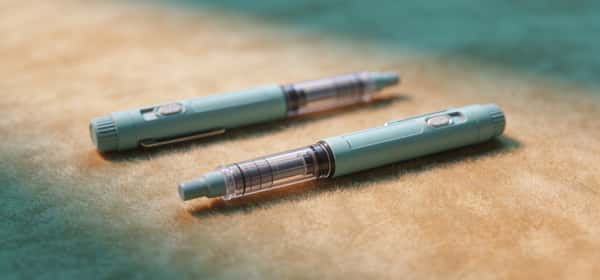
If you’re weighing up two GLP-1 drugs, the liraglutide vs semaglutide question usually comes down to one daily shot versus one weekly shot, and how much weight each tends to take off. They share the same core mechanism, but they are not interchangeable. Here’s how they actually differ on dosing, results, side effects, and price, plus the cases where the older drug still earns its keep.
This article is educational information, not medical advice. Liraglutide (Saxenda, Victoza) and semaglutide (Wegovy, Ozempic) are prescription-only medicines that must be prescribed and supervised by a licensed clinician. Compounded or “research use only” versions are not FDA-approved for human use and can be dangerous, and nothing here should be read as a way to obtain or self-inject these drugs without a prescriber. Talk to your doctor or pharmacist before you start, change, or stop any dose, especially if you have a personal or family history of medullary thyroid cancer, MEN2, pancreatitis, or are pregnant.
The quick answer
Both are GLP-1 receptor agonists that curb appetite and slow stomach emptying. Liraglutide is the older molecule and needs a daily injection; semaglutide lasts about a week per dose. In head-to-head and trial data, semaglutide produces clearly more weight loss on average, but liraglutide still has real uses, including a shorter half-life that some people prefer and a faster path off the drug if side effects hit.
Real meals matter more than any supplement. Choose your goal and get your plan.
Powered by DietGenie Eat healthy
 Lose weight
 Gain muscles
 Explore new cuisines
What are these two drugs, exactly?
Both belong to the GLP-1 family used for weight loss, which mimics a gut hormone your body releases after eating. That hormone signals fullness to the brain, slows how fast food leaves the stomach, and helps the pancreas manage blood sugar.
The branding is where people get confused, so here’s the map:
- Liraglutide is sold as Saxenda (for weight management, 3.0 mg daily) and Victoza (for type 2 diabetes, up to 1.8 mg daily).
- Semaglutide is sold as Wegovy (weight management, 2.4 mg weekly), Ozempic (type 2 diabetes, up to 2.0 mg weekly), and Rybelsus (an oral diabetes tablet).
So Saxenda vs Wegovy is the weight-loss matchup, and Victoza vs Ozempic is the diabetes matchup, but in both pairs you’re really comparing liraglutide against semaglutide. If you want the broader mechanism and a comparison with the newer dual agonist, see semaglutide vs tirzepatide.

Liraglutide vs semaglutide at a glance
| Feature | Liraglutide | Semaglutide |
|---|---|---|
| Brand names | Saxenda, Victoza | Wegovy, Ozempic, Rybelsus |
| Dosing frequency | Once daily (injection) | Once weekly (injection); oral version exists |
| Half-life | ~13 hours | ~7 days |
| Top weight-loss dose | 3.0 mg/day (Saxenda) | 2.4 mg/week (Wegovy) |
| Typical weight loss | Roughly 5-8% over a year | Up to ~15% at 68 weeks1 |
| Cardiovascular data | Yes (in diabetes) | ~20% fewer major CV events2 |
| Time to clear if stopped | A few days | A few weeks |
The standout numbers: in the STEP 1 trial, weekly semaglutide 2.4 mg produced a mean 14.9% body-weight reduction at 68 weeks.1 Liraglutide at its 3.0 mg dose typically lands closer to 5-8% over a similar window. The STEP 8 trial put the two head to head and favored semaglutide by a wide margin.
How much weight does each one take off?
This is usually the deciding factor, so it’s worth being specific.
- Semaglutide (Wegovy 2.4 mg): about 15% average loss at 68 weeks, with many people losing more.1 A meaningful share crossed the 20% mark.
- Liraglutide (Saxenda 3.0 mg): generally a smaller average, often in the 5-8% range over a year, with a slower buildup because you titrate a daily dose.
- STEP 8 head-to-head: semaglutide beat liraglutide on average weight loss by roughly double, which is the cleanest direct comparison available.
A few caveats. These are trial averages tied to lifestyle support, not guarantees. Individual response varies a lot, and what you do alongside the drug matters. Protein intake, resistance training, and sleep all influence how much of the loss is fat versus muscle, which is why a sensible eating approach while on a GLP-1 is part of the package, not an afterthought.
Suggested read: Wegovy vs Zepbound: Which Wins for Weight Loss?
Daily vs weekly: does dosing frequency matter?
The daily vs weekly GLP-1 split is more than a convenience question.
Arguments for weekly (semaglutide):
- One injection a week means fewer needles and fewer chances to forget.
- Steadier drug levels can mean smoother appetite control day to day.
- Better adherence in the real world, which tends to track with better results.
Arguments for daily (liraglutide):
- Shorter half-life means more control. If side effects flare, the drug clears in days rather than weeks.
- Easier to pause around surgery, illness, or pregnancy planning.
- Some people simply tolerate the gentler daily ramp better.
If you’re someone who reacts strongly to medications, that faster clearance is a genuine point in liraglutide’s favor. If you value set-and-forget simplicity, weekly wins.
What about side effects?
The side-effect profiles are similar because the mechanism is the same. The complaints are mostly gastrointestinal: nausea, vomiting, diarrhea, constipation, and reduced appetite, which is partly the point.3 These tend to be worst during dose increases and fade as your body adjusts.
Practical patterns worth knowing:
- GI symptoms are the top reason people quit either drug. Slow titration helps. So does eating smaller, lower-fat meals.
- Muscle loss can come with any rapid weight loss. Some lean-mass reduction is expected with GLP-1 therapy, and protein plus resistance training are the main ways to blunt it.4 Animal work even suggests that protecting muscle while you lose weight may improve fat loss, not just guard strength.5 If you want to protect muscle, see high-protein foods and how much protein you need per day.
- Serious but rare risks include pancreatitis and gallbladder issues; both drugs carry a boxed warning about thyroid C-cell tumors based on animal data.
- Hair thinning sometimes shows up with fast loss; it’s usually temporary. More on weight loss and hair loss.
If GI side effects make either drug intolerable, that’s a real conversation to have with your prescriber rather than something to push through silently.
Suggested read: Ozempic vs Mounjaro: How the Two Compare
How they stack up against the newer drugs
Liraglutide and semaglutide were the front-runners, but the field has moved. Tirzepatide, a dual GIP and GLP-1 agonist, pushed average loss higher in the SURMOUNT-1 trial, with the top dose reaching about 20.9% at 72 weeks.6 A head-to-head in type 2 diabetes, SURPASS-2, also favored tirzepatide over semaglutide on weight and blood sugar.7 Further out, the triple-agonist retatrutide reached roughly 24% at 48 weeks in a phase 2 trial.8 None of that makes semaglutide or liraglutide a bad choice, but it does mean the two of them now sit at the gentler, more established end of a fast-growing class. If your clinician offers a newer option, the same trade-offs apply: more potency tends to come with more GI side effects and a higher price.
Cost and access
Price often decides this in practice, and it shifts by country, insurer, and pharmacy.
- Both are expensive without coverage, frequently several hundred dollars a month at retail.
- Insurance coverage is patchy for weight-loss indications and more common for diabetes ones.
- Daily dosing means liraglutide can burn through pen volume faster, which affects the monthly tally.
- Newer weekly options have crowded the market, and supply, rebates, and compounding rules keep changing.
Don’t assume the cheaper sticker price is the cheaper drug per pound lost. If semaglutide takes off roughly twice the weight, the cost-per-result math can flip. Ask your pharmacist to run actual numbers for your plan.
When does liraglutide still make sense?
Even with semaglutide winning on average weight loss, liraglutide isn’t obsolete. It can be the better pick when:
- You need a fast off-ramp. Surgery coming up, or you want a drug that clears quickly if it disagrees with you.
- Weekly drugs are out of stock or not covered, and daily is what’s actually available.
- You tolerate it well and are hitting your goals. A drug that works for you beats a “better” one on paper.
- Your clinician has a specific reason tied to your history or other medications.
Whichever you use, GLP-1 drugs work best alongside the basics. Appetite tools like natural appetite suppressants and a plan to maintain weight loss after you taper matter, because stopping these drugs without a maintenance plan usually means regain.
Suggested read: Microdosing GLP-1: What It Means and the Risks
Bottom line
In the liraglutide vs semaglutide comparison, semaglutide is the stronger weight-loss tool for most people: weekly dosing, more average loss, and outcome data including a roughly 20% drop in major cardiovascular events in one large trial.2 Liraglutide earns its place when you want faster clearance, when supply or coverage forces your hand, or when it’s simply working. Both are prescription medicines with real risks, so the right choice is the one you and a qualified prescriber make together, not the one with the better headline number.
Wilding JPH, et al. Once-Weekly Semaglutide in Adults with Overweight or Obesity. N Engl J Med. 2021;384(11):989-1002. PubMed ↩︎ ↩︎ ↩︎
Lincoff AM, et al. Semaglutide and Cardiovascular Outcomes in Obesity without Diabetes. N Engl J Med. 2023;389(24):2221-2232. PubMed ↩︎ ↩︎
Ghusn W, Hurtado MD. Glucagon-like Receptor-1 agonists for obesity: Weight loss outcomes, tolerability, side effects, and risks. Obes Pillars. 2024;12:100127. PubMed ↩︎
Neeland IJ, Linge J, Birkenfeld AL. Changes in lean body mass with glucagon-like peptide-1-based therapies and mitigation strategies. Diabetes Obes Metab. 2024;26 Suppl 4:16-27. PubMed ↩︎
Nunn E, et al. Antibody blockade of activin type II receptors preserves skeletal muscle mass and enhances fat loss during GLP-1 receptor agonism. Mol Metab. 2024;80:101880. PubMed ↩︎
Jastreboff AM, et al. Tirzepatide Once Weekly for the Treatment of Obesity. N Engl J Med. 2022;387(3):205-216. PubMed ↩︎
Frias JP, et al. Tirzepatide versus Semaglutide Once Weekly in Patients with Type 2 Diabetes. N Engl J Med. 2021;385(6):503-515. PubMed ↩︎
Jastreboff AM, et al. Triple-Hormone-Receptor Agonist Retatrutide for Obesity - A Phase 2 Trial. N Engl J Med. 2023;389(6):514-526. PubMed ↩︎