Kimchi and sauerkraut are the two most famous fermented cabbage foods in the world, and people often want to know which one is “better” for them. The honest answer: both are excellent, gut-friendly choices, and the right pick comes down to flavor, how you’ll use it, and a couple of nutritional differences. Here’s a clear, side-by-side comparison to help you decide.
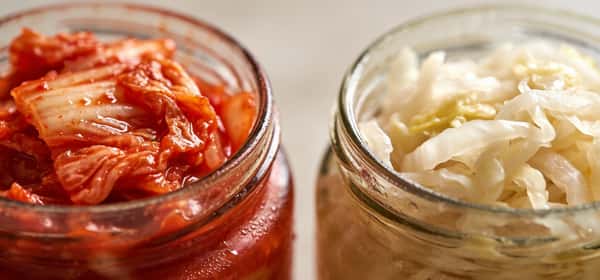
Quick answer: Both kimchi and sauerkraut are fermented cabbage rich in live probiotics and fiber, and both genuinely support gut health. Kimchi is spicier, more complex, and built on a wider mix of ingredients (which may mean more microbial variety); sauerkraut is simpler, milder, and cheaper. Neither is clearly “healthier” — the best one is the one you’ll actually eat regularly. For the broader context, see our fermented foods guide.
The core similarity
Start with what they share, because it’s most of the story. Both are made by lacto-fermentation: cabbage is salted, and naturally present lactic acid bacteria ferment its sugars into lactic acid. That process creates the sour tang, preserves the vegetable, and — crucially — populates it with live probiotics.
A calm gut starts with the right meals. Choose your goal and get your plan.
Powered by DietGenie Eat healthy
 Lose weight
 Gain muscles
 Explore new cuisines
That’s why both foods land in the category most consistently tied to gut health. A Stanford trial found that eating more fermented foods increased gut microbiome diversity and lowered inflammatory markers,1 and researchers highlight fermented vegetables like these as a low-risk, food-first way to support digestion — with specific interest in irritable bowel syndrome.2 Whichever you choose, you’re feeding your gut live cultures and fiber. Pair either with prebiotic foods to get the most benefit.
Where they differ
The differences come down to ingredients and flavor.
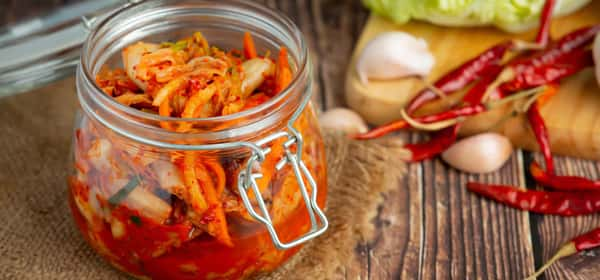
Kimchi is Korean, and it’s more than just cabbage. It’s typically made with napa cabbage and Korean radish, then seasoned with chili pepper, garlic, ginger, scallion, and often fish sauce or salted seafood. That means more heat, more complexity, and a broader set of plant ingredients — which can translate to a more varied mix of nutrients and potentially more microbial diversity.
Sauerkraut is German/Central European and radically simple: usually just cabbage and salt. That makes it milder, cheaper, more versatile as a neutral topping, and easier to make at home. It’s the plainer canvas of the two.
Head-to-head comparison
| Kimchi | Sauerkraut | |
|---|---|---|
| Origin | Korea | Germany / Central Europe |
| Base ingredients | Napa cabbage, radish, chili, garlic, ginger, scallion | Cabbage and salt |
| Flavor | Spicy, complex, umami | Sour, mild, simple |
| Ingredient variety | Higher (more plants and aromatics) | Lower (essentially cabbage) |
| Typical probiotics | Diverse lactic acid bacteria | Diverse lactic acid bacteria |
| Heat level | Spicy | Not spicy |
| Often vegan? | Not always (may contain fish sauce) | Usually yes |
| Cost / ease to DIY | Higher cost, more steps | Cheap, very easy |
Nutrition compared
Both are low-calorie, fiber-rich, and full of vitamins, with more similarities than differences.
- Kimchi brings extra antioxidant and anti-inflammatory compounds from its chili, garlic, and ginger, plus vitamins A and C. There’s even a specific twist: in a randomized trial, a probiotic strain derived from kimchi reduced body fat and waist size in adults with obesity.3
- Sauerkraut is a strong source of vitamin C (famously used to prevent scurvy on long voyages) and vitamin K, and its simplicity makes it lower in added flavor-ingredients. In a randomized pilot study, daily sauerkraut improved symptoms in people with IBS.4
The nutritional edge is small and depends on the specific product — both are genuinely nutrient-dense.
The shared caveat: sodium
Salt is essential to both, so both are salty foods. That’s fine in the modest, side-dish portions they’re traditionally eaten in, but it adds up if you eat large amounts. If you watch your blood pressure or sodium intake, keep servings to a few tablespoons and count them toward your daily total. This applies equally to kimchi and sauerkraut — neither wins here.
How to choose
- Want bold flavor and heat? Go kimchi. It shines with rice, eggs, noodles, and Korean dishes.
- Want a mild, versatile topping? Go sauerkraut. It works on sandwiches, sausages, salads, and grain bowls.
- Vegan or vegetarian? Check the label — kimchi often contains fish sauce or seafood; sauerkraut is usually plant-only.
- On a budget or want to DIY? Sauerkraut is cheaper and simpler to make at home.
- Can’t decide? Eat both. Rotating different ferments may expose your gut to a wider range of bacteria than sticking to one.
Whichever you pick, the same rules apply: buy it raw and refrigerated (not shelf-stable/pasteurized) for live cultures, eat it cold or added after cooking, and be consistent. See our full kimchi benefits and sauerkraut benefits guides for the details on each.
Suggested read: 8 Fermented Foods to Boost Digestion and Health
The bottom line
There’s no real loser in kimchi vs sauerkraut. Both are fermented cabbage foods that deliver live probiotics and fiber, support the gut microbiome, and come with solid research behind them — a diversity-boosting Stanford trial for fermented foods overall, plus food-specific studies on each. Kimchi offers more heat, complexity, and ingredient variety; sauerkraut offers simplicity, low cost, and versatility.
Pick based on taste and how you’ll use it, mind the salt, and buy raw for the live cultures. Better yet, keep both in the fridge and let your gut enjoy the variety. For the deep dives, read kimchi benefits and sauerkraut benefits, or explore the wider world of cultured foods in our fermented foods guide.
Wastyk HC, Fragiadakis GK, Perelman D, et al. Gut-microbiota-targeted diets modulate human immune status. Cell. 2021;184(16):4137-4153.e14. PubMed ↩︎
Garnås E. Fermented Vegetables as a Potential Treatment for Irritable Bowel Syndrome. Curr Dev Nutr. 2023;7(3):100039. PubMed ↩︎
Lim S, Moon JH, Shin CM, Jeong D, Kim B. Effect of Lactobacillus sakei, a Probiotic Derived from Kimchi, on Body Fat in Koreans with Obesity: A Randomized Controlled Study. Endocrinol Metab (Seoul). 2020;35(2):425-434. PubMed ↩︎
Nielsen ES, Garnås E, Jensen KJ, et al. Lacto-fermented sauerkraut improves symptoms in IBS patients independent of product pasteurisation - a pilot study. Food Funct. 2018;9(10):5323-5335. PubMed ↩︎