For years, “10,000 steps a day” has been the gold standard of casual fitness — the number on everyone’s watch, the goal that defines a “good day.” Now Japanese walking is challenging that, promising better results in less time by focusing on intensity instead of raw step count. So which should you actually aim for: a big number of steps, or a shorter, harder interval walk? The answer is more interesting than “one wins” — and the famous 10,000 figure has a surprising backstory. Here’s the honest comparison.
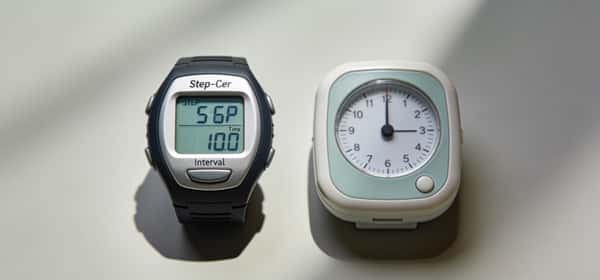
Quick answer: They’re two different philosophies. 10,000 steps is a volume goal — accumulate lots of easy movement throughout the day. Japanese walking is an intensity method — a focused 30-minute interval workout of alternating fast and slow walking. Research shows both are good for you, but Japanese walking is more time-efficient for improving fitness, strength, and blood pressure, while step-counting is great for general daily activity. Notably, the 10,000-steps target was never based on science — health benefits actually start well below it. The best approach for many people is to combine them: hit a sensible step count for daily movement and do Japanese walking for structured fitness. For the method, see Japanese walking.
The 10,000 steps myth
Let’s start with a surprise that reframes the whole debate: the 10,000-steps goal was a marketing invention, not a scientific finding. It originated from a 1960s Japanese pedometer whose name roughly translated to “10,000-step meter.” The round number stuck and became global gospel — but it was never derived from research on how many steps you actually need.
Choose your goal and get a personalized meal plan in minutes.
Powered by DietGenie Eat healthy
 Lose weight
 Gain muscles
 Explore new cuisines
And the science tells a more encouraging story. A meta-analysis of over 226,000 people found that health benefits from walking kick in well below 10,000 steps: the risk of early death dropped progressively starting from under 4,000 steps a day, with every additional 1,000 steps linked to a further 15% lower risk of all-cause mortality.1 More steps kept helping, but there was no magic threshold at 10,000 — meaningful benefits arrived far earlier. So if 10,000 has felt impossibly daunting, the good news is you don’t need to hit it to benefit.
Volume vs intensity
The core difference between the two approaches:
10,000 steps (volume): the goal is total daily movement, accumulated however it happens — walking to work, pacing on calls, errands, a stroll. It’s mostly low-intensity, spread across the day. Its strength is reducing sedentary time and keeping you generally active.
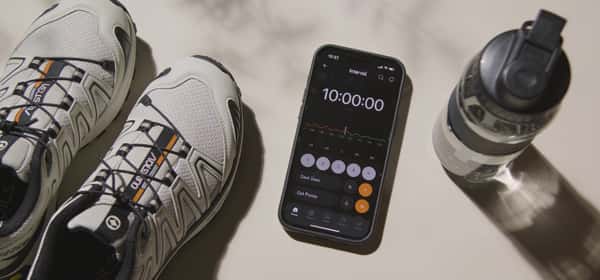
Japanese walking (intensity): the goal is a focused workout — 30 minutes of deliberately alternating hard and easy walking. Its strength is driving fitness adaptations through the high-effort intervals. Interval walking has been shown to improve aerobic capacity, leg strength, and blood pressure more than steady walking of the same duration.2 The intensity is the ingredient a step count usually lacks.
Neither is “wrong” — they optimize for different things. Steps maximize daily activity; Japanese walking maximizes fitness per minute.
Japanese walking vs 10,000 steps, side by side
| 10,000 steps | Japanese walking | |
|---|---|---|
| Philosophy | Volume of movement | Intensity intervals |
| Time | Spread across the day | ~30 focused minutes |
| Intensity | Mostly low | Alternating high/low |
| Best for | Daily activity, less sitting | Fitness, strength, BP |
| Fitness gains | Modest | Greater per minute |
| Effort to track | Step counter all day | Timer for one session |
| Evidence | Benefits start well under 10k | RCTs show it beats steady walking |
Which should you choose?
Match it to your goal and lifestyle:
- Choose Japanese walking if your priority is improving fitness, strength, or blood pressure efficiently, you’re time-pressed, or you want a structured workout with research behind it. Thirty focused minutes beats hours of aimless steps for fitness gains.
- Choose a step goal if you mainly want to combat sitting, stay generally active, and build gentle daily movement — and don’t stress about hitting exactly 10,000; even 6,000–8,000 delivers a lot of the benefit.
- Best of all: do both. They’re complementary, not competing. Use daily steps to stay active and reduce sedentary time, and add Japanese walking a few times a week for the fitness and health boost that low-intensity steps can’t fully provide.
Think of steps as your baseline activity and Japanese walking as your actual workout. Together they cover both bases.
What about tracking?
The two approaches also differ in how you monitor them, which suits different personalities:
- Step counting appeals to data-lovers — a watch or phone tallies your steps all day, giving a satisfying running number and streaks to chase. The downside is it can turn into anxious number-watching, and it counts a slow shuffle the same as a brisk stride.
- Japanese walking needs almost no tracking — just an interval timer for one focused session. There’s no all-day number to obsess over; you simply do the workout and you’re done. That simplicity is freeing for people who’d rather not stare at a step counter.
Neither is better, but if constant tracking stresses you out, Japanese walking’s “just do the 30 minutes” model is refreshingly low-pressure. If you love a metric to hit, steps give you one.
For weight loss specifically
If fat loss is your aim, the intensity of Japanese walking gives you more calorie burn per minute than easy steps — but neither out-runs diet. Weight loss still comes down to a calorie deficit, with exercise as support. We cover this in Japanese walking for weight loss, and the calorie side in can you lose weight by walking.
Suggested read: Interval Walking Training: The Research Behind It
The bottom line
Japanese walking vs 10,000 steps isn’t really a battle — it’s volume versus intensity, and they serve different purposes. The 10,000-steps target, it turns out, was never scientific; benefits from walking start well under 4,000 steps and keep rising, so the round number is more habit than requirement. Step counting is excellent for staying generally active and cutting sedentary time.
Japanese walking, by contrast, is a time-efficient, research-backed way to actually improve fitness, leg strength, and blood pressure — the intervals deliver what a low-intensity step count can’t. For most people, the smartest move is to stop treating them as rivals: keep up sensible daily steps for baseline activity, and add Japanese walking a few times a week as your structured workout. Do both, and you get the best of movement and fitness. To start the interval method, see Japanese walking.
Banach M, Lewek J, Surma S, et al. The association between daily step count and all-cause and cardiovascular mortality: a meta-analysis. Eur J Prev Cardiol. 2023;30(18):1975-1985. PubMed ↩︎
Nemoto K, Gen-no H, Masuki S, Okazaki K, Nose H. Effects of high-intensity interval walking training on physical fitness and blood pressure in middle-aged and older people. Mayo Clin Proc. 2007;82(7):803-811. PubMed ↩︎