Heavy periods are the single most common cause of iron deficiency in reproductive-age women. The cumulative blood loss outpaces dietary iron intake for many women with heavier-than-average bleeding, leading to gradual depletion of iron stores. Most affected women never connect their fatigue, hair loss, or brain fog to their periods — and most doctors don’t routinely check ferritin in women complaining of menstrual symptoms.

This guide covers how to know if your bleeding is heavy, how iron status interacts with periods, how to manage iron replacement, and when the bleeding itself needs medical attention rather than just supplementation.
Quick answer
- Normal period blood loss: 30–80 mL total over the period
- Heavy menstrual bleeding (HMB): > 80 mL per period — affects about 1 in 4 reproductive-age women
- Iron loss per period: ~15–40 mg normally; >40 mg with HMB
- Annual iron drain: Up to 480+ mg/year, which often exceeds what diet alone can replace
- Treatment: Address the bleeding cause + alternate-day oral iron (60–120 mg with vitamin C in the morning)
- When to escalate: Bleeding affecting quality of life, signs of anemia (breathlessness, paleness, severe fatigue), or persistent low ferritin despite supplementation
How to know if your periods are heavy
The medical definition of heavy menstrual bleeding (HMB) is blood loss exceeding 80 mL per period. Measuring that exactly is impractical, so practical signs include:
The right meals give you the nutrients you need. Choose your goal and get your plan.
Powered by DietGenie Eat healthy
 Lose weight
 Gain muscles
 Explore new cuisines
- Soaking through a pad or tampon every 1–2 hours for several hours
- Needing to change protection during the night
- Periods lasting longer than 7 days
- Passing blood clots larger than a quarter
- Feeling lightheaded, dizzy, or breathless during your period
- Periods that interfere with normal activities (missing work/school)
- Doubling up on protection (pad + tampon) regularly
If 2+ of these apply, your periods are heavier than average. This isn’t a personal failing or “just how your body works” — it’s a clinical sign that deserves medical attention.
Why heavy periods cause iron deficiency
The math is straightforward but underappreciated:
- Each milliliter of blood contains ~0.5 mg of iron
- Normal period: 30–80 mL × 0.5 = 15–40 mg iron lost
- Heavy period: 100–200+ mL × 0.5 = 50–100+ mg iron lost
- Over 12 cycles per year, a woman with heavy bleeding loses 600–1,200+ mg of iron annually
Daily dietary iron absorption (even with adequate intake) typically nets 1–2 mg per day = 365–730 mg/year. If your bleeding loss exceeds your absorbed intake, you slowly deplete stores.
This is why iron deficiency develops gradually in women with heavy periods. It’s not a sudden event; it’s the slow erosion of ferritin over years. By the time you feel symptomatic, you’ve often been depleting for a long time.
The vicious loop
Iron deficiency itself can affect bleeding patterns. Severe iron deficiency may cause:
- Increased capillary fragility
- Platelet dysfunction in extreme cases
- Worsening uterine bleeding in some women
So in some women, low iron → worse bleeding → lower iron → worse bleeding. Treating iron deficiency in these cases may actually improve menstrual flow somewhat — though usually the bleeding has a structural or hormonal cause that needs separate attention.
Causes of heavy menstrual bleeding worth investigating
If your periods are heavy, the cause matters:
Common structural/hormonal causes
- Uterine fibroids — benign muscle growths in the uterine wall
- Adenomyosis — endometrial tissue within the uterine muscle
- Endometriosis — see endometriosis symptoms
- Polyps — small growths in the endometrial lining
- Hormonal imbalance — particularly anovulatory cycles in perimenopause
- PCOS — irregular cycles can include heavy bleeding
- Hypothyroidism — can cause heavier bleeding
Less common but important
- Bleeding disorders — von Willebrand disease (most common inherited bleeding disorder; underdiagnosed in women)
- IUD effects — copper IUDs typically increase bleeding; hormonal IUDs decrease it
- Medication effects — anticoagulants, certain hormonal medications
- Endometrial hyperplasia or cancer — particularly relevant in perimenopausal and postmenopausal women
If you have heavy bleeding and haven’t been worked up, this is worth a doctor visit — particularly if bleeding is new, worsening, or associated with severe cramps. Don’t accept “just bad periods” as the entire answer.
Suggested read: What Is Perimenopause? Plain-English Guide to the Transition
Iron replenishment alongside heavy periods
Get tested before supplementing
Before starting iron, get bloodwork. You want to know:
- Ferritin — your iron stores (the key marker)
- Hemoglobin — whether anemia is present
- CBC — full blood count
- CRP — to interpret ferritin
See ferritin levels for what the numbers actually mean. The “normal” range often misses iron deficiency in women — ferritin <30 ng/mL is iron deficiency in most contexts, and 30–50 ng/mL is often functionally deficient if you’re symptomatic.
Modern oral iron protocol
A 2020 review showed that alternate-day morning dosing improves absorption and reduces side effects compared to traditional daily divided dosing.1 The biology: high oral iron doses raise hepcidin (which blocks absorption) for 24 hours, so daily dosing is partially self-defeating.
Protocol for women with heavy periods:
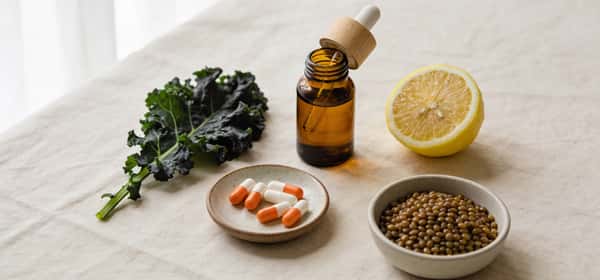
- 60–120 mg elemental iron (e.g., ferrous sulfate 325 mg = 65 mg elemental; ferrous bisglycinate 100 mg elemental per dose)
- Morning, ideally empty stomach, or with a small amount of food containing vitamin C
- Alternate days (every other day)
- With 200 mg vitamin C or orange juice for absorption
- Avoid coffee, tea, dairy, calcium supplements within 2 hours
- Continue 3+ months past symptom resolution to refill stores fully
Different iron forms
| Form | Elemental iron per typical dose | Tolerability | Notes |
|---|---|---|---|
| Ferrous sulfate | 65 mg per 325 mg tablet | Standard; GI side effects common | Cheapest |
| Ferrous gluconate | 38 mg per 325 mg tablet | Gentler than sulfate | Need more pills |
| Ferrous fumarate | 106 mg per 325 mg tablet | Moderate tolerability | More elemental per pill |
| Ferrous bisglycinate | 25–30 mg per 250 mg tablet | Generally well tolerated | More expensive |
| Polysaccharide iron | 50 mg elemental | Often well tolerated | Newer option |
| Heme iron polypeptide | Variable | Very gentle | Expensive |
If sulfate causes GI issues, bisglycinate or polysaccharide iron are reasonable alternatives. For specifics: iron supplements for women and should you take iron supplements.
Suggested read: Endometriosis and Inflammation: Mechanism and What Helps
When to consider IV iron
The 2025 JAMA review specifies IV iron indications:2
- Oral iron intolerance (severe GI symptoms despite trying multiple forms)
- Poor absorption (celiac, IBD, post-bariatric surgery)
- Ongoing significant blood loss that outpaces oral absorption
- Severe anemia needing rapid correction
- Chronic inflammatory conditions
For women with very heavy bleeding who can’t keep up with oral iron, IV iron is sometimes the only way to actually restore stores. It’s not exotic — modern preparations (ferric carboxymaltose, ferric derisomaltose) are safe and well-tolerated.
Reducing the bleeding itself
Iron supplementation treats the consequence; reducing bleeding treats the cause. Options to discuss with a doctor:
Hormonal management
- Combined oral contraceptives — can reduce bleeding by 30–50%
- Levonorgestrel IUD (Mirena, Liletta) — typically reduces bleeding by 70–90% over 6 months; often the most effective non-surgical option
- Progestin-only methods — pills or injections
- GnRH analogues — for severe cases, usually short-term
Non-hormonal medical options
- Tranexamic acid — taken during periods only; reduces bleeding ~50%. Prescription. Doesn’t affect cycles.
- NSAIDs — ibuprofen or mefenamic acid taken during periods can reduce bleeding modestly
- Iron-conserving lifestyle — reduce frequent blood donation, manage GI bleeding from NSAID overuse
Procedural options (for persistent bleeding)
- Endometrial ablation — destroys the uterine lining; reduces bleeding significantly
- Fibroid treatment — myomectomy, uterine artery embolization
- Hysterectomy — definitive but irreversible
The choice depends on whether you want future pregnancies, severity of bleeding, and underlying cause.
Dietary support
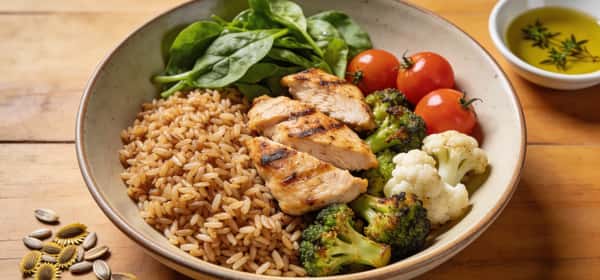
While diet alone rarely fixes established iron deficiency in women with heavy periods, it should be the foundation:
- Heme iron sources (best absorbed): beef, lamb, dark poultry, liver, sardines, shellfish
- Non-heme iron sources: lentils, chickpeas, beans, tofu, spinach, pumpkin seeds, fortified cereals
- Always pair with vitamin C: peppers, citrus, strawberries, kiwi, tomatoes
- Avoid iron-absorption blockers with iron-rich meals: coffee, tea, calcium, oxalates
See high iron foods, iron-rich plant foods, and ways to increase iron absorption for specifics.
Suggested read: Endometriosis Natural Treatment: Evidence-Based Approaches
Tracking your progress
A reasonable monitoring schedule:
- Baseline ferritin + CBC before starting any intervention
- 3 months in: retest. Ferritin should be rising. Hemoglobin should be normal.
- 6 months in: retest. Target ferritin >50 ng/mL minimum, ideally 70+.
- Annual: retest while ongoing risk (still menstruating, heavy periods continuing).
If ferritin isn’t rising despite consistent oral iron, something is wrong:
- Not actually taking it consistently
- Not absorbing it (try a different form or check for GI issues)
- Ongoing significant blood loss exceeding what you’re absorbing
- IV iron may be appropriate
When to escalate
Bring up your bleeding with a doctor — particularly a gynecologist — if:
- You haven’t been worked up for the cause of heavy periods
- Iron supplementation isn’t restoring your ferritin
- Bleeding is worsening over time
- You’re missing work, school, or activities due to bleeding
- You have symptoms of anemia (shortness of breath, lightheadedness, severe fatigue, paleness, chest pain on exertion)
- You’re trying to conceive — heavy bleeding history may indicate conditions affecting fertility
- New symptoms appear (pelvic pain, painful sex, bleeding between periods)
“Heavy periods are just genetic” isn’t an acceptable final answer when treatments exist.
The bigger picture
Heavy periods + chronic iron deficiency is one of those situations where addressing only one side leaves you stuck. Iron supplementation without reducing the bleeding cause means you’re constantly playing catch-up — and many women feel they’re “always taking iron” without making real progress on energy or symptoms.
The integrated approach:
- Diagnose the cause of heavy bleeding (gyn workup if not done)
- Treat the bleeding (hormonal, non-hormonal, or procedural as appropriate)
- Replenish iron with modern alternate-day protocol
- Maintain dietary iron as the foundation
- Monitor ferritin to confirm improvement
For the broader iron picture: iron deficiency in women. For the diagnostic side: ferritin levels and iron deficiency symptoms. For pregnancy-specific iron: iron during pregnancy.
For the underlying menstrual cycle context: menstrual cycle phases and the menstrual phase.
Bottom line
Heavy periods are the most common cause of iron deficiency in reproductive-age women, with annual iron loss often exceeding what diet can replace. Don’t treat just one side: investigate the bleeding cause (fibroids, adenomyosis, hormonal issues, bleeding disorders), reduce bleeding through hormonal or non-hormonal interventions when appropriate, and replenish iron with alternate-day morning oral iron (60–120 mg with vitamin C). Target ferritin >50 ng/mL minimum, ideally 70+. Get tested before, during, and after treatment. Don’t accept “just heavy periods” or “your ferritin is normal” as final answers if you’re symptomatic — both are correctable.
Stoffel NU, von Siebenthal HK, Moretti D, Zimmermann MB. Oral iron supplementation in iron-deficient women: How much and how often? Molecular Aspects of Medicine. 2020;75:100865. PubMed | DOI ↩︎
Auerbach M, DeLoughery TG, Tirnauer JS. Iron Deficiency in Adults: A Review. JAMA. 2025;333(20):1813-1823. PubMed | DOI ↩︎