You know the feeling: an hour or two after a carb-heavy lunch, your eyes get heavy, your focus dissolves, and suddenly you’re rummaging for a snack or a third coffee. That’s a sugar crash, and it’s not a personal failing or a sign you need more willpower — it’s a predictable consequence of how you ate. The good news is that because crashes follow a pattern, they’re genuinely preventable with a few simple tweaks. Here’s why they happen and how to keep your energy steady.
Quick answer: A sugar crash (reactive hypoglycemia) is the energy dip that follows a blood sugar spike. When you eat fast-digesting carbs alone, glucose shoots up, your body releases a big surge of insulin, and that can overshoot — dropping your blood sugar low enough to leave you tired, foggy, irritable, and craving more sugar. You avoid crashes by avoiding the big spike in the first place: pair carbs with protein, fiber, and fat, don’t eat refined carbs on their own, eat carbs after vegetables and protein, and take a short walk after meals. Steady the spike, and you steady the crash.
What a sugar crash actually is
A sugar crash is the slump that comes after a blood sugar spike — which is why it’s so often misunderstood. The tiredness doesn’t come from “not enough food”; it comes from the rebound.
Choose your goal and get a meal plan that considers your blood sugar.
Powered by DietGenie Eat healthy
 Lose weight
 Gain muscles
 Explore new cuisines
Here’s the sequence:
- You eat fast-digesting carbs (a pastry, white-bread sandwich, sugary drink) with little else.
- Glucose floods your bloodstream and spikes sharply.
- Your pancreas releases a large surge of insulin to clear it.
- That insulin response can overshoot, pulling blood sugar down quickly — sometimes below where it started.
- The low leaves you tired, foggy, shaky, irritable, and hungry again, often craving more sugar to climb back up.
That last step is the trap: the crash drives you to eat more quick carbs, which spikes you again, and the cycle repeats. The bigger the initial spike, the harder the crash tends to be — so preventing crashes is really about softening glucose spikes.
The symptoms of a crash
You might recognize these, usually one to three hours after a carb-heavy meal:
- Sudden tiredness or the classic afternoon slump
- Brain fog and trouble concentrating
- Irritability or “hanger”
- Shakiness or feeling jittery
- Strong cravings, especially for sugar or more carbs
- Renewed hunger soon after eating
If this is a regular pattern for you, your meals — not your willpower — are the likely culprit.
How to avoid sugar crashes
Every fix comes down to the same principle: prevent the oversized spike, and the crash that follows shrinks with it.
1. Never eat carbs “naked”
The fastest route to a crash is refined carbs by themselves. Always pair them with:
- Protein — eggs, yogurt, chicken, beans (the most stabilizing addition). See high-protein foods.
- Fiber — vegetables, fruit with skin, whole grains. See high-fiber foods.
- Healthy fat — avocado, nuts, olive oil.
An apple with peanut butter beats an apple alone; toast with eggs beats toast with jam.
2. Build balanced meals
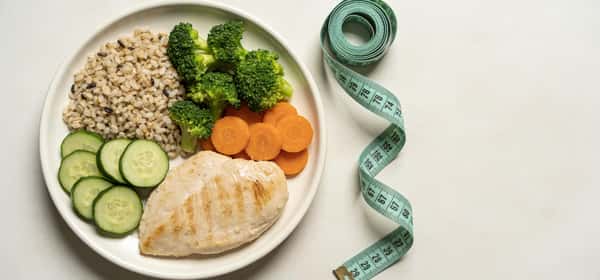
A meal with protein, fiber, and fat alongside your carbs digests slowly and releases energy steadily, avoiding the spike-and-crash entirely. Lean on genuinely filling foods and steady energy-boosting foods rather than quick sugar.
3. Use food order
Eating your vegetables and protein before your carbs blunts the glucose rise, which means a gentler comedown — a sequence shown to lower the post-meal glucose spike in controlled trials.1 It’s effortless — see food order for blood sugar.
Suggested read: Why You're Tired After Eating & How to Avoid It
4. Walk it off
A short walk after eating helps your muscles use up glucose directly, smoothing the post-meal curve and reducing the rebound dip. A meta-analysis found that light-intensity walking after meals significantly lowered post-meal glucose and insulin compared with sitting.2
5. Watch the liquid sugar
Sugary drinks, juice, and sweetened coffees cause some of the sharpest spikes and hardest crashes because there’s nothing to slow them. Water, unsweetened drinks, or at least pairing them with food helps.
Crash-proofing common meals
| Crash-prone | Steadier swap |
|---|---|
| Pastry + coffee | Eggs + whole-grain toast + coffee |
| White-bread sandwich alone | Sandwich + side salad, protein-rich filling |
| Fruit juice | Whole fruit + a handful of nuts |
| Big bowl of pasta | Smaller pasta + vegetables + protein first |
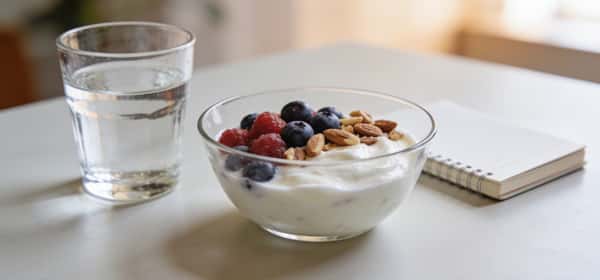
| Sugary cereal | Greek yogurt + berries + seeds |
Small swaps, no deprivation — just balanced plates instead of fast carbs alone.
The caffeine-and-crash trap
Worth flagging because it catches so many people: reaching for coffee to fix a crash often makes the cycle worse. A sugary coffee drink (or a pastry alongside it) adds another quick-carb spike, setting up the next crash. And caffeine on its own can mask tiredness without fixing the underlying glucose dip, so you end up wired but still foggy.
If you want coffee, have it with or after a balanced meal rather than using a sweetened version as a stand-alone pick-me-up. Plain or lightly sweetened coffee with a protein-containing snack steadies you far better than a sugar-loaded drink that spikes and drops you all over again.
A note on skipping meals
It’s tempting to think skipping a meal avoids crashes, but it often does the opposite. Arriving at your next meal overly hungry makes you eat faster and reach for quick carbs first — the exact setup for a big spike and crash. Eating regular, balanced meals keeps your hunger and your blood sugar on an even keel, which is the whole goal.
When it’s more than diet
Most sugar crashes are diet-driven and fixable. But if you get severe symptoms — dizziness, sweating, confusion, or shakiness that’s intense or frequent — especially unrelated to high-carb meals, that’s worth a doctor’s visit to rule out other causes. For most people, though, balancing meals solves it.
Suggested read: Glucose Spikes: Are They Bad and How to Blunt Them
The bottom line
Sugar crashes aren’t random and they aren’t about willpower — they’re the predictable rebound after a blood sugar spike, when an oversized insulin surge drops your glucose and leaves you tired, foggy, and craving more sugar. Because the crash follows the spike, the fix is to prevent the spike: stop eating refined carbs alone, build meals around protein, fiber, and fat, eat carbs after your veggies and protein, and walk after meals.
Do that and the afternoon slump largely disappears, your energy stays even, and you break the snack-crash-snack cycle. It’s not about cutting carbs — it’s about never eating them naked. Steady the spike, and you steady your whole day. For the bigger toolkit, see blood sugar balance.
Sun L, Goh HJ, Govindharajulu P, Leow MK, Henry CJ. Postprandial glucose, insulin and incretin responses differ by test meal macronutrient ingestion sequence (PATTERN study). Clin Nutr. 2020;39(3):950-957. PubMed ↩︎
Buffey AJ, Herring MP, Langley CK, Donnelly AE, Carson BP. The Acute Effects of Interrupting Prolonged Sitting Time in Adults with Standing and Light-Intensity Walking on Biomarkers of Cardiometabolic Health in Adults: A Systematic Review and Meta-analysis. Sports Med. 2022;52(8):1765-1787. PubMed ↩︎