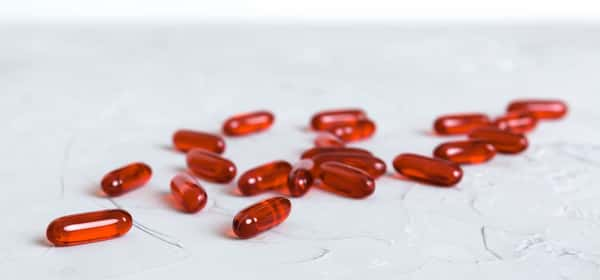
Omega-3 fatty acids provide several well-documented health benefits.

The best way to get them is by eating fatty fish at least twice per week. If you don’t eat fish regularly, supplements can help fill the gap.
What matters most in supplements is the amount of eicosapentaenoic acid (EPA) and docosahexaenoic acid (DHA)—the most beneficial forms of omega-3. These are found in fatty fish and algae.
Real meals matter more than any supplement. Choose your goal and get your plan.
Powered by DietGenie Eat healthy
 Lose weight
 Gain muscles
 Explore new cuisines
You can also get omega-3 from plant sources like flax seeds and walnuts, but these contain alpha-linolenic acid (ALA), which your body converts to EPA and DHA very inefficiently.
Here’s what the research says about optimal omega-3 intake.
In this article
Official omega-3 dosage guidelines
Health organizations vary somewhat in their recommendations, but most agree on a baseline.
For healthy adults, the general consensus is 250–500 mg of combined EPA and DHA daily.
For ALA (the plant-based omega-3), the recommended dietary allowance is 1.6 grams per day for men and 1.1 grams per day for women.
Higher doses are often recommended for specific health conditions, which we’ll cover below.
Suggested read: 12 Foods That Are High in Omega-3 Fatty Acids
Summary: Most health organizations recommend 250–500 mg of combined EPA and DHA daily for general health. There’s no official RDA for EPA and DHA, but there is for ALA.
Omega-3 for specific health conditions
Research supports higher omega-3 doses for certain conditions.
Heart health
A 2020 meta-analysis of 40 studies involving over 135,000 participants found that EPA and DHA supplementation was associated with reduced risk of heart attack (13% reduction), coronary heart disease events (10% reduction), and coronary heart disease mortality (9% reduction). The protective effect appeared to increase with higher doses.1
The American Heart Association recommends that people with coronary heart disease take about 1,000 mg of combined EPA and DHA daily. For those with high triglycerides, doses of 2,000–4,000 mg daily may be prescribed under medical supervision.2
That said, some large trials have shown mixed results. Omega-3 supplements appear most beneficial for people with existing heart disease or elevated triglycerides rather than for primary prevention in healthy populations.
Depression and anxiety
Studies suggest that omega-3s, particularly EPA, may help reduce symptoms of depression and anxiety. Effective doses in research range from 200–2,200 mg per day.
For mood disorders, supplements with higher EPA-to-DHA ratios may be more effective.
Cancer
Some observational studies have linked higher fish and omega-3 intake with reduced risk of certain cancers, including breast, prostate, and colon cancers.
However, this is correlation, not causation. Controlled trials haven’t confirmed that omega-3 supplements prevent cancer.
Summary: Higher omega-3 doses (1,000–4,000 mg daily) may benefit heart health and mood. Effects on cancer risk remain unclear.
Omega-3 for children and pregnant women
Omega-3 fatty acids, especially DHA, play a critical role during pregnancy and early development.
A Cochrane review of 70 trials found that omega-3 supplementation during pregnancy reduced the risk of preterm birth before 37 weeks and early preterm birth before 34 weeks. There was also a reduced risk of low birth weight babies.3
Most guidelines recommend pregnant and breastfeeding women consume an additional 200 mg of DHA daily beyond the standard recommendation.
For infants and children, global and national organizations typically recommend 50–100 mg of combined EPA and DHA per day.
Suggested read: Top Omega-3 Supplements: Key Benefits & Buying Guide
Summary: Pregnant and nursing women should aim for an additional 200 mg DHA daily. Children need 50–100 mg of combined EPA and DHA.
Omega-6 intake may affect your omega-3 needs
The typical Western diet contains roughly 10 times more omega-6 fatty acids than omega-3s. Most of this omega-6 comes from refined vegetable oils in processed foods.
Many researchers believe the optimal omega-6 to omega-3 ratio should be closer to 2:1 or even 1:1.
Here’s why it matters: omega-6 and omega-3 fatty acids compete for the same enzymes that convert them into their active forms. When omega-6 intake is very high, it can effectively crowd out omega-3 metabolism.
So beyond increasing omega-3 intake, you may want to reduce your consumption of oils high in omega-6, like corn, soybean, and sunflower oils.
Suggested read: Are Vegetable and Seed Oils Bad for Your Health? | Health Insights
Summary: Balancing your omega-6 to omega-3 ratio may be as important as absolute omega-3 intake. Consider reducing highly processed oils rich in omega-6.
Too much omega-3 can be harmful
The FDA states that omega-3 supplements containing EPA and DHA are generally safe up to 3,000 mg per day.
The European Food Safety Authority (EFSA) sets a slightly higher limit at 5,000 mg per day.
Potential concerns with very high doses include:
- Blood thinning: Omega-3s can affect platelet function. People planning surgery are often advised to stop supplements 1–2 weeks beforehand.
- Vitamin A toxicity: Some omega-3 supplements, particularly cod liver oil, contain high amounts of vitamin A, which can be toxic in excess.
- Uncertain benefits: Doses above 5,000 mg haven’t been shown to provide additional benefits, making the risk-benefit ratio unfavorable.
For most people, staying within 2,000–3,000 mg daily is both safe and sufficient.
Suggested read: Fish Oil Side Effects: 8 Risks of Taking Too Much
Summary: Up to 3,000–5,000 mg daily appears safe, but such high doses are rarely necessary. Watch out for blood-thinning effects and vitamin A content in some supplements.
Omega-3 supplement doses
Not all omega-3 supplements are created equal.
The key is checking the actual EPA and DHA content—not just the total fish oil amount. A supplement may advertise 1,000 mg of fish oil but contain only 300 mg of combined EPA and DHA.
This means you might need several capsules to reach your target dose. Read labels carefully.
Quality also matters. Look for supplements that have been third-party tested for purity and potency. Triglyceride-form fish oil may be better absorbed than ethyl ester forms.
Suggested read: Fish Oil Dosage: How Much Should You Take Per Day?
Summary: Focus on EPA and DHA content, not total fish oil. You may need multiple capsules to reach effective doses.
The bottom line
Omega-3 needs vary by individual, but here’s a practical summary:
- General health: 250–500 mg combined EPA and DHA daily
- Heart disease or elevated triglycerides: 1,000–4,000 mg daily (consult your doctor)
- Pregnancy and breastfeeding: Add 200 mg DHA to your regular intake
- Children: 50–100 mg combined EPA and DHA daily
- Upper limit: Don’t exceed 3,000–5,000 mg daily without medical supervision
The simplest approach is eating fatty fish (salmon, mackerel, sardines) twice per week. If that’s not realistic, a quality omega-3 supplement can help you meet your needs.
Bernasconi AA, Wiest MM, Lavie CJ, Milani RV, Laukkanen JA. Effect of Omega-3 Dosage on Cardiovascular Outcomes: An Updated Meta-Analysis and Meta-Regression of Interventional Trials. Mayo Clin Proc. 2021;96(2):304-313. PubMed ↩︎
Mori TA. Marine OMEGA-3 fatty acids in the prevention of cardiovascular disease. Fitoterapia. 2017;123:51-58. PubMed ↩︎
Middleton P, Gomersall JC, Gould JF, Shepherd E, Olsen SF, Makrides M. Omega-3 fatty acid addition during pregnancy. Cochrane Database Syst Rev. 2018;11(11):CD003402. PubMed ↩︎