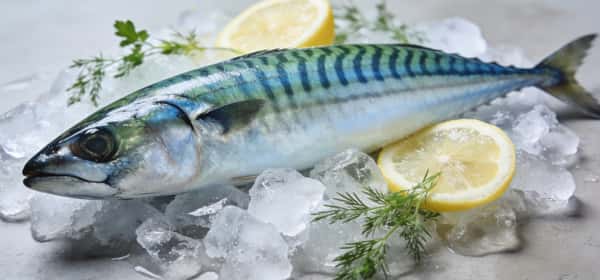
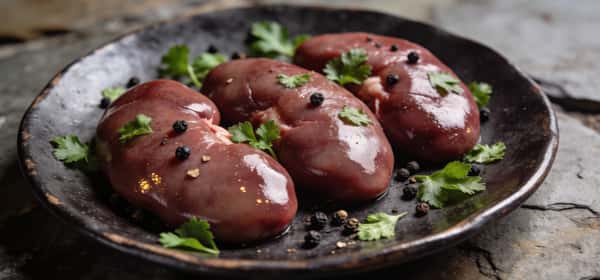
Most people who want to eat more organ meats get stuck at the same place: the flavor. Liver tastes like liver. Kidney tastes like kidney. That metallic, minerally punch is a lot to ask of a beginner. Beef heart is the exception, and it’s the one worth trying first.
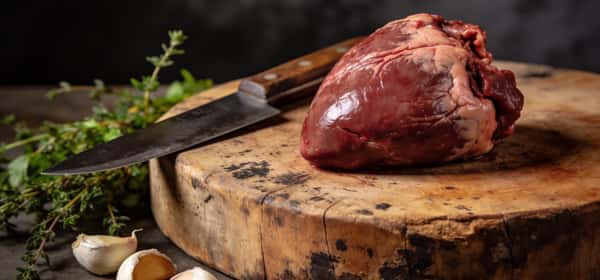
Here’s the thing that changes everything about it: the heart is a muscle. It pumps blood every second of an animal’s life, which makes it one of the hardest-working muscles in the body — but it’s still muscle tissue, not a glandular filter like the liver. That single fact is why beef heart tastes and cooks almost exactly like a lean cut of steak.
Quick answer: Beef heart is a working muscle rather than a glandular organ, so it has a mild, beefy flavor and a firm, steak-like texture instead of the strong taste people associate with organ meat. It’s very lean, packed with complete protein, and one of the richest food sources of CoQ10 — a compound your mitochondria use to make energy. Add in generous B12, iron, zinc, selenium, and riboflavin, and you get a nutrient-dense, affordable cut that’s the easiest entry point into eating organs.
Choose your goal and get a meal plan full of foods you actually like.
Powered by DietGenie Eat healthy
 Lose weight
 Gain muscles
 Explore new cuisines
Why beef heart is the easiest organ meat to start with
If you’ve ever choked down a bite of liver to be healthy, you know the wall you hit. Glandular organs concentrate strong flavors and a soft, sometimes chalky texture. Beef heart skips all of that.
Because it’s dense muscle, it slices into clean, firm pieces and cooks up with a taste that lands somewhere between sirloin and a lean roast — a little richer, a little more mineral, but nothing that shouts “organ.” Season it like steak and most people can’t tell they’re eating heart at all.
That’s the whole pitch. It’s a gateway. Once heart is a normal part of your rotation, the stronger organs feel a lot less intimidating, and you can branch out to beef liver benefits when you’re ready for the nutritional heavyweight.
The CoQ10 angle: beef heart is a rare whole-food source
This is the standout. Coenzyme Q10 (CoQ10) sits inside your mitochondria, where it helps shuttle electrons through the chain that produces cellular energy. Your body makes its own, but levels dip with age, and getting more from food is surprisingly hard.
Heart muscle is one of the most CoQ10-dense tissues in nature — it has to be, since it never stops working — which makes beef heart among the richest dietary sources you can eat.1 For context, the average diet supplies only about 3 to 6 mg of CoQ10 per day, and meat (heart especially) is where most of that comes from.1 There aren’t many whole foods that move that number, so a serving of heart is a genuinely uncommon way to get more without reaching for a capsule.
If you want the full picture on what this compound does and where the supplement evidence is strong, we cover it in detail in CoQ10 benefits.
What else is in beef heart
CoQ10 gets the headline, but the rest of the profile is why heart earns a spot on your plate. It’s lean — noticeably lower in fat than most steak — while delivering a big dose of complete protein, meaning all nine essential amino acids in the ratios your body actually uses. If you’re building meals around high protein foods, it fits right in.
The micronutrients stack up too:
- Vitamin B12 — a rich animal source. B12 runs low on plant-based diets, and deficiency shows up regularly in people who cut out animal foods, so heart is an easy way to top up.2 It’s one of the better high vitamin B12 foods you can eat.
- Iron — and the heme form found in beef, which your gut absorbs far more efficiently than the non-heme iron in plants.3
- Zinc — heart is a solid contributor if you’re tracking high zinc foods for immune and hormone support.
- Selenium and riboflavin — rounding out the antioxidant and energy-metabolism side of the profile.
Where beef heart fits: heart vs liver vs ribeye
Beef heart lives in an interesting middle spot — nearly as approachable as a steak, but with an organ-meat nutrient edge. Here’s how it stacks up against the two cuts it sits between:
| Beef heart | Beef liver | Ribeye steak | |
|---|---|---|---|
| Flavor / approachability | Mild, steak-like — easy | Strong, distinctly “organ” — hard | Mild, familiar — easiest |
| Protein | Very high, lean | High | High |
| CoQ10 | Among the richest food sources | High | Moderate |
| Vitamin A | Low | Extremely high (can overdo it) | Low |
| Cost | Cheap | Cheap | Expensive |
The takeaway: liver wins on sheer micronutrient density but is a hard sell on taste and can pile on more vitamin A than you want. Ribeye is the easiest to eat but costs the most and offers less CoQ10. Heart threads the needle — steak-like eating, organ-meat CoQ10, at a fraction of the price.
Suggested read: Desiccated Liver Supplements: A Straight Guide
How to cook beef heart
Treat it like a lean steak and you’ll get it right. The one rule that matters: don’t overcook it. Heart is lean, so there’s little fat to keep it forgiving — push it past medium and it turns tough and rubbery fast.
A few approaches that work:
- Grill or sear it. Slice the heart into steaks or strips, hit it with high heat, and pull it at medium-rare to medium. A hot, fast cook keeps it tender.
- Slice it thin. Cutting against the grain into thin pieces makes it eat more tender and cooks in seconds — great for stir-fries or skewers.
- Marinate first. An acidic marinade (citrus, vinegar, a little soy) softens the texture and mellows the mineral note even further.
- Grind it into burgers. The lowest-effort entry of all: blend roughly 25% ground heart into your burger or meatball mix. It disappears into the beef and nobody will know it’s there.
Before cooking, trim the tough outer fat, any silverskin, and the valve tissue at the top — those parts stay chewy no matter what you do. What’s left is clean, dark-red muscle that behaves just like steak.
A few honest cautions
Beef heart is nutrient-dense, not magic, and a couple of things are worth knowing:
- Cholesterol. Like other animal foods, heart contains a moderate amount of dietary cholesterol. For most people that’s fine within a balanced diet, but if your doctor has you watching intake, factor it in.
- Purines and gout. Organ meats carry purines, which break down into uric acid. Heart is milder here than liver or kidney, but it’s not purine-free — and higher meat intake overall is associated with a greater risk of gout.4 If you’re prone to gout, keep portions modest.
- Trim it properly. Beyond texture, cleaning off the outer fat and valves just makes for a better, leaner result.
None of this makes heart a food to avoid. It means treating it like what it is — a rich, real food best eaten as part of a varied diet rather than by the pound.
Suggested read: Organ Meats: Benefits, Nutrition & How to Start
The bottom line
If organ meats have always felt like a bridge too far, beef heart is where to start. It’s a working muscle, so it tastes and cooks like a lean steak instead of an organ — mild, firm, and easy to season. On top of that, it delivers complete protein, strong B12, well-absorbed heme iron, zinc, selenium, riboflavin, and a standout amount of CoQ10 that’s genuinely hard to get from other whole foods. Grill it like steak, don’t overcook it, or grind it quietly into burgers. It’s cheap, it’s approachable, and it’s the smartest first step into eating nose-to-tail.
Pravst I, Žmitek K, Žmitek J. Coenzyme Q10 contents in foods and fortification strategies. Crit Rev Food Sci Nutr. 2010;50(4):269-280. PubMed ↩︎ ↩︎
Jensen CF, et al. Vitamin B12 levels in children and adolescents on plant-based diets: a systematic review and meta-analysis. Nutr Rev. 2023;81(8):951-966. PubMed ↩︎
Mayer Labba IC, Hoppe M, Gramatkovski E, et al. Lower non-heme iron absorption in healthy females from single meals with texturized fava bean protein compared to beef and cod protein meals. Nutrients. 2022;14(15):3162. PubMed ↩︎
Choi HK, Atkinson K, Karlson EW, et al. Purine-rich foods, dairy and protein intake, and the risk of gout in men. N Engl J Med. 2004;350(11):1093-1103. PubMed ↩︎