Walk down the supplement aisle and you’ll find shelves of gummies, capsules, and powders promising thicker, faster-growing hair. Some have real science behind them. Most are selling you a deficiency you probably don’t have. The honest version of this topic is less exciting than the ads but a lot more useful: supplements help your hair mainly when they fix something that was actually missing. Here’s how to tell what’s worth taking and what’s just expensive urine.
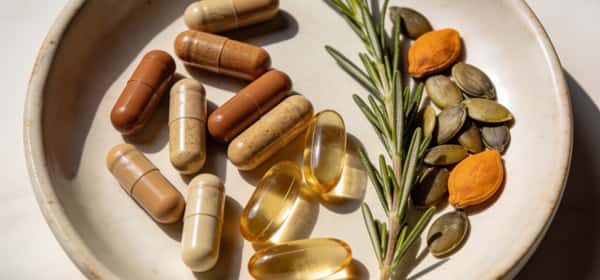
Quick answer: For most people, hair growth supplements only help if you have a genuine deficiency. Correcting low iron, vitamin D, or zinc can improve shedding; taking extra when your levels are already normal usually does nothing. Biotin is the classic example — it only helps the rare person who’s truly deficient, despite being marketed to everyone. A few multi-ingredient blends (with extracts like saw palmetto, pumpkin seed oil, or marine proteins) have modest trial support, but none rival proven treatments like minoxidil for actual pattern hair loss. Get your levels checked before you spend.
The core principle: deficiency vs. excess
Here’s the idea that makes sense of this entire category. Your hair follicles are some of the most metabolically active cells in your body, constantly dividing to push out new hair. That makes them sensitive to genuine shortfalls in the nutrients they need. When you’re low on iron, protein, zinc, or vitamin D, hair is one of the first non-essential things your body deprioritizes, and shedding can follow.
Glow starts with what you eat. Choose your goal and get your plan.
Powered by DietGenie Eat healthy
 Lose weight
 Gain muscles
 Explore new cuisines
But — and this is the part the marketing leaves out — the relationship isn’t a dial you can keep turning up. Topping up a nutrient you’re already getting enough of doesn’t push growth past normal. A retrospective study of alopecia patients found that supplementation didn’t significantly improve hair density or thickness overall, which fits the wider picture: the benefit comes from correcting a deficiency, not from piling on extra.1
So the smartest move isn’t grabbing a hair gummy. It’s getting a blood test for the nutrients that actually matter, and supplementing only what’s low.
The nutrients with the best evidence
A major review of vitamins and minerals in hair loss concluded that micronutrients play a real but limited role — important when deficient, unconvincing when you’re not.2 These are the ones worth knowing.
Iron (ferritin)
Low iron stores — measured as ferritin — are one of the most consistent nutritional links to hair loss, especially in women with heavy periods or restrictive diets. If your ferritin is low, correcting it can meaningfully reduce shedding. If it’s normal, iron pills won’t help and excess iron is harmful, so this is a test-don’t-guess nutrient.2
Vitamin D
Vitamin D receptors are involved in the hair cycle, and low levels show up frequently in people with hair loss. Correcting a deficiency is sensible for your overall health and may support hair, though the direct evidence for regrowth is modest.2
Zinc
Zinc deficiency is a recognized cause of hair loss, and supplementing helps when you’re genuinely low. But zinc is another one where more isn’t better — too much can actually disrupt other minerals and worsen things.2
Protein
This is the unglamorous foundation. Hair is made mostly of a protein called keratin, and chronically under-eating protein (common in crash diets and very low-calorie eating) starves your follicles of their raw material. You’re better off eating enough protein than chasing it in a pill — see keratin-rich foods and foods for hair growth.
Biotin — the famous one that’s mostly hype
Biotin (vitamin B7) is the headline ingredient in nearly every hair gummy, and it’s the clearest example of marketing outrunning evidence. True biotin deficiency does cause hair loss — but it’s genuinely rare, because biotin is in lots of everyday foods and your gut bacteria make some too. For the overwhelming majority of people with normal biotin levels, supplements do nothing for hair.2 Worse, high-dose biotin can skew certain lab tests (including thyroid and heart tests), so it’s not as harmless as it looks. If you’re not deficient, skip it. More detail in our best vitamins for hair growth guide.
Suggested read: Ozempic and Hair Loss: Why It Happens, What Helps
| Supplement | Helps if deficient? | Helps if levels normal? |
|---|---|---|
| Iron (ferritin) | Yes, often noticeably | No |
| Vitamin D | Yes, modestly | Unclear / minimal |
| Zinc | Yes | No (excess can harm) |
| Protein | Yes | No (just eat enough) |
| Biotin | Yes, but deficiency is rare | No |
The multi-ingredient blends
Beyond single nutrients, there’s a growing market of nutraceutical blends — capsules combining botanical extracts, amino acids, and vitamins, marketed specifically for hair. Do they work?
The most encouraging evidence comes from a recent network meta-analysis of 19 randomized trials covering over 1,600 people with androgenetic alopecia. It found that several supplements — standardized plant-extract blends, pumpkin seed oil, saw palmetto extract, tocotrienols (a form of vitamin E), and certain marine/probiotic formulas — improved hair density compared with placebo, and all were generally well tolerated.3 Saw palmetto is interesting because it’s thought to gently inhibit the DHT pathway, the same target as finasteride, though far more weakly.
Two caveats keep this in perspective. First, “better than placebo” isn’t the same as “as good as minoxidil or finasteride” — the supplement effects were modest, and the studies vary in quality. Second, these blends are a reasonable adjunct for someone who wants a low-risk add-on, not a replacement for proven treatments if you have genuine pattern hair loss. If you go this route, look for products studied in actual trials rather than a random label with a long ingredient list.
Collagen and the other popular add-ons
Collagen supplements are heavily marketed for hair, skin, and nails. The logic is that collagen provides amino acids (including those used to build keratin) and supports the skin around the follicle. The direct evidence for hair growth specifically is still thin, but collagen is a protein source and generally safe, so it’s a low-risk choice rather than a proven one.
Other common ingredients — saw palmetto, pumpkin seed oil, marine proteins, and B-vitamin complexes — range from “modest evidence” to “plausible but unproven.” The pattern across all of them is the same: low risk, sometimes a small benefit, never a substitute for the treatments that actually move the needle on genetic hair loss.
Suggested read: Top 5 Best Vitamins for Hair Growth and Healthy Hair
How to approach supplements sensibly
A simple, money-saving game plan:
- Figure out your type of hair loss first. Supplements do the most for nutritional shedding and the least for genetic pattern loss. If it’s male or female pattern hair loss, supplements are a side dish, not the main course.
- Test before you treat. Ask your doctor to check ferritin, vitamin D, zinc, and thyroid. Supplement what’s low, leave alone what’s normal.
- Prioritize food. A protein-adequate, varied diet covers most of what your follicles need. Pills fill gaps; they don’t beat a good diet.
- Be patient and skeptical. Hair grows slowly, so give any change three to six months. And remember the placebo effect runs strong here — “I think it’s working” testimonials aren’t data.
- Don’t megadose. With iron, zinc, and biotin especially, more is not better and can cause real problems.
The bottom line
Hair growth supplements are one of the most over-promised categories in wellness. The honest summary: they help when they’re correcting a real deficiency — low iron, vitamin D, zinc, or inadequate protein — and they mostly don’t when your levels are already fine. Biotin is the poster child for that gap between hype and reality. A handful of multi-ingredient blends have modest trial support and can serve as a low-risk add-on, but none of them rival minoxidil or finasteride for genuine pattern hair loss.
Test your levels, fix what’s low, eat enough protein, and treat the actual cause of your hair loss directly. Do that, and you’ll get far more out of your money than you would from a shelf of optimistic gummies.
Kakpovbia E, Ugonabo N, Chen A, et al. Impact of Laboratory Work Up and Supplementation on Alopecia Patients: A Single-Center Retrospective Chart Review. J Drugs Dermatol. 2021;20(7):807-809. PubMed ↩︎
Almohanna HM, Ahmed AA, Tsatalis JP, Tosti A. The Role of Vitamins and Minerals in Hair Loss: A Review. Dermatol Ther (Heidelb). 2019;9(1):51-70. PubMed ↩︎ ↩︎ ↩︎ ↩︎ ↩︎
Zhou L, Zhu W, Chen Y. Effects of dietary supplements on androgenetic alopecia: a systematic review and network meta-analysis. Front Nutr. 2026;12:1719711. PubMed ↩︎