When a GLP-1 medication crushes your appetite, what you eat matters more than ever, not less. With so little hunger to work with, every bite has to earn its place. Get the GLP-1 diet right and you protect your muscle, calm the nausea, and keep the weight loss steady. Get it wrong and you lose strength, feel queasy, and stall. Here’s how to eat while you’re on semaglutide, tirzepatide, or any drug in the class.
This is educational information, not medical advice. Semaglutide, tirzepatide, and similar GLP-1 drugs are prescription-only and must be supervised by a licensed prescriber. Many “research peptides” sold online are labeled research-use-only and are not FDA-approved for human use. Talk to your doctor or pharmacist before starting, changing, or stopping any dose, and don’t try to source or self-administer unapproved versions. This article covers food, not how to obtain or inject anything.
The quick answer
The GLP-1 diet isn’t a special menu. It’s a set of priorities that fit how these drugs change your body: eat protein first, add fiber and fluids, keep meals small and frequent, and limit the foods that make GLP-1 nausea worse. The drug handles your appetite. Your job is to make sure the smaller amount of food you do eat is mostly protein, fiber, and water-rich whole foods so you keep muscle, stay regular, and avoid feeling sick.
Choose your goal and get a meal plan that makes losing weight simpler.
Powered by DietGenie Lose weight
 Gain muscles
 Eat healthy
 Explore new cuisines
Why protein comes first on the GLP-1 diet
When you lose weight fast, some of that loss is muscle, not just fat. That’s true for any rapid weight loss, but it’s a real concern on GLP-1s because the appetite suppression is so strong. Reviews of these therapies estimate that lean mass can make up roughly a quarter to a third of total weight lost if you don’t push back with protein and resistance training.1 Animal work shows that protecting muscle during GLP-1 treatment is an active research target, not a given.2
Muscle is your metabolic engine and your insurance against frailty later. Losing it makes maintenance harder and the rebound worse. So protein is the non-negotiable part of any semaglutide diet plan.
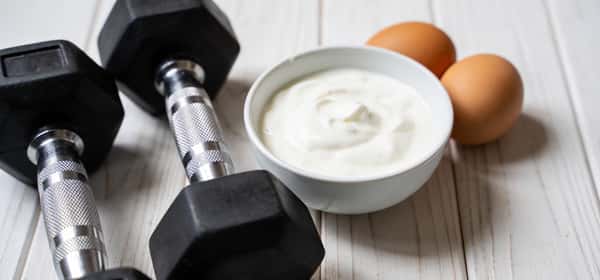
Aim for roughly 1.2 to 1.6 grams of protein per kilogram of body weight per day (a touch higher if you’re older or training hard). For a 75 kg person that’s about 90 to 120 grams. Because your appetite is small, front-load it: eat the protein on your plate before the carbs, and build every meal and snack around a protein source. Our guides on high-protein foods and how much protein you actually need go deeper if you want the full breakdown.
Pair the protein with resistance training two or three times a week. That combination is the single best lever for keeping lean mass while you drop fat.1
Fiber and fluids: the GI rescue team
GLP-1 drugs slow how fast your stomach empties. That’s part of why you feel full so long, but it’s also why constipation, bloating, and that “food just sitting there” feeling are so common. Gastrointestinal complaints are the most frequent side effects in the trials.3
Two things help most:
- Fiber. Soluble fiber softens stool and feeds gut bacteria; insoluble fiber adds bulk and keeps things moving. Build up to 25 to 35 grams a day, but ramp slowly, because dumping a lot of fiber on a slow stomach can backfire into more bloating. See high-fiber foods for easy sources.
- Water. GLP-1s blunt thirst cues along with hunger, so a lot of people quietly get dehydrated, which makes constipation worse. Target around 2 to 3 liters a day, sipped steadily rather than chugged (a full glass on a slow stomach can trigger nausea).
If you’re tracking which symptoms to expect and when, our rundowns of semaglutide side effects and tirzepatide side effects line up the timeline.
Suggested read: Tirzepatide vs Semaglutide: Honest Comparison
Smaller, more frequent meals beat three big ones
A slow-emptying stomach simply can’t handle a large plate. Push past your fullness and you’ll feel nauseated, sometimes for hours. The fix is structural:
- Eat four to six small meals or snacks spread through the day instead of three big ones.
- Stop at the first sign of fullness. On a GLP-1 that signal comes early and hits hard.
- Eat slowly. Put the fork down between bites and give the fullness signal time to register.
- Don’t drink large volumes during meals; it fills the limited space you have for protein.
This rhythm keeps your protein total up even when any single sitting is tiny, and it’s far gentler on your gut.
What to eat on tirzepatide and semaglutide: the food table
Here’s a practical “eat this, limit that” framework for what to eat on tirzepatide or semaglutide. The “limit” column isn’t forbidden food, it’s the stuff that most reliably triggers nausea or reflux when your stomach is moving slowly.
| Category | Lean into (GLP-1 foods) | Limit or time carefully |
|---|---|---|
| Protein | Eggs, Greek yogurt, chicken, fish, tofu, lentils, low-fat cottage cheese | Fatty fried meats, heavy processed sausage |
| Carbs | Oats, beans, quinoa, sweet potato, fruit, whole grains | White bread spikes, very sugary cereals |
| Fats | Olive oil, avocado, nuts (small portions) | Deep-fried food, heavy cream sauces, greasy takeout |
| Fiber | Vegetables, berries, chia, ground flax, legumes | Huge raw-veg piles all at once (bloating) |
| Drinks | Water, herbal tea, broth, electrolyte drinks | Alcohol, large sugary or fizzy drinks |
| Treats | Small portions, eaten slowly | Big rich desserts, “all you can eat” anything |
The pattern is simple: greasy, very sweet, and alcoholic items are the main nausea triggers, so keep them small and infrequent. Fat is the slowest thing to leave the stomach, so a high-fat meal sits longest and feels worst. Alcohol does double damage, irritating the stomach and adding empty calories your tiny appetite can’t afford. If natural appetite control is part of your plan even off the drug, certain GLP-1 foods like protein and fiber nudge your own GLP-1 response in the same direction.
Suggested read: Liraglutide vs Semaglutide: Daily vs Weekly GLP-1
Foods that worsen nausea, and how to settle it
When nausea does hit, lean on the same tricks that work for morning sickness:
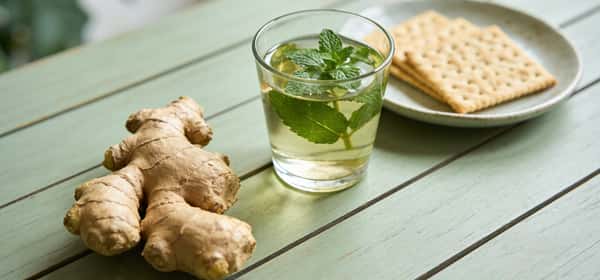
- Bland, dry, room-temperature foods are easiest: crackers, toast, plain rice, bananas.
- Ginger (tea, chews, fresh) genuinely helps many people.
- Cold or room-temperature food smells less and triggers less queasiness than hot, aromatic dishes.
- Eat something small even when you don’t want to. An empty stomach can make nausea worse, not better.
Worst offenders to skip on a queasy day: anything deep-fried, creamy, very sugary, or strong-smelling. Most nausea is heaviest in the first week or two after a dose increase and then settles, which is exactly why prescribers titrate the dose up slowly.3 If you want non-drug ways to dial down hunger between meals, these appetite-reducing strategies layer on top of the medication nicely.
A sample day on a GLP-1
This is one realistic template at roughly 1,400 to 1,600 calories and about 110 grams of protein. Scale portions to your own targets and your appetite, which may be smaller than this on higher doses.
- Breakfast: Greek yogurt with berries and a tablespoon of ground flax. (~25 g protein, easy on the stomach.)
- Mid-morning: A boiled egg or a small protein shake with water.
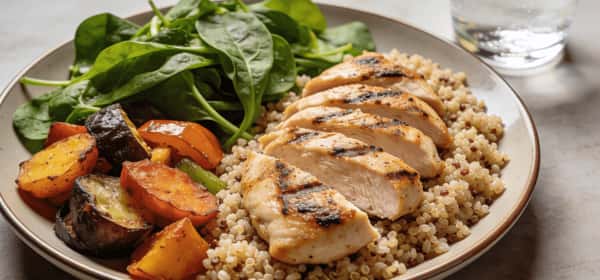
- Lunch: Grilled chicken or tofu over quinoa and roasted vegetables, olive oil drizzle. Protein first.
- Afternoon: Cottage cheese with a few nuts, or a piece of fruit with a string cheese.
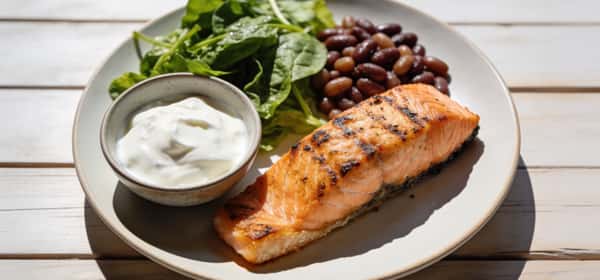
- Dinner: Baked salmon or lentils, a sweet potato, and a small cooked-vegetable side. Keep it on the lighter, lower-fat end.
- Evening (if needed): Herbal tea or a small casein/yogurt portion.
Sip water across the whole day, not just at meals. Notice the shape: small protein-anchored hits, fiber woven in, nothing fried, no alcohol, no giant plates.
How GLP-1s actually change what you need to eat
It helps to know why these rules exist. GLP-1 receptor agonists work by mimicking a gut hormone that slows gastric emptying, signals fullness to the brain, and steadies blood sugar. In the STEP 1 trial, semaglutide 2.4 mg produced a mean 14.9% body weight loss at 68 weeks.4 Tirzepatide, which hits two receptors, reached up to 20.9% at 72 weeks in SURMOUNT-1.5 That degree of appetite suppression is exactly what makes a deliberate eating plan necessary: you simply won’t eat enough by default to cover your protein and micronutrient needs unless you’re intentional about it.
The food strategy isn’t a substitute for the drug’s results. It’s the thing that decides whether the weight you lose is mostly fat (with muscle intact) or a sloppier mix that’s harder to keep off.
Suggested read: Microdosing GLP-1: What It Means and the Risks
Bottom line
A good GLP-1 diet is built around four moves: protein first, fiber and fluids up, meals small and frequent, and greasy/sweet/alcoholic foods kept low. Hit roughly 1.2 to 1.6 g of protein per kg, add resistance training, and you protect the muscle that keeps your metabolism and your results durable. None of this is about willpower; the medication handles your appetite. Your job is to make the little you eat count. Run your plan, your doses, and any new symptoms past your prescriber or a dietitian, since they can tailor it to your labs and your goals.
Neeland IJ, Linge J, Birkenfeld AL. Changes in lean body mass with glucagon-like peptide-1-based therapies and mitigation strategies. Diabetes Obes Metab. 2024;26 Suppl 4:16-27. PubMed ↩︎ ↩︎
Nunn E, et al. Antibody blockade of activin type II receptors preserves skeletal muscle mass and enhances fat loss during GLP-1 receptor agonism. Mol Metab. 2024;80:101880. PubMed ↩︎
Ghusn W, Hurtado MD. Glucagon-like Receptor-1 agonists for obesity: Weight loss outcomes, tolerability, side effects, and risks. Obes Pillars. 2024;12:100127. PubMed ↩︎ ↩︎
Wilding JPH, et al. Once-Weekly Semaglutide in Adults with Overweight or Obesity. N Engl J Med. 2021;384(11):989-1002. PubMed ↩︎
Jastreboff AM, et al. Tirzepatide Once Weekly for the Treatment of Obesity. N Engl J Med. 2022;387(3):205-216. PubMed ↩︎