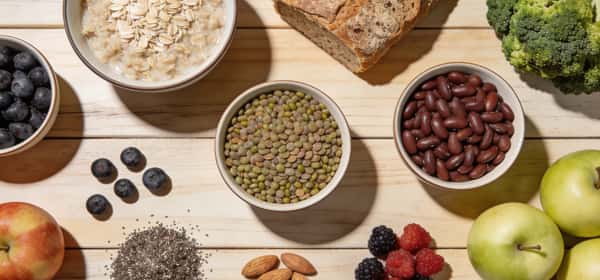
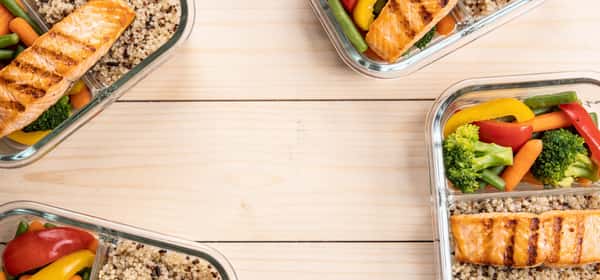
Living with IBS can make eating feel like a guessing game — but there’s a whole category of foods that tend to be gentle on a sensitive gut. Knowing what to reach for takes some of the fear out of mealtimes and gives you a reliable base to build on. These aren’t obscure health foods; they’re everyday options chosen for being low in the fermentable carbs that trigger symptoms and rich in the fiber that soothes. Here’s what to fill your plate with, and why each one helps.
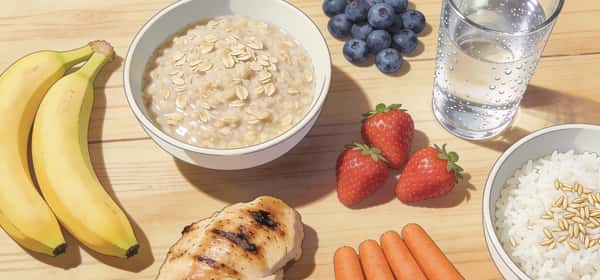
Quick answer: The best foods for IBS are low-FODMAP choices and sources of soluble fiber — oats, bananas, carrots, potatoes, rice, lean proteins, and low-FODMAP fruits and vegetables. A low-FODMAP approach reduces IBS symptoms,1 soluble fiber helps calm the gut,2 and certain probiotic and fermented foods can support it too.3 Because triggers are individual, treat this as a starting list and adjust to your own tolerance — but these gentle, gut-friendly foods are a reliable foundation for most people with IBS.
Soluble-fiber foods (the gut-soothers)
Fiber is a double-edged sword in IBS, and the type matters enormously. Soluble fiber — which forms a gel in the gut — helps regulate bowel movements and calm symptoms, while insoluble fiber like wheat bran can aggravate them for some people.2 Lean toward soluble sources:
A calm gut starts with the right meals. Choose your goal and get your plan.
Powered by DietGenie Eat healthy
 Lose weight
 Gain muscles
 Explore new cuisines
- Oats and oat bran
- Bananas (ripe but not overripe)
- Carrots, potatoes, and sweet potatoes
- Psyllium (a supplement form that’s especially well studied)
Add fiber gradually, since a sudden increase can cause its own gas and bloating, and drink plenty of water alongside it so the fiber can move through smoothly rather than backing up. Our guide to high-fiber foods helps you build up slowly.
Low-FODMAP fruits and vegetables
FODMAPs are the fermentable carbs behind a lot of IBS bloating, and choosing lower-FODMAP produce is a proven way to cut symptoms.1 Gentle options include:
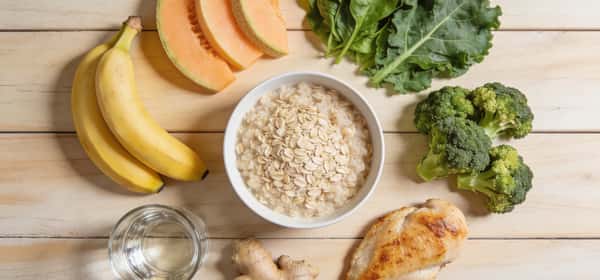
- Fruit: bananas, blueberries, strawberries, oranges, grapes, kiwi
- Vegetables: carrots, cucumber, zucchini, spinach, bell peppers, potatoes, green beans
The main high-FODMAP produce to limit includes onions, garlic, apples, pears, and stone fruits — the fuller picture is in our FODMAP guide and high-FODMAP foods list. Portion size matters too: some foods are fine in small amounts but trigger symptoms in large ones.
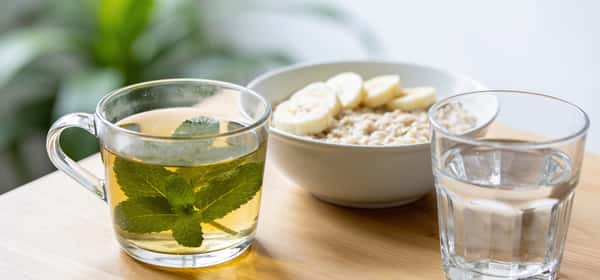
Gentle proteins
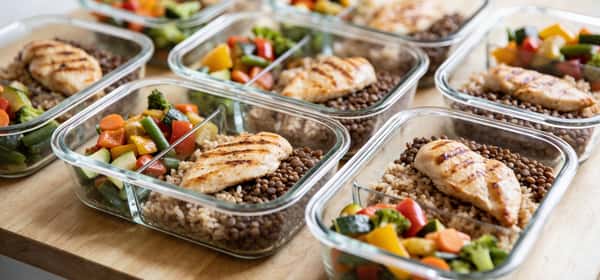
Plain proteins are naturally low in FODMAPs and usually well tolerated, making them a safe centerpiece for meals:
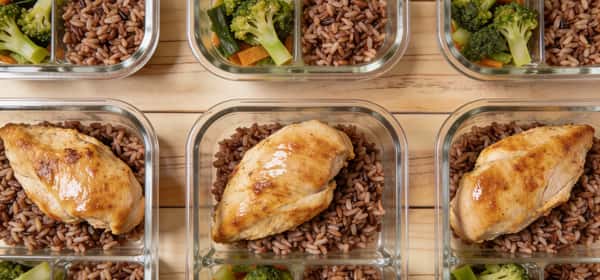
- Chicken, turkey, and lean meats
- Fish and eggs
- Firm tofu (softer tofu can be higher in FODMAPs)
The key is preparation — grilled, baked, or poached rather than fried in lots of fat, since fatty and fried foods are common IBS triggers. Keep sauces simple and avoid ones loaded with onion and garlic.
Grains that are easy on the gut
Not all grains are equal for IBS. Gentler, lower-FODMAP choices include:
- Oats
- Rice (white and brown)
- Quinoa
- Gluten-free or sourdough bread (traditional sourdough is often better tolerated than regular wheat bread)
For many people the issue with wheat is its FODMAP content rather than gluten itself, which is why some tolerate sourdough — where fermentation lowers the FODMAPs — better than standard bread.
Probiotic and fermented foods
Your gut bacteria play a role in IBS, and certain probiotics have been shown to improve symptoms.3 Some people benefit from adding gut-friendly fermented foods like low-FODMAP yogurt (lactose-free or small portions), kefir, or a little sauerkraut. It’s worth introducing these slowly and seeing how you respond, since tolerance varies — and our guide to probiotics covers how they may help.
Tailoring foods to your IBS type
IBS isn’t one condition, and the best foods shift a little depending on your main symptom:
- If you lean toward constipation (IBS-C): gently increase soluble fiber from oats, kiwi, and psyllium, and make sure you’re drinking enough water so the fiber can do its job. Kiwi in particular has a reputation for helping with regularity.
- If you lean toward diarrhea (IBS-D): soluble fiber still helps by adding form to stools, but go easy on high-fat meals and caffeine, which can speed things up. Bananas, oats, rice, and potatoes are steadying choices.
- If you’re mixed (IBS-M): consistency is your friend — regular meals built from the gentle staples on this list help smooth out the swings.
Whatever your type, increase any fiber slowly and keep well hydrated, since a sudden fiber jump can backfire.
Preparation and portion tips
How you eat a gut-friendly food matters as much as choosing it:
- Cook simply. Grilled, baked, steamed, or poached foods are gentler than fried ones.
- Mind portion size. Many foods are low-FODMAP in a small serving but become a trigger in a large one — half a cup of a food might be fine when a full cup isn’t.
- Chew well and eat slowly. Rushed, large mouthfuls mean more swallowed air and harder digestion, both of which add to bloating.
- Spread food through the day. Several smaller meals are usually easier on the gut than one or two big ones.
These small habits often make the difference between a “safe” food sitting well or not.
A quick-reference list
| Category | Gut-friendly choices |
|---|---|
| Fiber | Oats, psyllium, ripe banana, carrots |
| Fruit | Banana, blueberries, strawberries, kiwi, oranges |
| Vegetables | Carrots, cucumber, zucchini, spinach, peppers |
| Protein | Chicken, fish, eggs, firm tofu |
| Grains | Oats, rice, quinoa, sourdough |
| Extras | Lactose-free yogurt, kefir, ginger |
Make it personal
The reason no two IBS diets look the same is that tolerance is individual — a food that soothes one person triggers another. Use this list as your reliable starting point, then fine-tune with a food-and-symptom diary and, if you’re following the structured low-FODMAP approach, the reintroduction phase that shows which foods you can handle. Pair these gut-friendly foods with the wider strategy, and steer clear of the common triggers in our foods to avoid with IBS guide.
Suggested read: A 7-Day IBS Diet Meal Plan
The bottom line
Eating well with IBS is about leaning into the many foods that are gentle on a sensitive gut: soluble fiber like oats and psyllium, low-FODMAP fruits and vegetables, plain lean proteins, easy grains like rice and oats, and gut-supporting fermented foods. Low-FODMAP eating and soluble fiber both have real evidence for calming symptoms, and the right probiotics can help too. Add fiber gradually, cook simply, watch your portions, and — above all — personalize the list to your own tolerance. Build your meals from this gut-friendly foundation and eating with IBS becomes far less of a gamble.
Halmos EP, Power VA, Shepherd SJ, Gibson PR, Muir JG. A diet low in FODMAPs reduces symptoms of irritable bowel syndrome. Gastroenterology. 2014;146(1):67-75. PubMed ↩︎ ↩︎
Black CJ, Yuan Y, Selinger CP, et al. Efficacy of soluble fibre, antispasmodic drugs, and gut-brain neuromodulators in irritable bowel syndrome: a systematic review and network meta-analysis. Lancet Gastroenterol Hepatol. 2020;5(2):117-131. PubMed ↩︎ ↩︎
Zhang T, Zhang C, Zhang J, Sun F, Duan L. Efficacy of Probiotics for Irritable Bowel Syndrome: A Systematic Review and Network Meta-Analysis. Front Cell Infect Microbiol. 2022;12:859967. PubMed ↩︎ ↩︎