The single most useful thing to understand about eating with diverticulitis is that the best foods depend entirely on when you’re eating them. In the middle of a flare, your gut needs gentle, easy-to-digest food. Once you’ve recovered, it needs exactly the opposite — plenty of fiber to keep things moving and prevent the next attack. Mix those two phases up and you’ll either irritate an inflamed gut or miss out on real protection. Here’s what to eat in each, made clear.
Quick answer: During a diverticulitis flare, the best foods are gentle and low in fiber — clear liquids at first, then white rice, white bread, eggs, tender meat, and well-cooked skinless vegetables — to rest your gut. Once recovered, the best foods are high in fiber: whole grains, fruits, vegetables, legumes, and yes, nuts and seeds, which research shows are safe and even protective.1 A high-fiber diet is linked to a 41% lower risk of diverticular disease at around 30 grams a day.2 Match the food to the phase and follow your doctor’s guidance during a flare.
During a flare: gentle, low-fiber foods
When diverticulitis is active, the goal is to give your inflamed colon a rest, which means temporarily eating less fiber. Doctors usually suggest starting with clear liquids and stepping up to low-fiber solids as you improve.
A calm gut starts with the right meals. Choose your goal and get your plan.
Powered by DietGenie Eat healthy
 Lose weight
 Gain muscles
 Explore new cuisines
Clear liquids (early flare):
- Water and broth
- Clear juices without pulp (apple, white grape)
- Ice pops and gelatin
- Plain tea
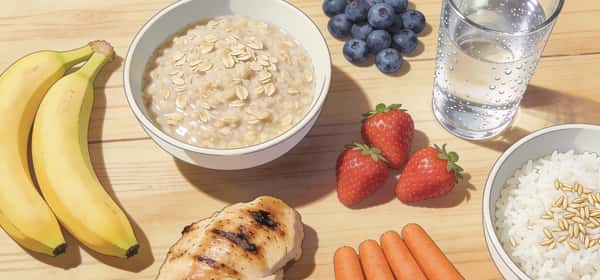
Low-fiber foods (as symptoms ease):
- White rice, white bread, and plain pasta
- Eggs and tender, well-cooked meat, poultry, or fish
- Well-cooked vegetables without skins or seeds
- Canned or cooked fruit without skin
- Low-fiber cereals
This phase is short and meant to be followed under medical guidance — it supports recovery while any prescribed treatment does the heavy lifting. For the full flare-and-prevention picture, see our main diverticulitis diet guide.
After recovery: high-fiber foods
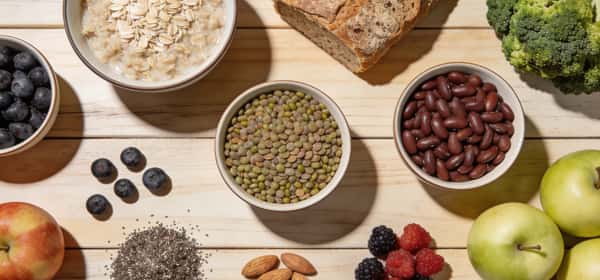
Once your symptoms have fully settled, the strategy reverses. Fiber becomes your best friend, because it softens and bulks up stool, easing pressure in the colon and lowering the odds of another flare. The evidence is compelling: higher fiber intake is associated with a significantly lower risk of diverticular disease, with about 30 grams a day linked to a 41% risk reduction.2 Build your everyday diet around:
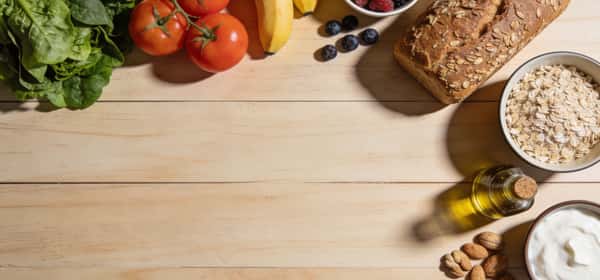
- Whole grains: oats, brown rice, whole-grain bread and pasta, barley
- Fruits: apples, pears, berries, oranges (with skins where edible)
- Vegetables: broccoli, carrots, leafy greens, sweet potatoes
- Legumes: beans, lentils, chickpeas — high in fiber and plant protein
- Nuts and seeds: almonds, walnuts, chia, and more
Add fiber back gradually after a flare, and drink plenty of water alongside it. Our high-fiber foods guide has plenty of easy ways to reach a good daily target.
Yes, you can eat nuts and seeds
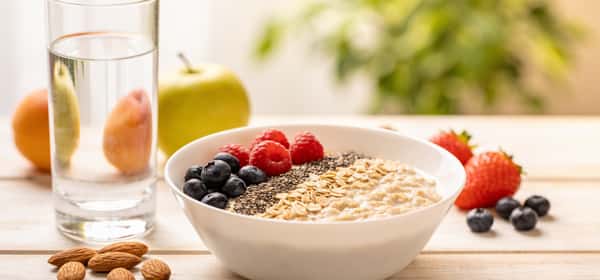
This deserves its own mention because the old advice was so strict. People with diverticular disease were long told to avoid nuts, seeds, corn, and popcorn for fear the fragments would lodge in the pouches. Large research debunked this: over 18 years of follow-up, these foods did not increase diverticulitis risk, and nuts and popcorn were actually linked to a slightly lower risk.1 So in your prevention diet, these nutritious high-fiber foods are firmly back on the menu. (During an active flare you still keep fiber low — but that’s about resting the gut, not avoiding seeds specifically.)
A quick reference by phase
| Phase | Best foods |
|---|---|
| Early flare | Water, broth, clear juice, gelatin, ice pops |
| Improving flare | White rice, white bread, eggs, tender meat, skinless cooked veg |
| Prevention | Whole grains, fruit, vegetables, legumes, nuts, seeds |
Gut-friendly extras
A couple of additions worth considering for the prevention phase:
- Water. Fiber only works well with enough fluid, so hydration is part of the plan — aim to sip steadily through the day rather than relying on a couple of big glasses.
- Poultry and fish over red meat, since red meat is linked to higher diverticulitis risk while poultry and fish are not — an easy swap that quietly lowers your risk.
- Fermented foods like yogurt and kefir may support overall gut health, though evidence specific to diverticulitis is limited — see our fermented foods guide.
A note on fiber types
Not all fiber behaves the same way, and both kinds help. Soluble fiber — in oats, apples, beans, and psyllium — dissolves into a gel that softens stool. Insoluble fiber — in whole grains, vegetables, and the skins of fruit — adds bulk that speeds passage through the colon. For diverticulitis prevention you want a mix of both, which happens naturally when you eat a variety of whole plant foods rather than relying on any single source. The one time this matters differently is during a flare, when you temporarily cut all fiber to rest the gut; the soluble-versus-insoluble distinction only comes into play once you’re back to the prevention phase.
What about fiber supplements?
If you struggle to reach your fiber target from food alone, a supplement can help bridge the gap. Psyllium (ispaghula) is the best-studied and forms a gentle gel that softens stool, and methylcellulose is another option. A few sensible rules:
- Use supplements to top up a food-based diet, not replace whole foods — real foods bring vitamins, minerals, and a mix of fiber types that a powder can’t.
- Start with a small dose and build up, always with plenty of water.
- Don’t start a fiber supplement during an active flare; wait until you’ve recovered.
Food first, supplement second, is the right order — the meals in this guide can get most people to a good fiber intake without any pills.
Suggested read: The Best Foods for Prediabetes
Put it together
The whole skill of eating with diverticulitis is matching food to phase: gentle and low-fiber to recover, rich and high-fiber to prevent. As you move from one to the other, transition gradually rather than jumping straight from clear liquids to a big bowl of beans. Pair this with the foods to avoid with diverticulitis, and use our diverticulitis meal plan to see it all in practice.
Suggested read: A Diverticulitis Diet Meal Plan
The bottom line
The best foods for diverticulitis come in two sets. During a flare, keep it gentle and low-fiber — clear liquids, then white rice, eggs, tender meat, and skinless cooked vegetables — to rest your gut while you recover, following your doctor’s advice. Once you’re well, flip to high-fiber eating built on whole grains, fruits, vegetables, legumes, and the nuts and seeds you were once wrongly told to fear, aiming for around 30 grams of fiber a day to cut your risk of the next flare. Transition gradually, drink plenty of water, and let the phase guide your plate.
Strate LL, Liu YL, Syngal S, Aldoori WH, Giovannucci EL. Nut, corn, and popcorn consumption and the incidence of diverticular disease. JAMA. 2008;300(8):907-914. PubMed ↩︎ ↩︎
Aune D, Sen A, Norat T, Riboli E. Dietary fibre intake and the risk of diverticular disease: a systematic review and meta-analysis of prospective studies. Eur J Nutr. 2020;59(2):421-432. PubMed ↩︎ ↩︎