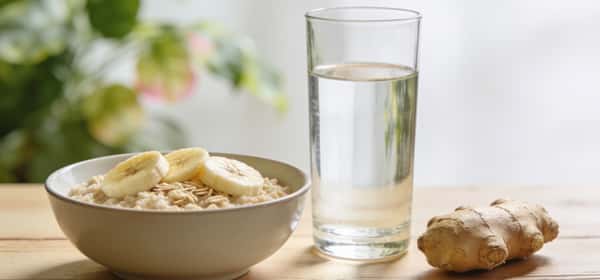
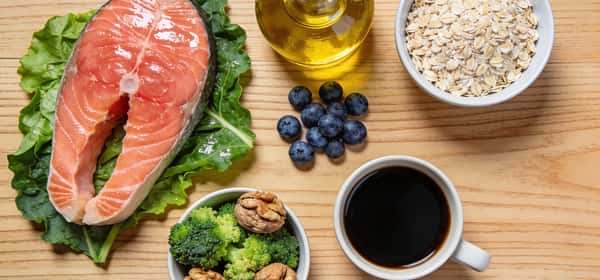
Most acid reflux advice is a long list of what not to eat — which can leave you staring at your kitchen wondering what’s actually left. Plenty, as it turns out. A whole range of foods are gentle on your stomach, less likely to trigger reflux, and genuinely soothing. Knowing what to reach for makes eating with reflux far less stressful, and it’s the positive half of the acid reflux diet. Here’s what to fill your plate with, and why each one earns its place.
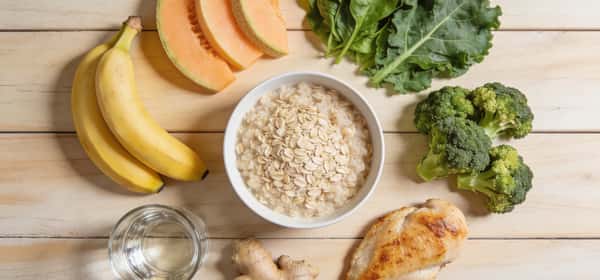
Quick answer: The best foods for acid reflux are low in fat, low in acid, and high in fiber — vegetables, whole grains like oatmeal, lean proteins, non-citrus fruit like bananas and melon, and soothing extras like ginger. Fiber-rich eating has been shown to reduce heartburn and improve the muscle that keeps acid down,1 and a Mediterranean-style diet appears to protect against reflux.2 Build your meals around these gentle foods, keep portions moderate, and you give your stomach far less reason to send acid the wrong way.
Vegetables (the non-acidic ones)
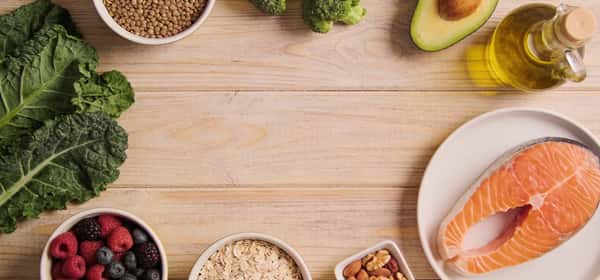
Vegetables are naturally low in fat and sugar and help reduce stomach acid, making them a cornerstone of a reflux-friendly diet. The best choices are the non-acidic ones:
Food choices matter for reflux. Choose your goal and get a plan built for you.
Powered by DietGenie Eat healthy
 Lose weight
 Gain muscles
 Explore new cuisines
- Leafy greens (spinach, kale, lettuce)
- Broccoli, cauliflower, and green beans
- Cucumber and celery
- Potatoes and other root vegetables
The main ones to be cautious with are tomatoes, onions, and garlic, which can trigger reflux in some people. Otherwise, make vegetables a big part of every meal — just cook them simply rather than frying them in lots of oil.
Whole grains and fiber
Fiber is quietly one of the most useful things for reflux. A fiber-enriched diet has been shown to cut heartburn frequency and even improve the resting pressure of the lower esophageal sphincter — the muscle that keeps acid where it belongs.1 Whole grains are an easy way to get there:
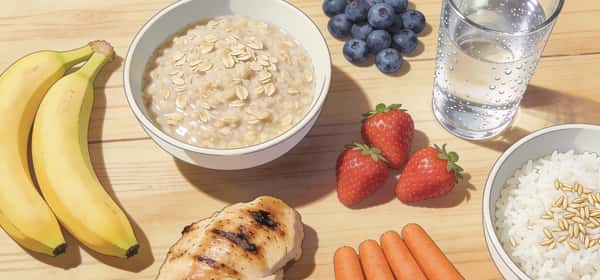
- Oatmeal (a classic reflux-friendly breakfast that’s filling and can help absorb acid)
- Brown rice
- Whole-grain bread
- Whole-grain pasta
Beyond grains, vegetables, legumes, and fruit all add fiber. Our guide to high-fiber foods has plenty of options to help you hit a good daily target.
Lean protein
How you cook protein matters more than the protein itself. Lean, non-fried proteins are gentle on reflux, while fatty and fried versions are among the worst triggers. Good choices:
- Skinless chicken and turkey
- Fish, grilled or baked
- Tofu and tempeh
- Eggs (though very fatty preparations may bother some people)
Grill, bake, poach, or steam rather than deep-frying, and trim visible fat. This keeps the meal low in fat, which is key, since fat is the dietary factor most consistently linked to reflux.2
Non-citrus fruit
Fruit is fine with reflux — you just want the low-acid options rather than citrus. Reach for:
- Bananas (gentle and often soothing)
- Melons (cantaloupe, honeydew, watermelon)
- Apples and pears
- Berries in moderation
Save oranges, grapefruit, lemons, and pineapple for later, since their acidity can aggravate symptoms. Tomatoes, though technically a fruit, belong on the caution list too — both fresh and as sauce, they’re a common trigger despite being healthy in other respects. And ripeness helps: a fully ripe banana is gentler than an underripe one, which can occasionally bother sensitive stomachs.
Soothing extras
A few foods have a reputation for actively calming the stomach:
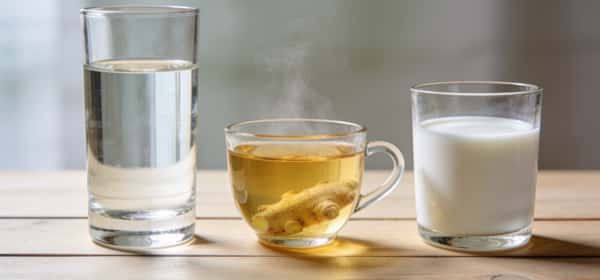
- Ginger. A traditional remedy for digestive upset, ginger is naturally anti-inflammatory and can be added to meals or sipped as (caffeine-free) tea.
- Low-fat dairy or alternatives. Low-fat yogurt and plant milks are usually well tolerated, while full-fat dairy may trigger some people.
- Healthy fats in small amounts. A little olive oil, avocado, or a few nuts are fine — just keep portions modest, since even healthy fats can loosen the LES in large amounts.
How you cook matters as much as what you cook
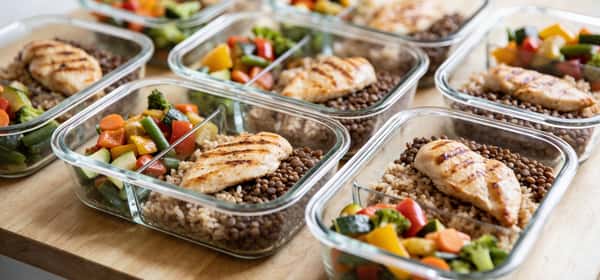
A gentle food can become a trigger the moment you fry it. Because fat is the dietary factor most consistently tied to reflux, the cooking method often matters as much as the ingredient.2 A few habits keep your safe foods safe:
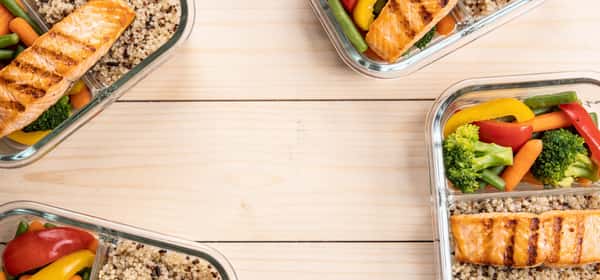
- Grill, bake, steam, or poach instead of deep-frying or pan-frying in lots of oil.
- Trim visible fat from meat and remove poultry skin.
- Go easy on rich sauces — creamy, buttery, or tomato-based sauces can undo an otherwise reflux-friendly meal.
- Season gently. Herbs are fine; heavy chili, black pepper, and raw onion or garlic bother many people.
The same chicken breast that’s soothing when baked can trigger heartburn when it’s battered and fried — so the way you prepare food is part of the diet, not an afterthought.
Remember, triggers are personal
Here’s an important caveat that saves a lot of frustration. The lists in this guide reflect what bothers most people, but reflux triggers vary from person to person. Some people tolerate a little tomato or coffee with no issue; others react to foods considered “safe.” The best way to find your own pattern is to notice which meals reliably precede your heartburn — a simple food-and-symptom note for a couple of weeks often reveals your personal triggers faster than any generic list. Use these foods as a well-evidenced starting point, then adjust to your own body.
A quick-reference list
Keep this handy:
| Food group | Best choices |
|---|---|
| Vegetables | Leafy greens, broccoli, cucumber, potatoes |
| Grains | Oatmeal, brown rice, whole-grain bread |
| Protein | Skinless poultry, baked fish, tofu, eggs |
| Fruit | Bananas, melon, apples, pears |
| Extras | Ginger, low-fat yogurt, a little olive oil |
| Drinks | Water, herbal (non-mint) tea |
Make it a pattern
The magic is in the overall approach, not any single food. A plate that’s mostly non-acidic vegetables and whole grains, with a modest portion of lean protein and a little healthy fat, is a textbook reflux-friendly meal — and it lines up neatly with the Mediterranean diet, which research links to less reflux.2 For the complete strategy, including what to cut and the meal-timing habits that matter, see our main acid reflux diet guide, and to sidestep the triggers, read foods that cause heartburn.
Suggested read: A 7-Day Acid Reflux Diet Meal Plan
The bottom line
Eating with acid reflux isn’t only about restriction — it’s about leaning into the many foods that genuinely help. Non-acidic vegetables, fiber-rich whole grains like oatmeal, lean non-fried proteins, low-acid fruit like bananas and melon, and soothing extras like ginger together give your stomach far less to react to. Fiber in particular has been shown to reduce heartburn and strengthen the muscle that holds acid down. Build your meals around this gentle, Mediterranean-style pattern, cook simply rather than frying, and keep portions moderate — and you turn your diet from a source of heartburn into a genuine part of the cure.
Morozov S, Isakov V, Konovalova M. Fiber-enriched diet helps to control symptoms and improves esophageal motility in patients with non-erosive gastroesophageal reflux disease. World J Gastroenterol. 2018;24(21):2291-2299. PubMed ↩︎ ↩︎
Surdea-Blaga T, Negrutiu DE, Palage M, Dumitrascu DL. Food and Gastroesophageal Reflux Disease. Curr Med Chem. 2019;26(19):3497-3511. PubMed ↩︎ ↩︎ ↩︎ ↩︎