When you have IBS, certain foods are almost guaranteed to stir up trouble — the bloating, cramps, gas, and sudden bathroom trips that make daily life unpredictable. Learning which foods commonly trigger symptoms is one of the fastest routes to relief, because cutting the worst offenders often calms things down within days. Not everyone reacts to everything, but some categories cause problems for a large share of people with IBS. Here’s what to watch, and why each one matters.
Quick answer: The main foods to avoid with IBS are high-FODMAP foods (like onions, garlic, wheat, and certain fruits and legumes), fatty and fried foods, caffeine, alcohol, spicy foods, and carbonated or artificially sweetened drinks. High-FODMAP foods are the best-studied triggers — cutting them significantly reduces IBS symptoms.1 The others irritate the gut or speed it up in ways that provoke pain and irregular bowels. Since triggers are individual, use this as a starting list and confirm your own with a food-and-symptom diary.
High-FODMAP foods (the biggest culprit)
FODMAPs are fermentable carbohydrates that draw water into the gut and get fermented by bacteria, producing the gas and bloating so common in IBS. They’re the most evidence-backed dietary trigger: reducing them significantly lowered IBS symptoms in a controlled trial.1 The main high-FODMAP foods to watch:
A calm gut starts with the right meals. Choose your goal and get your plan.
Powered by DietGenie Eat healthy
 Lose weight
 Gain muscles
 Explore new cuisines
- Vegetables: onions, garlic, cauliflower, mushrooms
- Fruits: apples, pears, watermelon, stone fruits (peaches, plums)
- Grains: wheat and rye in large amounts
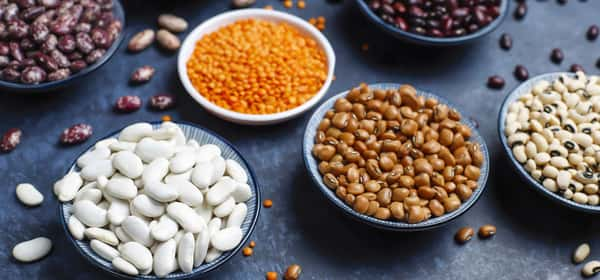
- Legumes: beans, lentils, and chickpeas in large portions
- Dairy: milk and soft cheeses (from lactose)
- Sweeteners: honey, high-fructose corn syrup, and sugar alcohols
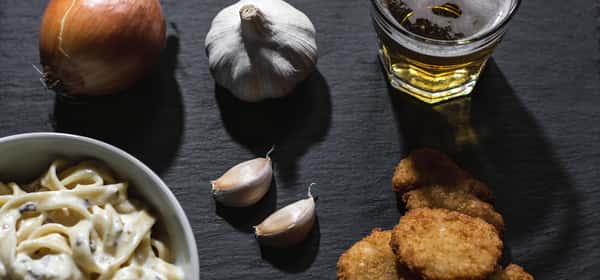
Onion and garlic deserve special mention, because they hide in so many sauces, stocks, and processed foods. Our full high-FODMAP foods list and FODMAP guide go deeper — and remember portion matters, since some foods are fine in small amounts.
Fatty and fried foods
Rich, greasy foods are a classic IBS trigger. Fat stimulates strong gut contractions and can speed up transit, provoking cramps and diarrhea in many people. The usual suspects:
- Fried food and fast food
- Fatty cuts of meat and heavy, creamy sauces
- Rich pastries and deep-fried snacks
You don’t have to eat fat-free, but lean, simply-cooked meals sit far more comfortably than a greasy one.
Caffeine
Caffeine stimulates the gut and can trigger or worsen diarrhea and urgency, making it a common problem for IBS-D in particular. That means:
- Coffee
- Strong tea
- Energy drinks
- Cola
You may not need to quit entirely, but cutting back — especially on an empty stomach or when symptoms flare — often helps. Watch that a sudden caffeine reduction can cause headaches, so taper gradually. Decaf coffee is still mildly stimulating to the gut for some people, so if plain coffee is a trigger, don’t assume decaf is automatically safe.
Alcohol
Alcohol irritates the gut lining, affects motility, and disrupts digestion, and many people with IBS find it a reliable trigger. Beer is a double problem because it’s also carbonated and often made from wheat. If you drink, keep it moderate and occasional, choose lower-FODMAP options like a small amount of wine or spirits over beer, and avoid sugary mixers.
Spicy foods
Spicy dishes — particularly those with chili and capsaicin — can speed up gut transit and irritate a sensitive digestive system, triggering pain and urgency. Tolerance varies widely, so if spice reliably sets you off, ease back; if it doesn’t bother you, you may be fine.
Carbonated and artificially sweetened drinks
Two sneaky triggers in the drinks aisle:
- Carbonated drinks introduce gas that adds directly to bloating.
- Artificial sweeteners — especially sugar alcohols like sorbitol, mannitol, and xylitol (found in sugar-free gum, sweets, and “diet” products) — are poorly absorbed and can cause gas and diarrhea.
Water is the safest default, and it supports healthy digestion overall.
Suggested read: How to Manage IBS Naturally
Dairy and lactose
Dairy deserves its own mention because it trips up so many people with IBS — but the culprit is usually lactose, a FODMAP sugar, rather than dairy itself. Milk, soft cheeses, and ice cream are the biggest offenders, while hard aged cheeses and butter are naturally very low in lactose and often fine. The good news is you rarely have to give up dairy entirely:
- Switch to lactose-free milk and yogurt, which taste the same but have the lactose already broken down.
- Choose hard cheeses like cheddar or parmesan over soft ones.
- Try plant-based milks — but pick low-FODMAP ones like almond or rice milk rather than higher-FODMAP options.
If dairy is a trigger for you, a true lactose intolerance is worth ruling out with your doctor, since it’s a distinct (and easily managed) issue.
Watch for hidden triggers on labels
One of the most frustrating parts of eating with IBS is that triggers hide in processed foods. Onion and garlic powder appear in an enormous range of sauces, soups, stocks, crisps, and ready meals — often listed simply as “spices” or “natural flavors.” Sugar alcohols lurk in anything labeled “sugar-free.” A few label-reading habits help:
- Scan for onion, garlic, and their powders in savory products.
- Check for sorbitol, mannitol, xylitol, and isomalt in sugar-free gum, sweets, and diet drinks.
- Watch for high-fructose corn syrup and inulin/chicory root fiber (a FODMAP added to many “high-fiber” bars).
Cooking from whole ingredients is the surest way to know exactly what’s in your food.
A swap-it-out cheat sheet
| Instead of | Try |
|---|---|
| Onion & garlic | Garlic-infused oil, chives, or herbs |
| Regular wheat bread | Sourdough or gluten-free bread |
| Fried food | Grilled, baked, or steamed |
| Coffee | Weak tea or a low-FODMAP herbal tea |
| Beer | A small glass of wine |
| Sugar-free gum/sweets | Regular in moderation, or none |
It’s the pattern, and it’s personal
An important reframe: reducing these triggers works best as a consistent pattern, not a one-off, and the exact list is yours to discover. IBS triggers vary hugely from person to person — the surest way to find yours is a food-and-symptom diary, or the structured reintroduction phase of the low-FODMAP diet. Pair cutting these triggers with adding the best foods for IBS for the full effect. And if symptoms are severe, persistent, or come with red flags like blood or weight loss, see a doctor rather than managing it with diet alone.
Suggested read: The IBS Diet: What to Eat to Manage IBS
The bottom line
The foods to avoid with IBS are the ones that ferment, irritate, or over-stimulate a sensitive gut: high-FODMAP foods above all — onions, garlic, wheat, and certain fruits and legumes — plus fatty and fried foods, caffeine, alcohol, spicy dishes, and carbonated or artificially sweetened drinks. Cutting the big offenders often brings noticeable relief within days. But since IBS is so individual, treat this list as a well-evidenced starting point and confirm your personal triggers with a diary. Trim the troublemakers, keep the gut-friendly foods, and work with a doctor for anything severe — and you take back a lot of control over your symptoms.