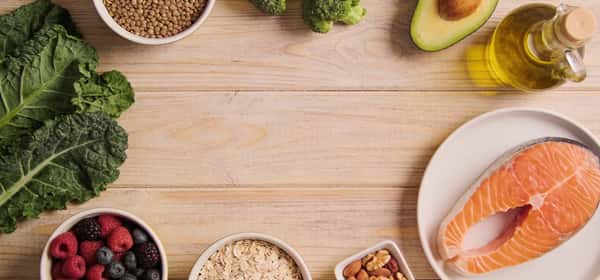
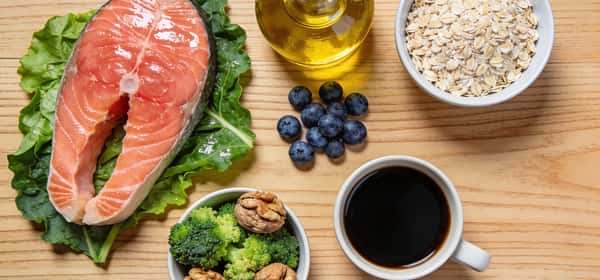
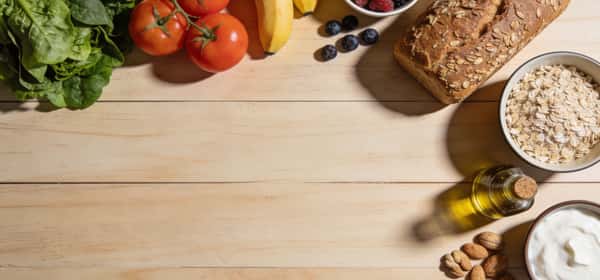
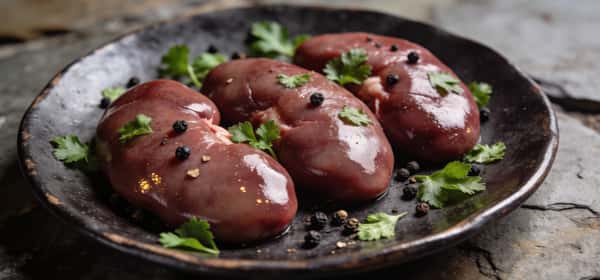
When you’re managing gout, it’s easy to focus entirely on what to cut. But there’s a whole list of foods that actively work in your favor — lowering uric acid, calming inflammation, and reducing your risk of the next attack. Adding these is just as important as avoiding the triggers, and several of them are genuinely backed by research rather than folklore. Here’s what to put on your plate to help keep uric acid in check.
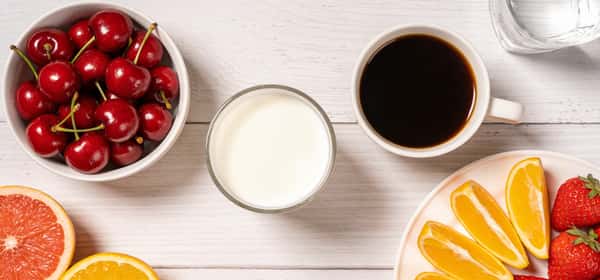
Quick answer: The foods that lower uric acid naturally include low-fat dairy, cherries, coffee, vitamin C-rich foods, and plenty of water. Low-fat dairy is linked to a lower risk of gout, cherries cut the risk of recurrent attacks by around a third, and vitamin C modestly lowers uric acid.123 Round that out with whole grains, vegetables, and legumes — plant foods that are safe and beneficial for gout despite old myths. None of these is a cure on its own, but together they meaningfully support lower uric acid and fewer flares.
Low-fat dairy
One of the most reliable protective foods for gout is also one of the simplest. In a large study, men who consumed the most dairy had a significantly lower risk of gout than those who consumed the least — the effect was strong and clear.1 Low-fat options like skim milk and low-fat yogurt appear especially helpful, likely because dairy proteins help your kidneys excrete uric acid. A daily serving or two of low-fat dairy is an easy, evidence-backed addition to a gout-friendly diet.
Choose your goal and get a meal plan that considers your joints.
Powered by DietGenie Eat healthy
 Lose weight
 Gain muscles
 Explore new cuisines
Cherries and tart cherry
Cherries are the most famous gout food, and unlike a lot of folk remedies, they have real evidence. In a study of over 600 people with gout, eating cherries over a two-day period was associated with a 35% lower risk of a gout attack — and when combined with the medication allopurinol, the risk dropped by 75%.2 The anthocyanins that give cherries their color are thought to be anti-inflammatory and may help lower uric acid. Fresh cherries, tart cherry juice, and cherry extract all count. We dig into the details in cherries and gout, and cherries have other health benefits too.
Coffee
Good news for coffee drinkers: coffee is associated with lower uric acid levels and a reduced risk of gout. The exact mechanism isn’t fully pinned down — it may involve coffee’s effect on how the body processes uric acid — but regular, unsweetened coffee fits comfortably into a gout-friendly diet. Just keep it unsweetened, since the sugar in sweetened coffees works against you.
Vitamin C-rich foods
Vitamin C has a modest but real effect on uric acid. A meta-analysis of randomized trials found that vitamin C supplementation significantly lowered serum uric acid levels.3 While the effect from supplements is small, it points to vitamin C-rich foods being a smart choice for gout. Load up on:
- Citrus fruits (oranges, grapefruit)
- Bell peppers
- Strawberries and kiwi
- Broccoli and tomatoes
Our guide to high vitamin C foods has plenty of options — and these come with fiber and antioxidants as a bonus, unlike a supplement.
Water and hydration
Simple but important: staying well hydrated helps your kidneys flush uric acid out of your body, and dehydration is a known trigger for attacks. Aim to drink water consistently through the day, and make it your default drink in place of soda and juice. It does double duty by supporting weight management too — see drinking water and weight loss.
Plant foods: safe and beneficial
Here’s the reassuring part that rewrites old gout advice. Vegetables, legumes, and whole grains — even the “high-purine” ones like beans, peas, spinach, and mushrooms — are safe for gout, because plant purines don’t trigger it the way animal purines do.1 That means you can build a rich, fiber-filled diet without fear:
| Food group | Why it helps |
|---|---|
| Vegetables | Low risk, high in nutrients and fiber |
| Legumes (beans, lentils) | Safe plant protein to replace meat |
| Whole grains | Support weight and overall metabolic health |
| Whole fruit | Fine in moderation; cherries and citrus especially good |
Replacing some of your meat with beans and lentils is a particularly smart swap — you cut animal purines and add gout-safe protein at the same time.
A sample uric-acid-lowering day
Here’s how these foods come together on an ordinary day:
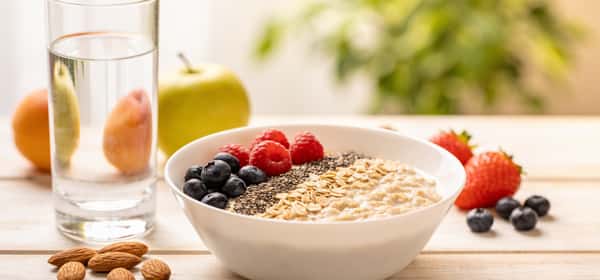
- Breakfast: oatmeal topped with cherries and berries, plus a glass of low-fat milk and a black coffee.
- Lunch: a big salad with plenty of vegetables, chickpeas or lentils for protein, and a citrus dressing.
- Snack: low-fat yogurt or a piece of vitamin C-rich fruit.
- Dinner: a modest portion of poultry or fish (not the highest-purine kinds) with lots of vegetables and a whole grain.
- Throughout: water as your main drink, and a small glass of unsweetened tart cherry juice.
Notice the shape of it — plant-forward, dairy included, cherries and citrus featured, meat modest, and not a sugary drink or beer in sight. That’s the whole strategy in a day.
A note on supplements
You’ll see supplements marketed for uric acid — tart cherry capsules, vitamin C, and various “uric acid support” blends. Vitamin C has the most evidence, with trials showing it modestly lowers uric acid, but the effect is small and you can get vitamin C from food just as well.3 Tart cherry supplements are a reasonable convenient way to get cherry’s benefits if you won’t eat them otherwise. Beyond those, most “uric acid” supplements are poorly supported. None replaces the fundamentals of diet, weight loss, and — where needed — medication, so treat them as minor add-ons at most and check with your doctor first, especially if you take other medications.
Put it together — but keep it realistic
An honest note: these foods genuinely help, but their effect on uric acid is modest. For someone with occasional, mild symptoms, a gout-friendly diet built around these foods may be enough. For established or recurrent gout, diet supports but doesn’t replace urate-lowering medication, which is the medical standard. Think of these foods as a powerful complement to your treatment, not a substitute — and work with your doctor on the full plan. For everything together, see the best diet for gout and the fuller how to lower uric acid guide.
Suggested read: Best Diet for Gout: Guide and Meal Plan
The bottom line
Plenty of foods work in your favor against gout: low-fat dairy lowers your risk, cherries cut recurrent attacks by around a third, coffee and vitamin C-rich foods help nudge uric acid down, and water flushes it out. Just as importantly, the whole world of plant foods — vegetables, beans, whole grains — is safe and beneficial, so you can eat richly rather than restrictively. Build your meals around these, swap some meat for legumes, stay hydrated, and enjoy your cherries and coffee. None of it replaces medical care for serious gout, but together these foods are a genuinely effective way to help keep uric acid — and attacks — under control.
Choi HK, Atkinson K, Karlson EW, Willett W, Curhan G. Purine-rich foods, dairy and protein intake, and the risk of gout in men. N Engl J Med. 2004;350(11):1093-1103. PubMed ↩︎ ↩︎ ↩︎
Zhang Y, Neogi T, Chen C, Chaisson C, Hunter DJ, Choi HK. Cherry consumption and decreased risk of recurrent gout attacks. Arthritis Rheum. 2012;64(12):4004-4011. PubMed ↩︎ ↩︎
Juraschek SP, Miller ER 3rd, Gelber AC. Effect of oral vitamin C supplementation on serum uric acid: a meta-analysis of randomized controlled trials. Arthritis Care Res (Hoboken). 2011;63(9):1295-1306. PubMed ↩︎ ↩︎ ↩︎