Of all the blood-sugar tips floating around, food order might be the best one — because it asks you to change nothing about what you eat, only the sequence you eat it in. Same meal, same calories, same carbs, but eat your vegetables and protein first and your glucose response drops noticeably. It sounds too easy to matter, yet it’s one of the better-supported tricks in the whole “balance your blood sugar” toolkit. Here’s the science and exactly how to do it.
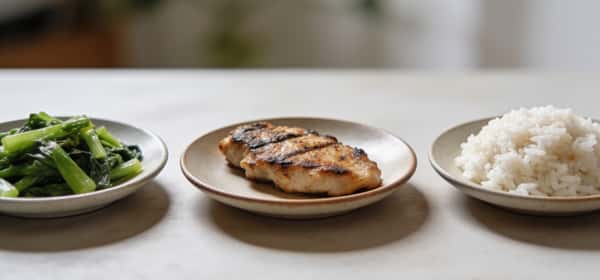
Quick answer: Food order means eating your vegetables and protein (and fat) before your carbohydrates in a meal. Doing this meaningfully lowers the post-meal glucose and insulin rise compared with eating the carbs first — without changing the meal itself. In a controlled trial in healthy adults, eating vegetables, then meat, then rice produced a significantly smaller glucose spike and more of the fullness hormone GLP-1 than eating rice first. It works because the fiber, protein, and fat slow down how fast the carbs hit your bloodstream. It’s free, effortless, and a genuinely smart habit. For the full picture, see blood sugar balance.
The simple idea
A typical meal has three components: vegetables (fiber), protein and fat, and carbohydrates (rice, bread, pasta, potatoes). Most people eat them all mixed together, or even carbs first.
Choose your goal and get a meal plan that considers your blood sugar.
Powered by DietGenie Eat healthy
 Lose weight
 Gain muscles
 Explore new cuisines
Food order just says: save the carbs for last. Eat the vegetables and protein at the start of the meal, and finish with the starchy carbohydrate. That’s the entire technique. You’re not removing or reducing anything — just reordering.
The science behind it
This isn’t folk wisdom; it’s been measured. In a randomized crossover trial in healthy adults, researchers fed people the same meal of vegetables, chicken, and rice in different orders. When participants ate vegetables first, then meat, then rice, their post-meal glucose response was significantly lower than when they ate the rice first — and they released more GLP-1, a fullness hormone, without needing extra insulin.1
The effect shows up in people who need glucose control too. In a trial of women with gestational diabetes, switching to a vegetables-then-protein-then-carbs order reduced post-meal blood glucose by around 6% and insulin by 8–11% compared with their regular eating pattern.2 Same food, better numbers, just from sequence.
Why it works
A few mechanisms combine to flatten the curve:
- Fiber forms a barrier. Eating vegetables first puts fiber into your gut before the carbs arrive, slowing how quickly glucose is absorbed.
- Protein and fat slow stomach emptying. They delay how fast the meal moves into your intestine, so the carbohydrate trickles in rather than flooding.
- Gut hormones get a head start. Protein and fat stimulate fullness hormones like GLP-1, which also help manage the glucose response — the same system covered in foods that mimic Ozempic.
The net result: the same carbs enter your bloodstream more gradually, so the spike is gentler and the crash that follows is smaller.
How to do it in real life
It’s easy once you build the habit:
- Start with vegetables. Salad, a side of greens, roasted veg, or even the vegetable parts of a mixed dish — eat these first.
- Then protein and fat. Your chicken, fish, eggs, tofu, beans, cheese, or nuts come next.
- Finish with the carbs. Rice, bread, pasta, potato, or dessert last.
Real-world examples:
- Salad before the pasta, not alongside it.
- Eat the chicken and broccoli first, then the rice.
- Soup or a few bites of protein before a sandwich.
- At a restaurant, order a vegetable or protein starter and eat it before the bread basket.
You don’t have to be rigid — even loosely front-loading veg and protein helps. Pair this with high-fiber foods and high-protein foods and you’ve stacked two blood-sugar tactics at once.
What to realistically expect
Honest expectations keep this useful rather than magical:
- It reduces the spike, it doesn’t erase it. You’ll still digest your carbs — they just hit more gently.
- It’s a helper, not a license. Food order softens the response to a carb-heavy meal, but it doesn’t make unlimited refined carbs harmless.
- The benefits are real but modest — steadier energy, fewer cravings, a smaller crash, and a bit more fullness. For weight, the indirect help (less hunger, better appetite control) matters more than the glucose number itself — see blood sugar and weight loss.
- It pairs perfectly with a post-meal walk, another easy spike-blunter.
Common questions
A few things people wonder once they start:
- How long should I wait between courses? You don’t need a timer. Even just eating your vegetables and protein in the first part of the meal and saving the bulk of the carbs for the end works — a gap of 10 minutes is ideal in studies, but simply ordering your bites helps.
- Does it work with mixed dishes? Pure separation is harder with a stir-fry or a curry, but you can still eat the vegetable and protein pieces first and the rice last. Even loose ordering gives some benefit.
- Do I have to do it every meal? No. It’s most worth it for your carb-heaviest meals (big pasta, rice, or potato dishes). For a light, balanced meal it matters less.
- Will it help if I’m already eating low-carb? There’s less to gain if your meals barely spike you to begin with — food order shines most when there’s a meaningful amount of carbohydrate to slow down.
The point is to make it a flexible default, not a rigid ritual. Approximate ordering captures most of the benefit.
Who benefits most
- Anyone eating carb-heavy meals gets a gentler response for free.
- People with prediabetes, insulin resistance, or PCOS may benefit most, since their glucose control is already under more strain — see insulin and insulin resistance.
- Metabolically healthy people get the energy and craving benefits without needing to be strict about it.
Suggested read: Blood Sugar Balance: What Actually Works
The bottom line
Food order is the rare health tip that costs nothing, changes nothing about what you eat, and still works. By eating your vegetables and protein before your carbohydrates, you slow how fast those carbs reach your bloodstream — flattening the glucose spike, smoothing the crash, and boosting fullness hormones, all demonstrated in controlled trials including in healthy adults.
Make it a default: veg and protein first, carbs last. It won’t turn a junk-food meal into health food, but as an effortless habit layered onto decent eating, it’s one of the smartest, most evidence-backed moves in the whole blood-sugar conversation. Stack it with a short post-meal walk and you’ve covered two of the best tactics there are.
Sun L, Goh HJ, Govindharajulu P, Leow MK, Henry CJ. Postprandial glucose, insulin and incretin responses differ by test meal macronutrient ingestion sequence (PATTERN study). Clin Nutr. 2020;39(3):950-957. PubMed ↩︎
Murugesan R, Kumar J, Thiruselvam S, et al. Food order affects blood glucose and insulin levels in women with gestational diabetes. Front Nutr. 2024;11:1512231. PubMed ↩︎