The fertility diet is one of those topics where the marketing dramatically outpaces the science. “Foods that boost ovulation” lists, “fertility-boosting smoothie recipes,” elaborate protocols promising specific cycle improvements — most of them have minimal trial evidence. The actual research is messier and more modest, but it does support a few real patterns.
This guide covers what the systematic reviews actually find, the foods that consistently show up as helpful, the ones to reduce, and how big the food-fertility effect realistically is.
Quick answer
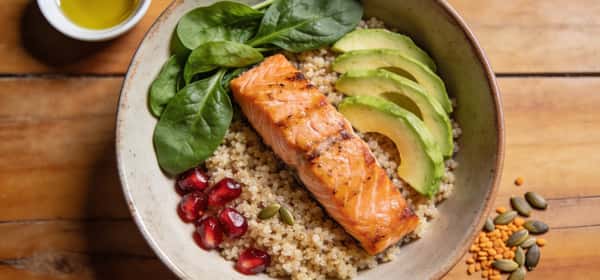
The single dietary pattern most consistently associated with better fertility outcomes is the Mediterranean diet: vegetables, fruits, whole grains, legumes, fish, olive oil, nuts, and limited red meat. The biggest specific changes worth making:
Choose your goal and get a meal plan that's right for your pregnancy.
Powered by DietGenie Eat healthy
 Lose weight
 Gain muscles
 Explore new cuisines
- Reduce trans fats (industrial baked goods, fried food) — most consistent negative signal
- Reduce sugar-sweetened beverages and refined carbs — linked to ovulatory infertility
- Increase plant-based protein in place of some animal protein
- Eat omega-3-rich fish 2–3 times a week
- Take a prenatal vitamin with folate, starting 3 months before trying — see prenatal vitamins
The effect of diet on fertility is real but modest. Diet won’t fix anatomical or hormonal infertility, but it can shift the odds for couples with otherwise normal reproductive function.
What the evidence actually shows
A 2023 systematic scoping review published in Human Reproduction Update examined 36 studies on preconception diet and female fertility.1 The clearest findings:
- Mediterranean diet adherence was the most consistently associated with improved clinical pregnancy rates
- Reducing trans fats, saturated fat, and discretionary food intake (fast food, sugar-sweetened beverages) was associated with improvements in live birth and clinical pregnancy rates
- Soy, seafood, and dairy showed inconsistent findings across studies
- Insufficient evidence to support any single specific dietary approach as definitively superior
A 2021 review in Advances in Nutrition on female fertility nutritional approaches reached similar conclusions: high trans fats, refined carbs, and added sugars are negatively associated with fertility, while Mediterranean-style eating with adequate omega-3, plant-based protein, and micronutrients is positively associated.2
The honest summary: diet effects on fertility are real but modest. They’re not nothing, but they’re also not a substitute for medical evaluation if you’ve been trying for over a year.
Foods to emphasize
Vegetables (5+ servings/day)
The single most boring and most reliable recommendation. Higher vegetable intake — particularly leafy greens — is associated with better fertility outcomes across nearly every observational study. Key vegetables to prioritize:
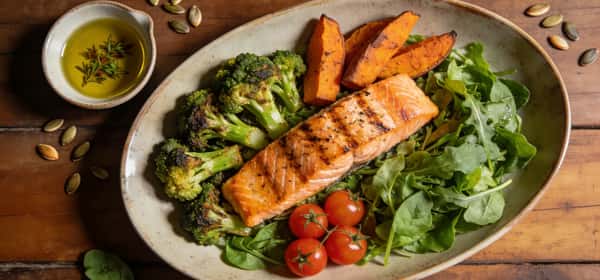
- Leafy greens (folate, iron) — spinach, kale, Swiss chard
- Cruciferous vegetables (folate, fiber) — broccoli, Brussels sprouts, cauliflower
- Brightly colored vegetables (antioxidants) — peppers, beets, sweet potatoes
Fatty fish (2–3 servings/week)
Wild salmon, sardines, mackerel, anchovies, and herring are rich in omega-3 fatty acids, which support reproductive health and reduce inflammation. Limit high-mercury fish (large tuna, swordfish, king mackerel) — see tuna in pregnancy for the breakdown on tuna specifically.
Deeper dive on the fertility-specific evidence: omega-3 for fertility.
Whole grains
Replace refined carbs with whole grains. The pattern that shows up in cohort studies is “high carb quality” — meaning unprocessed, fiber-rich carbohydrates rather than white bread, white rice, or sugar-sweetened cereals. Oats, brown rice, quinoa, whole-grain bread, and barley are good defaults.
Suggested read: PCOS Diet: What Works Best According to Research
Legumes and plant-based protein
The Nurses’ Health Study II found that replacing animal protein with plant protein was associated with reduced ovulatory infertility — a 50% lower risk for women who got 5% more of their energy from plant sources at the expense of animal sources. Lentils, chickpeas, beans, tofu, and tempeh are the workhorses.
This doesn’t mean eliminate animal protein. It means make plant proteins a regular part of the rotation.
Olive oil and nuts
Both are signature Mediterranean foods. Walnut consumption has small but consistent evidence for improving sperm parameters in men. Olive oil provides monounsaturated fats and polyphenols. A daily 1–2 tablespoons of olive oil and a small handful of nuts is the typical pattern.
Full-fat dairy (modest amounts)
This one’s counterintuitive but supported by some research: women consuming small amounts of full-fat dairy have slightly better ovulatory function than women on strictly low-fat dairy. The effect isn’t huge — don’t make this central — but the “all dairy must be skim” rule for fertility isn’t well-supported.
Berries and pomegranate
Higher antioxidant intake correlates with better reproductive outcomes. Blueberries, strawberries, raspberries, and pomegranates are the simplest dietary antioxidant sources. Aim for a cup of berries most days.
Foods to reduce or avoid
Trans fats
The clearest negative signal in the fertility diet literature. Industrial trans fats — partially hydrogenated oils in some baked goods, fried fast food, margarines — are associated with ovulatory infertility risk in observational data. Most products in the US no longer contain industrial trans fats, but check labels on imported or older-recipe products.
Suggested read: Endometriosis Natural Treatment: Evidence-Based Approaches
Sugar-sweetened beverages
Soda, sweet tea, energy drinks, juice cocktails. These show up repeatedly as associated with reduced fertility, partly through insulin/glucose effects and partly through caloric crowd-out. Sparkling water with lemon or unsweetened tea is the easy swap.
Refined carbs and added sugars
Same mechanism as sugar-sweetened beverages but slower. High glycemic load is associated with worse insulin sensitivity, which affects ovulation. This is particularly relevant for women with PCOS (the major non-anatomical cause of infertility).
Excessive alcohol
Heavy alcohol intake (>14 drinks/week) is associated with reduced fertility. Moderate drinking (1–4 drinks/week) shows mixed effects in observational data. The safe-during-trying recommendation is “minimize” — there’s no clear minimum dose that’s known to be safe, but small amounts during the preconception phase haven’t been shown to significantly affect time-to-pregnancy.
Very high caffeine
Caffeine intake above ~500 mg/day (5 cups of coffee) is associated with reduced fertility in some studies. Moderate intake (1–2 cups/day) doesn’t show clear effects. Less is better; complete avoidance isn’t necessary.
What about specific “fertility foods”?
A lot of foods get marketed as fertility-specific. Most of the claims outrun the evidence:
| Food | Marketing claim | Reality |
|---|---|---|
| Pineapple core | “Improves implantation” | No evidence — myth |
| Pomegranate | “Boosts uterine lining” | Small evidence for antioxidant benefit; not a specific fertility effect |
| Maca | “Hormone balance” | Limited evidence; some signal for libido, not for conception rates |
| Royal jelly | “Egg quality” | Limited evidence |
| Asparagus | “Folate boost” | Yes — but just because it’s a folate source. No special fertility effect |
| Avocados | “Healthy fats for fertility” | Healthy yes; fertility-specific effect not established |
The pattern: nutrient-rich foods are generally good for fertility because they’re generally good for health. There’s no specific “fertility superfood.”
Body composition matters more than individual foods
This is the part people don’t want to hear, but the evidence is consistent: both underweight and overweight are associated with reduced fertility. The reasons differ:
- Low body fat / very low energy availability: Can suppress GnRH pulsing and cause anovulation. Common in elite athletes and women in restrictive diets.
- Higher body fat: Associated with insulin resistance, which can disrupt ovulation. Particularly relevant in PCOS.
A BMI in the 20–25 range is the rough sweet spot for fertility outcomes. Modest weight loss (5–10% of body weight) in women with overweight and ovulatory dysfunction often restores ovulation.
This isn’t a guilt-trip framing — it’s just that diet quality plus appropriate energy intake matters more than any specific food.
Suggested read: Perimenopause Diet: What to Eat to Reduce Symptoms
Supplements with the most fertility-specific evidence
Beyond a basic prenatal:
- CoQ10: Has some RCT evidence for improving oocyte quality, particularly in women with reduced ovarian reserve or over 35. See CoQ10 for fertility.
- Omega-3 (DHA/EPA): Supports reproductive health; particularly important if you don’t eat fatty fish. See omega-3 for fertility.
- Vitamin D: Deficiency is associated with reduced fertility; correction improves outcomes if deficient.
- Folate: Non-negotiable. See folate vs folic acid.
For the broader picture on prenatal supplementation, see prenatal vitamins and supplements during pregnancy.
Diet considerations for partners (sperm matters too)
Half of fertility outcomes depend on sperm. Diet patterns that improve sperm parameters:
- Antioxidant-rich diet: Walnuts, berries, leafy greens — multiple trials show improved sperm motility and morphology
- Reduced trans fats and processed meats: Associated with lower sperm concentration
- Adequate zinc and selenium: Brazil nuts (selenium), oysters/pumpkin seeds (zinc)
- Reduced alcohol and avoid recreational drugs
- Adequate omega-3: Particularly DHA
A partner-equivalent dietary effort is usually as important as the woman-side effort.
How long does diet take to “work”?
This is where expectations matter. Eggs (oocytes) take about 90 days to mature from the early follicle stage to ovulation. Sperm cycle through full production every 70–80 days.
So dietary changes have their biggest effect on cycles that are 3 months out from when the change started — not the cycle you’re currently in. This is why the standard recommendation is to start optimizing 3 months before active trying.
Lifestyle is bigger than any single food
The other major fertility factors don’t fit on a plate:
- Sleep (under 6 hours is associated with worse fertility)
- Stress management
- Movement (moderate, not extreme)
- Avoiding smoking (the single biggest modifiable lifestyle factor)
- Limiting environmental toxin exposure (BPA, phthalates, pesticides where possible)
For the broader picture across diet plus lifestyle, 16 natural ways to boost fertility covers all the modifiable factors.
When to stop chasing dietary fixes
If you’re under 35 and have been trying for 12 months without conceiving, or under 35 with a known fertility-relevant condition, see a fertility specialist. For women over 35, the threshold drops to 6 months. Diet optimization is part of preconception care, not a treatment for clinical infertility.
A specialist evaluation isn’t admitting defeat — it’s getting actual data on what’s happening with ovulation, sperm parameters, and structural factors. From there, you can decide what to do.
Bottom line
The fertility diet that holds up across the research is essentially a Mediterranean pattern: lots of vegetables, fish, whole grains, legumes, nuts, olive oil, modest dairy, limited red meat and refined carbs. Cut trans fats and sugar-sweetened beverages. Take a prenatal. Don’t expect any single food to be transformative — the effect of diet on fertility is real but modest. Adequate body fat (BMI 20–25), good sleep, and not smoking matter at least as much. Plan 3 months of optimization before active trying; that’s how long an egg takes to mature.
Alesi S, Habibi N, Silva TR, et al. Assessing the influence of preconception diet on female fertility: a systematic scoping review of observational studies. Human Reproduction Update. 2023;29(6):811-828. PubMed | DOI ↩︎
Skoracka K, Ratajczak AE, Rychter AM, Dobrowolska A, Krela-Kaźmierczak I. Female Fertility and the Nutritional Approach: The Most Essential Aspects. Advances in Nutrition. 2021;12(6):2372-2386. PubMed | DOI ↩︎