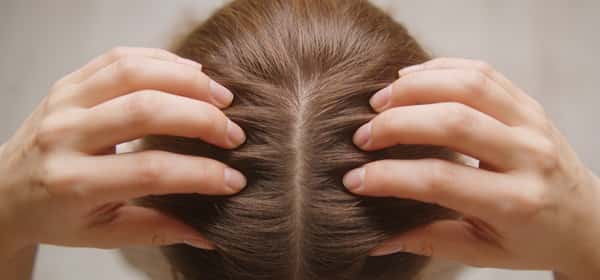
For a lot of women, the first clue isn’t hair on the pillow — it’s the part. The line down the middle of your scalp looks a little wider than it used to, your ponytail wraps an extra time, or more scalp shows through under bright bathroom lights. Female pattern hair loss is common, often starts earlier than people expect, and carries a real emotional weight precisely because hair is tied up with how many women feel about themselves.
The reassuring part: it’s usually not a sign of illness, it’s manageable, and a lot of the panic comes from not knowing what’s happening. Let’s fix that.
Quick answer: Female pattern hair loss (the female form of androgenetic alopecia) is a gradual thinning of hair across the top and crown of the scalp, usually sparing the frontal hairline. Unlike sudden shedding, it develops slowly over years as hair follicles miniaturize and the part widens. It’s driven by a mix of genetics, hormones, and age rather than one single cause. The best-evidenced treatment is topical minoxidil; doctors also use anti-androgen medications like spironolactone in some cases. Correcting iron, thyroid, and vitamin issues matters too, because they can make thinning worse.
Glow starts with what you eat. Choose your goal and get your plan.
Powered by DietGenie Eat healthy
 Lose weight
 Gain muscles
 Explore new cuisines
How to tell it apart from normal shedding
This is the single most useful distinction, because the two get confused constantly and they need different responses.
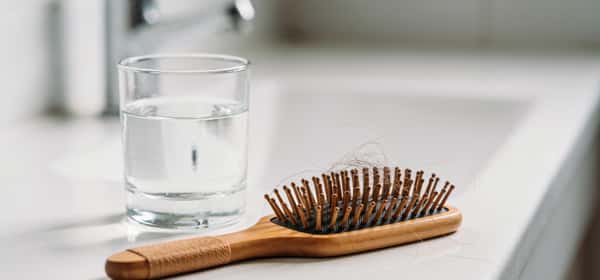
Shedding (the medical term is telogen effluvium) is when more hairs than usual fall out all at once, a couple of months after a trigger — a stressful event, illness, childbirth, crash dieting, or stopping the pill. You see lots of loose hairs in the brush and shower, it thins all over, and it usually grows back once the trigger passes. We cover this in detail in postpartum hair loss and weight loss and hair loss.
Female pattern hair loss is different. It’s not really about hairs falling out faster — it’s about the hairs that grow back coming in finer and sparser each cycle. It’s slow, it concentrates on the top of the scalp, and it doesn’t reverse on its own. A classic sign is the “Christmas tree” pattern: when you part your hair, the thinning is widest at the front of the part and narrows toward the back.
| Feature | Telogen effluvium (shedding) | Female pattern hair loss |
|---|---|---|
| Onset | Fairly sudden, after a trigger | Gradual, over years |
| What you notice | Handfuls of hair falling out | Wider part, more visible scalp |
| Where | All over the scalp | Top and crown, hairline usually spared |
| Recovery | Often reverses on its own | Persists and slowly progresses |
It’s also completely possible to have both at the same time, which is why a bout of heavy shedding can sometimes “unmask” underlying pattern thinning that was already there.
What causes it
The name androgenetic alopecia points to androgens (hormones) and genetics, and in women the picture is a bit more tangled than it is in men.
Genetics and age. A family history of thinning on either side raises your risk, and the likelihood climbs with age. Many women first notice it around or after menopause.
Hormones. Androgens (male-type hormones that women have in smaller amounts) and the enzyme that converts testosterone to the more potent DHT play a role in follicle miniaturization, the same shrinking process behind male pattern baldness.1 But unlike men, plenty of women with pattern hair loss have perfectly normal androgen levels, so it’s not purely a hormone-excess problem. The drop in protective estrogen around menopause is thought to tip the balance for some women.1
PCOS and other androgen conditions. When thinning comes alongside irregular periods, acne, or unwanted facial hair, polycystic ovary syndrome or another source of higher androgens may be involved, and that’s worth investigating with a doctor.
Aggravators that aren’t the root cause but make it worse. Low iron (ferritin), an under- or over-active thyroid, rapid weight loss, low vitamin D, and crash diets can all thin hair further. These are worth checking because, unlike your genes, they’re fixable.
Suggested read: Spearmint Tea for PCOS: Dose, Evidence, and Timeline
Getting the right diagnosis
Because several things can thin women’s hair, getting an accurate diagnosis is genuinely useful rather than a formality. A dermatologist will look at the pattern (top-of-scalp thinning with a preserved hairline), ask about timing and family history, and often order blood work to check ferritin (iron stores), thyroid function, vitamin D, and sometimes androgen levels, especially if you have other symptoms.
Don’t self-diagnose your way into a drawer full of supplements. If your iron is fine, iron pills won’t help — and if it’s low, that’s something you’d actually want to know and fix.
What actually helps
You have real options. None are overnight fixes, and all of them ask for patience, but the evidence is solid for the front-line choices.
Topical minoxidil — the first-line treatment
Minoxidil is the most studied and best-supported treatment for female pattern hair loss. A large Cochrane review of dozens of trials found that women using topical minoxidil were significantly more likely to see meaningful regrowth than those on placebo, with a measurable bump in total hair count.2 Interestingly, the 2% and 5% strengths performed similarly in women, so the lower strength is a reasonable, often less irritating place to start.2 It’s available over the counter, applied to the scalp daily, and needs several months of consistent use before you judge it. Our minoxidil guide walks through how to use it and what to expect.
Anti-androgen medications
For some women — particularly those with signs of higher androgens or who don’t respond to minoxidil alone — doctors prescribe anti-androgen drugs like spironolactone, which blunt the hormonal signal driving miniaturization. These are prescription-only, take months to show an effect, and aren’t safe in pregnancy, so they’re a conversation to have with a clinician.2 Oral finasteride is used far more cautiously in women than in men and is generally avoided in anyone who could become pregnant — more on that in our finasteride benefits and risks guide.
Fixing the fixable
Correcting low iron, treating a thyroid problem, eating enough protein, and getting adequate calories often produce a noticeable improvement on their own, and they make every other treatment work better. This is the least glamorous step and frequently the most worthwhile. See the best vitamins for hair growth and foods for hair growth for the nutrients that matter most, and hair growth supplements for an honest look at what the pills can and can’t do.
Procedures and cosmetics
Platelet-rich plasma injections and low-level laser devices are sometimes used as add-ons, with modest and mixed evidence. On the purely practical side, volumizing products, strategic styling, scalp-tone powders, and hair fibers can make thinning far less noticeable while you wait for treatment to work — and there’s nothing wrong with using them.
Suggested read: Top 5 Best Vitamins for Hair Growth and Healthy Hair
Living with it while you treat it
The emotional side is real, and it deserves more than a shrug. Female hair loss can hit confidence hard, partly because it’s less openly talked about than men’s. A few things help:
- Start sooner. Like the male version, treatment protects existing hair better than it regrows lost hair, so early action pays off.
- Be consistent and patient. Give any treatment four to six months minimum. Take monthly photos in the same lighting — progress is too gradual to judge from the mirror day to day.
- Treat the whole picture. Sleep, stress, and nutrition won’t cure pattern hair loss, but chronic stress and undereating absolutely add to shedding on top of it.
- You’re allowed to mind. Caring about your hair doesn’t make you vain. If it’s weighing on you, that alone is reason enough to see a dermatologist and get a plan.
The bottom line
Female pattern hair loss is a slow, genetic, hormone-influenced thinning across the top of the scalp — not a disease, not a reflection of how you’ve cared for your hair, and not the same thing as the heavy shedding that follows stress or childbirth. Recognizing which one you’re dealing with is the first real step.
The treatment news is encouraging: topical minoxidil has strong evidence, anti-androgen options exist for the right candidates, and fixing iron, thyroid, and nutrition gaps can make a visible difference. Start early, stay consistent, and get a proper diagnosis before you spend money guessing — that combination gives you the best shot at keeping the hair you have and thickening what’s thinned.
Owecka B, Tomaszewska A, Dobrzeniecki K, Owecki M. The Hormonal Background of Hair Loss in Non-Scarring Alopecias. Biomedicines. 2024;12(3):513. PubMed ↩︎ ↩︎
van Zuuren EJ, Fedorowicz Z, Schoones J. Interventions for female pattern hair loss. Cochrane Database Syst Rev. 2016;(5):CD007628. PubMed ↩︎ ↩︎ ↩︎