Exercising in heat asks more of your body than the same workout in cool weather. Your muscles produce heat, and on a hot day your skin can’t dump that heat into the air as easily, so your core temperature climbs faster, your heart rate runs higher, and a pace that felt easy in spring suddenly feels brutal in July. None of that means you have to stop training when it gets hot — it means you train smarter. This guide covers how your body handles heat, how to acclimatize, how much to drink, and the warning signs that tell you to stop immediately.
Quick answer
- Your body cools mostly through sweat. When sweat can’t evaporate (humid air, heavy clothing), cooling fails and core temperature rises.
- Acclimatize over 10–14 days of progressive heat exposure — it’s the single biggest safety upgrade.
- Drink to thirst plus a plan: roughly 0.4–0.8 L per hour for most people, individualized by weighing yourself before and after.
- Replace ~1.5 L of fluid for every 1 kg of body weight lost during a session.
- Heat exhaustion (heavy sweating, dizziness, nausea, weakness) is a warning. Heat stroke — core temp above 40°C/104°F with confusion or collapse — is a medical emergency. Call 911 and cool aggressively.
- Slow down, shift to cooler hours, and respect humidity. Effort that’s safe at 20°C can be dangerous at 35°C.
What heat actually does to your body
When you exercise, working muscles generate a lot of heat. Your body gets rid of most of it by sweating: sweat evaporates off your skin and carries heat away. To feed that process, blood gets diverted to the skin, which means your heart has to pump harder to supply both your muscles and your skin at the same time.1
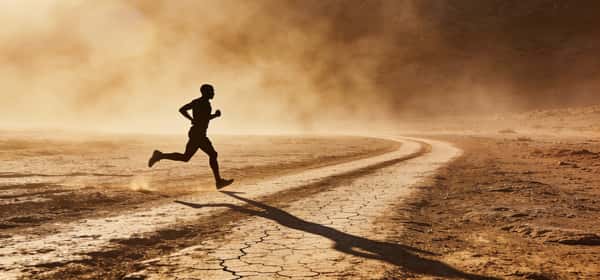
That competition is why the heat feels so punishing. The same run that sat at 150 beats per minute in cool air might hit 165 in the heat at the exact same pace. Add humidity and it gets worse, because sweat that can’t evaporate doesn’t cool you — it just drips. Your core temperature keeps rising, your perceived effort spikes, and performance drops.
Choose your goal and get a personalized meal plan in minutes.
Powered by DietGenie Eat healthy
 Lose weight
 Gain muscles
 Explore new cuisines
A core temperature climbing past 40°C (104°F), especially with any change in how your brain is working (confusion, stumbling, strange behavior), is the line where heat stress becomes life-threatening.2
Acclimatize before you push hard
The best protection against heat is heat itself, in controlled doses. Heat acclimatization is a set of real physiological changes your body makes when you train in hot conditions repeatedly over 10–14 days: your plasma (blood) volume expands, you start sweating earlier and more, your sweat becomes more dilute (you waste less salt), your heart rate drops at a given effort, and your core temperature stays lower.3
The protocol is simple: exercise in the heat for 60–90 minutes a day, starting easy and building intensity over the first week or two. You’ll feel awful the first few sessions and noticeably better by the end of the second week. Most of the cardiovascular adaptations show up early; the sweating and fluid-balance changes round out over the full two weeks.4
If you’re traveling somewhere hot for a race or event, this is why arriving a couple of weeks early — or doing heat sessions at home beforehand — matters so much. For the full breakdown, see our guide to heat acclimatization.
How much to drink
You lose water and salt through sweat, and the goal is to avoid losing too much (dehydration) without drinking so much that you dilute your blood (a dangerous condition called hyponatremia). The honest answer is that fluid needs are individual, but here’s a workable framework.
Find your sweat rate. Weigh yourself naked before a one-hour session and again right after, towel-dried. Each 1 kg lost is roughly 1 liter of sweat (adjust for any fluid you drank during the session). That number is your baseline.
During exercise, aim to replace enough to keep your weight loss under about 2% of body weight, since losses beyond that start to hurt endurance performance. For most people in the heat that lands around 0.4–0.8 L per hour, but a heavy sweater in extreme heat can lose far more.5
After exercise, drink about 1.5 liters for every 1 kg of body weight you lost, spread over a few hours, because you’ll pee some of it out.6
Don’t force huge volumes “just in case.” Drinking far more than you sweat is how endurance athletes end up hyponatremic. Our full guide to hydration during exercise walks through the weigh-in/weigh-out method and how to read your own thirst, and how much water should you drink per day covers the baseline you start from.
Suggested read: Carb Loading: The Glycogen Protocol for Endurance
When water isn’t enough: electrolytes
Sweat isn’t just water — it carries sodium, and a lot of it. Sweat sodium concentration varies hugely between people, but a common range is around 1 gram of sodium per liter of sweat.7 If you’re doing a short, easy session, plain water and a normal diet replace that fine. But once you’re going long (over about an hour), sweating heavily, or doing repeated sessions in the heat, replacing sodium starts to matter — both to hold onto the fluid you drink and to reduce the risk of overdrinking plain water.
| Drink (per 500 ml) | Sodium | Best for |
|---|---|---|
| Plain water | ~0 mg | Short or easy sessions under an hour |
| Sports drink | ~100–250 mg | Sessions over an hour, moderate sweating |
| Oral rehydration / high-sodium mix | ~500–1,000 mg | Heavy sweat, long endurance, salty sweaters |
We go deep on this in electrolytes for sweating, and you can compare options in our guides to electrolyte drinks and electrolyte water.
Heat exhaustion vs heat stroke: know the difference
This is the part that actually keeps you safe. There’s a meaningful difference between feeling overheated and being in danger.
| Sign | Heat exhaustion | Heat stroke (emergency) |
|---|---|---|
| Core temperature | Up, usually below 40°C/104°F | Above 40°C/104°F |
| Mental state | Tired, irritable, headachy — but lucid | Confusion, slurred speech, collapse, seizure |
| Skin | Heavy sweating, pale, clammy | May be hot; sweating can continue or stop |
| Pulse | Fast, weak | Fast, strong |
| Other | Nausea, dizziness, cramps, weakness | Vomiting, loss of consciousness |
| What to do | Stop, cool down, rehydrate, rest | Call 911 and cool aggressively now |
Heat exhaustion is your body waving a flag. Stop exercising, get to shade or air conditioning, remove excess clothing, sip cool fluids, and cool your skin. You should improve within 30 minutes.
Heat stroke is a true emergency. The defining feature is a core temperature above 40°C (104°F) combined with central nervous system changes — confusion, disorientation, stumbling, collapse, or a seizure.2 It can kill, and survival depends on cooling fast. Call 911, then start cooling immediately — cold-water immersion if available, or ice packs to the neck, armpits, and groin, plus dousing with water and fanning.8 Don’t wait for an ambulance to start cooling.
Full symptom list and red flags are in signs of heat exhaustion.
Suggested read: Luteal Phase: Hormones, Symptoms, and What to Expect
A practical hot-weather training protocol
- Time it right. Train early morning or evening. Midday sun in summer is the worst window.
- Warm up smart. You don’t need a long, sweaty warm-up in the heat — a short dynamic warm-up routine loosens you up without cooking you before you start.
- Pre-hydrate. Drink ~500 ml of fluid about two hours before, then top up if needed.5
- Dress for evaporation. Light, loose, light-colored, moisture-wicking. Skip the “sweat suit.”
- Pace by effort, not by your usual splits. Slow down. Your heart rate runs higher in heat, so go by feel. This is a great day for Zone 2 cardio rather than a hard interval session.
- Drink on a plan, roughly 0.4–0.8 L/h, with sodium if you’re going long.
- Build heat tolerance gradually over 10–14 days rather than going all-out on the first hot day.
- Know your exits. Have shade, water, and a way to stop. If you feel dizzy, nauseous, or your skin goes clammy and your effort suddenly feels impossible, stop.
If you’re easing into running this summer, start in cool hours and build slowly — our couch to 5k plan and running for weight loss guide both assume you respect the conditions.
Suggested read: Zone 2 Running: Why Slow Running Builds Speed
Who needs extra caution
Some people overheat faster or tolerate it less well: older adults, anyone with heart or lung conditions, people on certain medications (diuretics, some blood pressure and psychiatric drugs), those who are ill or under-slept, and anyone not yet acclimatized. Children and very lean or very large bodies also regulate heat differently. If any of that’s you, be conservative — lower intensity, more shade, shorter sessions — and check with your doctor before hard training in extreme heat.
Bottom line
Exercising in heat is safe and even beneficial when you respect it. The core temperature you generate has to go somewhere, and on a hot, humid day your body’s cooling system is working overtime. Acclimatize over 10–14 days, hydrate on a plan (about 0.4–0.8 L/h, replacing ~1.5 L per kg lost), add sodium when sessions run long, slow your pace, and train in cooler hours. Most importantly, learn the difference between heat exhaustion — a warning you can recover from — and heat stroke, where a core temp above 40°C/104°F plus confusion or collapse means call 911 and cool aggressively right now. Train smart and the heat becomes a training tool instead of a threat. For the rest of the cluster, see heat acclimatization, hydration during exercise, electrolytes for sweating, and signs of heat exhaustion.
Périard JD, Travers GJS, Racinais S, Sawka MN. Cardiovascular adaptations supporting human exercise-heat acclimation. Auton Neurosci. 2016;196:52-62. PubMed | DOI ↩︎
Bouchama A, Abuyassin B, Lehe C, et al. Classic and exertional heatstroke. Nat Rev Dis Primers. 2022;8(1):8. PubMed | DOI ↩︎ ↩︎
Périard JD, Racinais S, Sawka MN. Adaptations and mechanisms of human heat acclimation: applications for competitive athletes and sports. Scand J Med Sci Sports. 2015;25 Suppl 1:20-38. PubMed | DOI ↩︎
Sekiguchi Y, Filep EM, Benjamin CL, Casa DJ, DiStefano LJ. Does dehydration affect the adaptations of plasma volume, heart rate, internal body temperature, and sweat rate during the induction phase of heat acclimation? J Sport Rehabil. 2020;29(6):847-850. PubMed | DOI ↩︎
Convertino VA, Armstrong LE, Coyle EF, et al. American College of Sports Medicine position stand. Exercise and fluid replacement. Med Sci Sports Exerc. 1996;28(1):i-vii. PubMed | DOI ↩︎ ↩︎
McDermott BP, Anderson SA, Armstrong LE, et al. National Athletic Trainers’ Association position statement: fluid replacement for the physically active. J Athl Train. 2017;52(9):877-895. PubMed | DOI ↩︎
Baker LB. Sweating rate and sweat sodium concentration in athletes: a review of methodology and intra/interindividual variability. Sports Med. 2017;47(Suppl 1):111-128. PubMed | DOI ↩︎
Casa DJ, Guskiewicz KM, Anderson SA, et al. National Athletic Trainers’ Association position statement: preventing sudden death in sports. J Athl Train. 2012;47(1):96-118. PubMed | DOI ↩︎