Endometriosis is, at its core, a chronic inflammatory disease. The endometrial-like tissue growing outside the uterus isn’t just sitting there — it’s bleeding monthly, releasing inflammatory signals, and triggering a sustained immune response that drives most of the condition’s worst features: pain, scarring, adhesions, and fertility problems.

Understanding the inflammation piece changes how you approach treatment. Hormonal therapy reduces the bleeding-and-inflammation cycle. Anti-inflammatory diet and lifestyle reduce the systemic inflammatory load. Surgery removes the tissue producing local inflammation. None of these are random choices — they all target the inflammation that defines the disease.
Quick answer
Endometriosis involves:
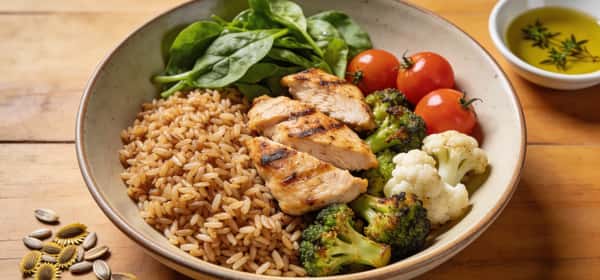
Everyday meals can calm inflammation. Choose your goal and get your plan.
Powered by DietGenie Eat healthy
 Lose weight
 Gain muscles
 Explore new cuisines
- Local inflammation at endometriotic lesions — cytokines, prostaglandins, immune cell infiltration
- Pelvic peritoneal inflammation — altered fluid composition with elevated inflammatory markers
- Systemic inflammation — measurable elevations in CRP and inflammatory cytokines in blood
- Immune dysfunction — failure of normal immunosurveillance allows ectopic tissue to persist
- Pain amplification — chronic inflammation sensitizes pain pathways centrally and peripherally
Interventions that reduce inflammation — hormonal therapy, anti-inflammatory diet, omega-3, exercise, weight management, stress reduction — all reduce endometriosis symptoms through this shared mechanism.
The inflammatory cascade in endometriosis
The 2022 BMJ review by Horne & Missmer outlines the current understanding: endometriosis is a “chronic, inflammatory, gynecologic disease” where genetic, hormonal, and immunologic factors converge.1
The simplified cascade:
Retrograde menstruation — small amounts of menstrual blood and endometrial cells flow backward through the fallopian tubes into the pelvis. This happens in most women, but in some, the cells implant rather than being cleared.
Immune dysregulation — in women who develop endometriosis, the local immune response fails to clear these ectopic cells. Macrophage function is altered, natural killer cell activity is reduced, and pro-inflammatory cytokines accumulate.
Implantation and lesion formation — endometrial-like tissue establishes on pelvic surfaces. These lesions develop their own blood supply (angiogenesis) and become responsive to monthly hormonal cycles.
Cyclical bleeding and inflammation — each cycle, the ectopic tissue bleeds. Trapped blood and tissue trigger sustained local inflammation: IL-1, IL-6, IL-8, TNF-α, prostaglandins (especially PGE2 and PGF2α).
Chronic inflammatory state — the cycle becomes self-perpetuating. Inflammation promotes more lesion growth, angiogenesis, and nerve infiltration into lesions.
Scarring and adhesions — sustained inflammation drives fibrosis. Organs become fused together (most commonly the ovaries to the pelvic sidewall or the bowel to the uterus).
Central sensitization — chronic pain input causes central nervous system changes. Over time, the pain becomes amplified, and stimuli that wouldn’t normally hurt become painful.
 Suggested read: What Causes PCOS? The Real Drivers Explained Clearly
What’s actually elevated
In women with endometriosis, multiple inflammatory markers are measurably elevated compared to women without the disease:
| Marker | Elevation pattern | Significance |
|---|---|---|
| IL-6 | Elevated in peritoneal fluid and serum | Pro-inflammatory; promotes lesion survival |
| IL-8 | Elevated in peritoneal fluid | Promotes neutrophil recruitment and angiogenesis |
| TNF-α | Elevated locally and systemically | Drives chronic inflammation |
| VEGF | Elevated | Promotes blood vessel growth into lesions |
| MCP-1 | Elevated | Macrophage recruitment |
| Prostaglandin E2 (PGE2) | Elevated | Drives pain and inflammation |
| Prostaglandin F2α (PGF2α) | Elevated | Causes uterine contractions and pain |
| CRP | Mildly elevated systemically | General inflammatory marker |
These aren’t just biomarkers — they’re the actual drivers of the symptoms you experience. NSAIDs work in endometriosis specifically because they inhibit prostaglandin synthesis.
Suggested read: Iron for Heavy Periods: Replenish, Maintain, and Get Help
How estrogen amplifies the inflammation
Estrogen and inflammation aren’t separate stories in endometriosis — they reinforce each other:
- Estrogen drives the growth of endometriotic lesions (which is why hormonal therapies that suppress estrogen reduce disease activity)
- Inflammation produces aromatase — the enzyme that makes estrogen from androgens. Inflammatory cytokines induce aromatase locally in lesions, so the lesions actually produce their own estrogen, fueling further growth
- Progesterone resistance — many endometriotic lesions don’t respond normally to progesterone (which should oppose estrogen’s effects), so the inflammation-estrogen loop runs without its normal brake
This is why simply “balancing hormones” isn’t a treatment for endometriosis — the lesions are creating their own hormonal microenvironment.
How inflammation drives pain
Endometriosis pain has multiple components, all rooted in inflammation:
Acute prostaglandin-driven pain
Each cycle, the lesions release prostaglandins (PGE2, PGF2α) that:
- Trigger uterine contractions (period cramps)
- Sensitize peripheral nerves
- Promote local vasoconstriction and tissue ischemia
This is the acute period pain that NSAIDs (prostaglandin inhibitors) can partly relieve.
Chronic neurogenic inflammation
Endometriotic lesions develop their own nerve fibers, and these nerves become sensitized to inflammatory mediators. Substance P, CGRP, and other neuropeptides amplify the pain response, creating chronic pelvic pain even outside of periods.
Central sensitization
Over time, sustained pain input rewires central nervous system pain processing. The brain becomes more sensitive to pain signals — and to signals that shouldn’t be painful. This is why some women with endometriosis develop:
- Pain in regions not directly affected by lesions
- Increased sensitivity to other sensory inputs
- Conditions like fibromyalgia, migraine, or IBS at higher rates
Pelvic floor muscle dysfunction
Chronic pelvic pain causes the pelvic floor muscles to hold protective tension. Over time, these muscles develop trigger points and hypertonicity, which create their own pain — independent of the lesions themselves. This is why pelvic floor physiotherapy is so important; it addresses a self-perpetuating pain source.
Suggested read: What Is PMDD? Symptoms, Causes, and Treatment Explained
What reduces the inflammation
Hormonal therapy
Suppressing the estrogen-driven cyclical bleeding of lesions reduces the recurring inflammatory trigger. Options:
- Combined oral contraceptives (continuous, no placebo week)
- Progestin-only methods (Mirena IUD, dienogest, norethindrone)
- GnRH agonists/antagonists with add-back therapy (for severe cases)
Most of these work in months, not weeks. They’re not instant — but they’re effective for the majority of women.
Anti-inflammatory diet
A Mediterranean-style anti-inflammatory diet reduces systemic inflammatory markers and provides nutrients that compete with pro-inflammatory pathways. See the endometriosis diet for specifics. For the broader anti-inflammatory framework: anti-inflammatory diet and foods that cause inflammation.
Omega-3 fatty acids (EPA + DHA)
The most directly inflammation-targeted nutritional intervention for endometriosis. Mechanism:
- EPA and DHA compete with omega-6 arachidonic acid in cell membranes
- Result: less arachidonic acid available to make pro-inflammatory PGE2 and PGF2α
- Plus: omega-3 produce their own anti-inflammatory resolvins and protectins
Practical dose for endometriosis: 1,000–2,000 mg combined EPA + DHA per day. Higher than the standard “general health” recommendation because you’re aiming for therapeutic, not maintenance, effect.
Sources: high-omega-3 foods, omega-3 supplement guide.
Regular exercise
Moderate aerobic exercise reduces systemic CRP, IL-6, and other inflammatory markers. The effect is consistent across trials. 150 minutes/week of moderate aerobic activity is the baseline; more is fine if tolerated.
Stress management
Chronic psychological stress drives sustained cortisol elevation, which in turn drives chronic inflammation when prolonged. Mindfulness, CBT, adequate sleep, and stress reduction all measurably lower inflammatory markers over time.
For the cortisol-inflammation overlap: how to lower cortisol naturally and supplements to lower cortisol.
Suggested read: Menstrual Phase: Hormones, Symptoms, and How to Support It
Specific anti-inflammatory supplements
- Vitamin D — if deficient. >75% of endometriosis patients in some series have low vitamin D
- Curcumin — direct anti-inflammatory effects; preliminary evidence in endometriosis
- NAC — antioxidant and anti-inflammatory; small studies suggest benefit
- Magnesium — modulates inflammatory pathways and supports smooth muscle relaxation. See magnesium for PMS
For broader options: anti-inflammatory supplements.
Weight management (in the right context)
Higher body fat is associated with higher systemic inflammation, partly because adipose tissue itself produces inflammatory cytokines (TNF-α, IL-6). For women with overweight and endometriosis, modest weight reduction can lower inflammatory markers — though this isn’t relevant if you’re at a healthy weight already.
Sleep
Inadequate sleep (consistently under 7 hours) increases inflammatory markers. The reverse is true: protecting sleep reduces inflammation. This isn’t soft advice — it’s a measurable biological effect.
What about probiotics and gut health?
The gut-inflammation link is real but more complicated than popular content suggests. See endometriosis and gut health for the honest picture — including a major recent study that complicates the “fix your gut, fix endo” narrative.
What’s still uncertain
A few aspects of the endometriosis-inflammation story aren’t fully settled:
- Which comes first? Does inflammation cause endometriosis, or does endometriosis cause inflammation? Most evidence suggests they’re mutually reinforcing.
- Subtype-specific patterns. Different endometriosis subtypes (superficial peritoneal, ovarian endometrioma, deep infiltrating) may have different inflammatory profiles.
- Personalized anti-inflammatory targeting — emerging research is trying to identify which women have which inflammatory profile, to tailor treatment.
The clinical implication: broad-spectrum anti-inflammatory interventions (Mediterranean diet, omega-3, exercise, hormonal suppression) work for most women. Highly targeted anti-cytokine therapies are still mostly experimental.

What this means for your day-to-day
If you have endometriosis and want to address the inflammatory piece practically:
- Take an effective hormonal therapy if appropriate — this is the foundation
- Eat anti-inflammatory — Mediterranean pattern, see endometriosis diet
- Hit therapeutic omega-3 dosing — 1,000–2,000 mg EPA+DHA daily
- Move regularly — moderate aerobic + strength
- Protect sleep — 7–9 hours consistently
- Manage stress actively — CBT, mindfulness, whatever works for you
- Address pelvic floor dysfunction — specialist physiotherapy
- Add specific supplements where evidence supports — vitamin D if deficient, magnesium, curcumin
This is the integrated approach. No single piece is transformative; together, they meaningfully reduce inflammatory load and symptom burden.
For the broader natural treatment framework: endometriosis natural treatment. For symptoms and diagnosis: endometriosis symptoms.
Bottom line
Endometriosis is fundamentally inflammatory — local lesion inflammation, pelvic fluid inflammation, systemic inflammation, and central sensitization all contribute to the symptoms. Hormonal therapy reduces the cyclical inflammatory trigger; anti-inflammatory diet and omega-3 reduce the systemic load; exercise and stress management reduce inflammatory cytokines; pelvic floor physiotherapy addresses the muscle-pain cycle. None of these alone is a cure, but combining them targets the actual mechanism that drives the disease. Skip “anti-inflammatory protocols” sold as cures; do the boring, evidence-based versions consistently.