EMS devices are sold with two very different stories. One is the rehab version: a clinical tool that helps you rebuild a muscle that’s gone quiet after injury or surgery. The other is the fitness-influencer version: strap on a belt, watch TV, and skip the gym. The first is well-supported. The second is mostly wishful thinking. Here’s what electrical muscle stimulation actually does, where it earns its place, and where it falls flat.
Quick answer
- What EMS devices do: send small electrical currents through pads on your skin to make a muscle contract without you consciously firing it
- Best evidence for: rehab and recovery of strength in a weakened muscle, especially after surgery (this is the clinical use, called NMES)
- Useful add-on for: maintaining muscle when you can’t move normally
- Overblown claims: replacing real workouts, building serious strength on its own, melting fat, sculpting abs passively
- Key rule: EMS supplements training and rehab — it doesn’t replace voluntary exercise
- Hard safety line: not for people with pacemakers or certain implanted devices (see safety)
What EMS actually is
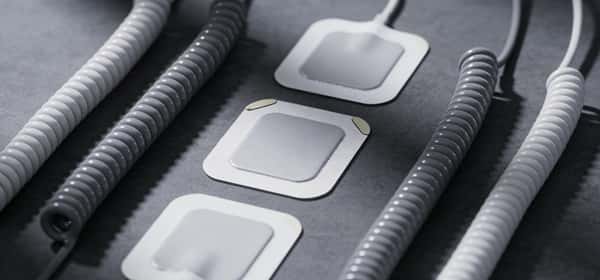
EMS stands for electrical muscle stimulation. In clinical settings it’s usually called NMES — neuromuscular electrical stimulation. The device delivers pulses of current through electrode pads on your skin, and that current makes the underlying muscle contract whether or not you’re trying to move it.
It helps to keep two related technologies straight:
Choose your goal and get a meal plan with plenty of protein.
Powered by DietGenie Gain muscles
 Lose weight
 Eat healthy
 Explore new cuisines
- EMS / NMES makes muscles contract. It’s used for strength and rehab.
- TENS (transcutaneous electrical nerve stimulation) targets nerves for pain relief and isn’t designed to build muscle. Some home units do both modes, so check what you’re actually using.
The honest framing: a muscle contraction triggered by electricity is a real contraction, but it’s not identical to the one your brain produces during exercise. That difference is why EMS is a great helper in specific situations and a poor stand-in for training in most.
Where the evidence is strong: rehab
This is EMS’s home turf, and the evidence is solid. After knee surgery, the quadriceps muscle often “shuts down” and is hard to activate, which stalls recovery. NMES helps here.
A 2025 systematic review and meta-analysis of randomized trials in patients after ACL surgery found that adding NMES to standard physical therapy produced significantly better recovery of quadriceps strength than physical therapy alone, at both short- and long-term follow-up — and starting it early (within the first week) gave the biggest benefit.1 An earlier meta-analysis reached the same conclusion: NMES plus standard physical therapy beat physical therapy alone for quadriceps strength and physical function in the early post-operative period.2
The takeaway: when a muscle has gone weak and you can’t fully activate it on your own, EMS gives it a jump-start. That’s a genuine, evidence-backed use — done as part of a rehab program, not instead of one.
Where it’s useful as a recovery and maintenance tool
Beyond formal rehab, EMS has a sensible supporting role:
- Keeping muscle when movement is limited. If injury, immobilization, or illness keeps you from training a muscle group, NMES can help slow the loss of strength.
- Low-level recovery use. Gentle stimulation is sometimes used to promote blood flow and a sense of recovery, similar to other comfort tools. The effect here is modest, in the same ballpark as compression boots or percussion massage — pleasant and possibly helpful for how you feel, not a dramatic recovery accelerator.
If you’re stacking recovery methods, treat EMS as one optional piece alongside sleep, muscle-recovery foods, and the actual training that drives adaptation. See the health benefits of exercise for why voluntary movement stays the engine.
Suggested read: Wim Hof Breathing: The Method, Science, and Safety
What EMS devices can’t do
This is where the consumer hype runs ahead of reality.
| Claim | Reality |
|---|---|
| Replaces your workouts | No — voluntary exercise drives cardiovascular fitness, coordination, and bone loading that EMS can’t reproduce |
| Builds big strength on its own | EMS shines for weakened muscle; for healthy people, normal training beats it for strength gains |
| Sculpts abs passively | A contracted ab muscle isn’t a visible six-pack; that comes down to training plus body composition |
| Burns fat / spot-reduces | No credible evidence for passive fat loss from a stim belt |
| “Works your core while you sit” | A real contraction, but a poor substitute for loaded, coordinated movement |
The core limitation is the same in every case: EMS contracts a muscle, but it skips the nervous-system learning, full range of motion, and whole-body demand of real exercise. For a healthy person, it’s a supplement at best.
How to use an EMS device sensibly
- Match the mode to the goal. Use the NMES/muscle mode for strength or rehab, TENS mode for pain relief. They’re not interchangeable.
- Follow a rehab plan if you’re recovering. For post-injury or post-surgery use, your physical therapist should guide intensity, placement, and timing — that’s how the studies got their results.
- Place pads correctly. Electrode position determines which fibers fire. Poor placement means a weak or uncomfortable contraction.
- Start at low intensity. Build up to a firm but tolerable contraction, never painful.
- Don’t treat it as the workout. Use it around your training and recovery, not instead of them.
Why EMS isn’t the same as a workout
The reason a stim belt can’t replace training comes down to what a voluntary contraction actually involves that an electrical one doesn’t.
- Your nervous system learns. Real movement trains coordination, balance, and motor control. EMS fires a muscle in isolation and skips that learning entirely.
- Whole-body demand. Lifting, running, and even brisk walking load your heart, lungs, and bones. A localized contraction does none of that — there’s no cardiovascular or meaningful bone-loading effect.
- Range and pattern. Exercise moves joints through their range in coordinated patterns. EMS produces a static, artificial contraction that doesn’t reproduce how you actually use the muscle.
That’s exactly why EMS earns its place in rehab — when a muscle has gone offline and you can’t contract it normally, a forced contraction is genuinely useful. But for a healthy body that can already move, the electrical version is a weak substitute for the real thing.
Suggested read: CPAP Alternatives That Actually Work for Sleep Apnea
Safety and contraindications
EMS is generally safe when used correctly, but there are firm exceptions:
- Pacemakers and implanted electronic devices. Do not use EMS if you have a pacemaker, implanted defibrillator, or similar device — the current can interfere with them. This is a hard no without specialist clearance.
- Pregnancy. Avoid EMS, especially over the trunk, unless a clinician advises otherwise.
- Epilepsy or seizure disorders. Check with your doctor first.
- Don’t place pads over the chest/heart, on the front of the neck, on broken or irritated skin, or over the eyes.
- Heart conditions, cancer, or undiagnosed pain. Get medical advice before use.
When in doubt, especially around the heart or during pregnancy, ask a healthcare professional before switching it on.
Bottom line
EMS devices are a genuinely useful tool in one specific lane: rebuilding a weakened muscle, most clearly after knee surgery, where adding NMES to physical therapy reliably improves strength recovery. As a recovery and muscle-maintenance aid when you can’t move normally, it has a reasonable supporting role too. What it can’t do is replace real workouts, build serious strength in healthy people, or passively sculpt your body — those claims outrun the evidence. Use EMS as a supplement to training and rehab, match the mode to your goal, and respect the safety lines, especially the hard no for pacemakers. For other recovery tools to compare, see compression boots, percussion massage, and red light therapy.
Li Z, Jin L, Chen Z, et al. Effects of neuromuscular electrical stimulation on quadriceps femoris muscle strength and knee joint function in patients after ACL surgery: a systematic review and meta-analysis of randomized controlled trials. Orthop J Sports Med. 2025;13(1):23259671241275071. PubMed | DOI ↩︎
Hauger AV, Reiman MP, Bjordal JM, Sheets C, Ledbetter L, Goode AP. Neuromuscular electrical stimulation is effective in strengthening the quadriceps muscle after anterior cruciate ligament surgery. Knee Surg Sports Traumatol Arthrosc. 2018;26(2):399-410. PubMed | DOI ↩︎