You’ve probably seen the ads: a little sticker you slap on your arm that promises injection-free weight loss with “GLP-1 technology.” No needles, no prescription, no doctor. It sounds great. So do GLP-1 patches work? The short, honest answer is no, and the reason comes down to basic chemistry plus a total lack of evidence. Here’s what’s actually going on.
This is educational information, not medical advice. Real GLP-1 drugs like semaglutide and tirzepatide are prescription-only and must be supervised by a licensed prescriber. Many “research peptides” sold online are labeled “research use only,” are not FDA-approved for human use, and have not been tested for safety or quality. Talk to a doctor or pharmacist before starting, changing, or stopping any medication or supplement. Don’t try to self-source or self-dose prescription drugs.
Quick answer: There is no published clinical trial showing that any over-the-counter “GLP-1 patch” produces weight loss. GLP-1 and the drugs based on it are large peptide molecules that don’t cross intact skin in meaningful amounts, so a topical patch can’t deliver a working dose. What you’re buying is usually a herbal or vitamin patch with clever branding, not a needle-free version of Ozempic or Wegovy.
Choose your goal and get a meal plan that makes losing weight simpler.
Powered by DietGenie Lose weight
 Gain muscles
 Eat healthy
 Explore new cuisines
What is GLP-1, and why does delivery matter?
GLP-1 (glucagon-like peptide-1) is a hormone your gut releases after you eat. It tells your pancreas to release insulin, slows how fast your stomach empties, and signals your brain that you’re full. Drugs like semaglutide and tirzepatide are engineered to mimic this hormone and stick around far longer than the natural version. If you want the deeper mechanism, our explainer on GLP-1 for weight loss covers how these drugs change appetite and blood sugar.
Here’s the catch that matters for patches: GLP-1 and its drug analogs are peptides built from chains of amino acids. Semaglutide is a molecule of roughly 4,100 daltons. That size is the whole problem for any skin-based product.
Why GLP-1 peptides can’t get through your skin
Your skin is a barrier designed to keep things out. The outermost layer, the stratum corneum, is a tightly packed wall of dead cells and lipids. For a molecule to pass through it passively, pharmacologists generally point to a few rules of thumb:
- Small size. Transdermal delivery works best for molecules under about 500 daltons. Nicotine, hormones like estradiol, and fentanyl all fit comfortably under that ceiling.
- The right oil-and-water balance. The molecule has to be lipophilic enough to dissolve into the skin’s fatty layers.
- A low effective dose. Patches deliver tiny amounts over hours, so the drug has to be potent at microgram levels.
Now compare that to a GLP-1 drug:
| Property | Patch-friendly drugs | GLP-1 peptides (semaglutide, etc.) |
|---|---|---|
| Molecular weight | Under ~500 Da | ~4,000+ Da |
| Type | Small molecules | Large peptides |
| Crosses intact skin? | Yes, passively | No, not meaningfully |
| Stomach survival | N/A | Degraded; oral versions need a special absorption enhancer |
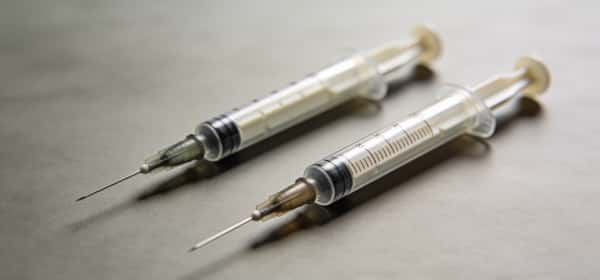
Peptides this big don’t slip through the skin barrier on their own. That’s not a marketing opinion; it’s why the actual approved GLP-1 drugs come as injections or, in one oral case, a specially formulated pill with an absorption enhancer to survive the gut. If a patch could deliver semaglutide, pharma companies, who have spent fortunes on needle-free delivery research, would already be selling it.
So what’s actually in a “GLP-1 patch”?
This is where the marketing gets slippery. Most patches sold online fall into a few buckets:
- Herbal and “metabolism” blends. Ingredients like berberine, green tea extract, chromium, or apple cider vinegar. Some of these have modest effects on blood sugar when eaten in real doses, but a patch delivers a fraction of that, if any.
- Vitamin patches. B12, B6, and similar. Pleasant marketing, no weight-loss mechanism.
- “GLP-1 support” labeling. The phrase implies the patch boosts your own GLP-1. Even if an ingredient could nudge natural GLP-1, the amount in a topical patch is nowhere near a drug dose.
Notice what’s missing: none of these contain actual semaglutide or tirzepatide. They legally can’t, because those are prescription drugs. The “GLP-1” in the name is a borrowed buzzword, not an ingredient. If you’re curious whether real peptides have any legitimate use, see our honest take on peptides for weight loss.
Suggested read: Retatrutide: The Triple Agonist Explained
Do GLP-1 patches work according to the reviews?
Scroll the GLP-1 patches reviews and you’ll see the usual pattern: glowing five-star testimonials on the seller’s own site, a scattering of “I felt less hungry” comments, and very few neutral third-party assessments. A few things to keep in mind:
- Testimonials aren’t trials. Appetite is suggestible. If you buy a weight-loss product and start paying attention to what you eat, you may eat less, with or without the patch doing anything.
- Self-selection bias. Happy customers post; disappointed ones often just request a refund and move on.
- No control group. Without a placebo comparison, you can’t separate the patch from regular dieting, water weight, or wishful thinking.
The thing that would actually settle the question, a randomized controlled trial showing a GLP-1 patch beats placebo for weight loss, doesn’t exist. Compare that to the mountain of evidence behind the injections: in the STEP 1 trial, weekly semaglutide produced a mean 14.9% body-weight loss over 68 weeks.1 Tirzepatide in SURMOUNT-1 reached up to 20.9% at the highest dose over 72 weeks.2 That’s the bar a real GLP-1 therapy clears. A sticker has cleared nothing.
How does this compare to the real prescription drugs?
It’s worth being blunt about the gap, because it explains why people are tempted by patches in the first place: the real drugs work, but they require needles, a prescription, and money.
| GLP-1 patch | Prescription GLP-1 (injection) | |
|---|---|---|
| Active drug delivered | None proven | Semaglutide / tirzepatide |
| Clinical evidence | None | Large randomized trials |
| Typical weight loss | No proven effect | ~15% to ~21% in trials12 |
| Prescription needed | No | Yes, with medical supervision |
| Known risks | Mostly skin irritation | Nausea, vomiting, rare serious effects3 |
The injections aren’t risk-free, and that’s exactly why they’re supervised. The most common side effects are gastrointestinal, nausea, vomiting, diarrhea, which is why prescribers titrate the dose up slowly.3 There are also real contraindications, and lean-muscle loss is a recognized issue during rapid weight loss that’s best managed with protein and resistance training.4 If you’re weighing your options between the two main drugs, our comparison of semaglutide vs tirzepatide lays out the trade-offs. None of that supervision and titration applies to a patch, because a patch isn’t delivering a drug.
Suggested read: GLP-1 Diet: What to Eat on Semaglutide & Tirzepatide
If you want the GLP-1 effect, what actually helps?
There are two honest paths, and neither involves a sticker.
Path one: real medication, properly prescribed. If your weight or metabolic health meets the criteria, a licensed prescriber can evaluate you for an approved GLP-1 drug and supervise the dose. That’s the only way to get the trial-level results, and it comes with monitoring for side effects. Skip the gray-market online sellers entirely.
Path two: raise your own GLP-1 naturally. Your body makes GLP-1 every time you eat, and some food choices trigger more of it than others:
- Protein. Higher-protein meals stimulate GLP-1 and blunt hunger. See how much protein per day you actually need and which high-protein foods hit the target.
- Fiber. Fermentable fiber feeds gut bacteria that produce compounds boosting GLP-1, and fiber slows digestion. Our piece on how fiber can help you lose weight digs into the mechanism.
- The bigger picture. None of this is magic, but combined with the basics it adds up. We pulled the realistic options together in natural GLP-1 strategies.
Will food match a 2.4 mg dose of semaglutide? No, and anyone promising that is selling something. But these moves are free, safe, and actually do nudge the hormone the patches claim to target.
How to spot the marketing red flags
If you’re evaluating any “GLP-1 patch” or similar product, watch for these tells:
- “Needle-free Ozempic / Wegovy alternative.” A patch cannot deliver these drugs. Full stop.
- No ingredient list with doses. If they won’t tell you exactly what’s in it and how much, assume it’s underdosed filler.
- Only on-site reviews. No independent testing, no published data.
- Urgency and scarcity tactics. Countdown timers and “90% off today” are sales pressure, not science.
- Vague science words. “Transdermal peptide technology” sounds impressive and means nothing without a molecule that can actually cross skin.
Bottom line
So, do GLP-1 patches work? Based on the chemistry and the complete absence of clinical evidence, no, they don’t deliver a working GLP-1 dose, because the peptides are too large to cross intact skin and the patches don’t contain the real drugs anyway. What you’re paying for is branding wrapped around herbs or vitamins. If you want the effect those ads are dangling, talk to a doctor about a properly prescribed and supervised GLP-1 medication, or build up your own GLP-1 with more protein and fiber. Both of those are real. The patch isn’t.
Wilding JPH, et al. Once-Weekly Semaglutide in Adults with Overweight or Obesity. N Engl J Med. 2021;384(11):989-1002. PubMed ↩︎ ↩︎
Jastreboff AM, et al. Tirzepatide Once Weekly for the Treatment of Obesity. N Engl J Med. 2022;387(3):205-216. PubMed ↩︎ ↩︎
Ghusn W, Hurtado MD. Glucagon-like Receptor-1 agonists for obesity: Weight loss outcomes, tolerability, side effects, and risks. Obes Pillars. 2024;12:100127. PubMed ↩︎ ↩︎
Neeland IJ, Linge J, Birkenfeld AL. Changes in lean body mass with glucagon-like peptide-1-based therapies and mitigation strategies. Diabetes Obes Metab. 2024;26 Suppl 4:16-27. PubMed ↩︎