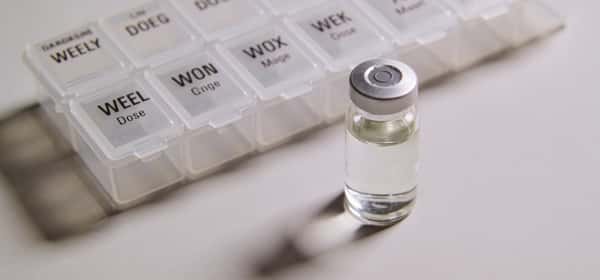
You’ve probably seen the ads: the same weight-loss shots as Ozempic or Mounjaro, for a fraction of the price, mailed to your door. That’s the world of compounded semaglutide and tirzepatide, and it’s a messier, riskier corner of the market than the slick marketing suggests. Here’s what compounding actually is, why it exploded, and how to tell a real pharmacy from a gray-market seller dressed up to look like one.

This is educational information, not medical advice. Semaglutide and tirzepatide are prescription-only medications that must be prescribed and supervised by a licensed clinician. Many “research” versions of these peptides are sold strictly for laboratory use, are not FDA-approved for human use, and have not been tested for the purity, sterility, or dosing accuracy required for injection into people. Talk to a doctor or pharmacist before you start, change, or stop any dose. Nothing here is meant to help anyone obtain or self-administer an unapproved substance.
The quick answer
Compounded semaglutide and tirzepatide are pharmacy-mixed versions of the active drugs in brand-name products like Ozempic, Wegovy, Mounjaro, and Zepbound. When made by a properly licensed compounding pharmacy under a valid prescription, compounding is a long-standing, legal practice. The danger isn’t the idea of compounding itself, it’s the flood of sellers who skip the rules, use unapproved salt forms, or ship vials with no quality control at all. Safety depends almost entirely on the source.
Choose your goal and get a meal plan that makes losing weight simpler.
Powered by DietGenie Lose weight
 Gain muscles
 Eat healthy
 Explore new cuisines
What does “compounded” GLP-1 actually mean?
Compounding is when a pharmacist combines or alters ingredients to create a medication tailored to a specific patient, instead of dispensing a mass-manufactured product. It’s normal medicine: pediatric liquids, allergen-free formulations, custom doses.
For GLP-1 drugs, a compounded product means a pharmacy is sourcing the active pharmaceutical ingredient, semaglutide or tirzepatide, and putting it into vials, usually mixed with bacteriostatic water or saline so you draw and inject it yourself. To understand why these drugs work in the first place, our explainer on GLP-1 for weight loss walks through the appetite and blood-sugar mechanisms.
A few things make compounded versions different from the brand:

- No fixed pen. You typically get a vial and draw doses with a syringe, rather than a dial-a-dose pen.
- Variable concentration. Two pharmacies can make wildly different strengths, so the same number of “units” means different milligrams.
- No FDA approval of the finished product. Compounded drugs are not reviewed or approved by the FDA the way Ozempic or Zepbound are. The agency doesn’t verify their safety, effectiveness, or quality before they reach you.
Why did compounded semaglutide and tirzepatide boom?
Two forces collided. First, demand went vertical once the trial data landed. In STEP 1, semaglutide 2.4 mg produced a mean 14.9% body-weight loss over 68 weeks.1 In SURMOUNT-1, tirzepatide reached up to 20.9% at the highest dose over 72 weeks.2 Those numbers are extraordinary for a medication, and word spread fast.
Second, the brand-name supply couldn’t keep up. The FDA placed both semaglutide and tirzepatide on its official drug shortage list. Under U.S. law, when a drug is in shortage, compounding pharmacies are allowed to make copies to fill the gap, something normally prohibited for an approved, commercially available drug. That carve-out, plus prices often a fifth of the brand cost and spotty insurance coverage, created a giant market almost overnight.
Here’s the catch: those shortages were declared resolved in 2025. Once a drug comes off the shortage list, the legal basis for mass-compounding copies largely disappears. Some compounding can continue in narrow cases (a documented clinical need for a different dose or an allergy to an inactive ingredient), but the era of routine, marketing-driven compounded GLP-1 is on much shakier legal ground than it was. If you want the fuller legal picture, see are peptides legal.
Suggested read: Tirzepatide Dosage Chart: Titration & Units Guide
503A vs 503B vs gray market: who’s actually making it?
This is the single most useful distinction to learn. Not all “compounded” sellers are the same, and the gap between them is the gap between regulated medicine and a guessing game.
| Source | What it is | Oversight | Reasonable trust level |
|---|---|---|---|
| 503A pharmacy | Traditional compounding pharmacy, makes a product for one patient with a prescription | State boards of pharmacy; must use FDA-registered ingredient sources | Moderate, if licensed and reputable |
| 503B outsourcing facility | Larger compounder that can make batches; registers with the FDA | FDA inspections, current Good Manufacturing Practice (cGMP) standards | Higher among compounders |
| Gray-market “research” sellers | Online vendors shipping vials labeled “research use only” or “not for human consumption” | Essentially none for human safety | Avoid for personal use |
The gray market is where most of the horror stories come from. These vendors dodge prescription requirements by slapping “research use only” on the label, which is also a legal shield, not a quality guarantee. The powder inside has not been tested for sterility, endotoxins, or even whether it contains the drug it claims to. Our guide on whether peptides are safe goes deeper on why this matters.
Suggested read: Peptide Dose Calculator: Reconstitution Math
What’s the FDA’s position, and what are the real risks?
The FDA has been blunt: it has not reviewed compounded semaglutide or tirzepatide for safety, effectiveness, or quality, and it has logged adverse event reports tied to these products. The concerns are concrete, not theoretical.
- Dosing errors. Because concentrations vary and people are measuring doses by hand from a vial, overdoses happen. The FDA has received reports of people drawing 5 to 20 times the intended dose, leading to severe nausea, vomiting, and hospitalizations.
- Wrong salt forms. Some products use semaglutide sodium or acetate salts instead of the semaglutide base in the approved drugs. These salt forms have not been shown to be safe or effective, and the FDA has specifically warned about them.
- Contamination and sterility failures. Injectables must be sterile. Compounders that cut corners can ship vials with bacteria, particulates, or endotoxins, a direct route to infection or worse.
- Unknown purity. Especially with gray-market powder, you don’t know what fraction is actual drug versus filler or degraded byproduct.
- No pharmacovigilance. With the brand drug, side effects feed into a monitoring system. With an anonymous vial, there’s no recall, no batch tracing, no one accountable if something goes wrong.
A broad review of GLP-1 receptor agonists confirms the side-effect profile you’d be managing even with a clean product: nausea, vomiting, diarrhea, and constipation are common, and there are real contraindications, including a personal or family history of medullary thyroid cancer.3 Doing that without medical supervision compounds the risk.
Is compounded semaglutide safe? Is tirzepatide safe? How to evaluate a source
There’s no universal yes or no. A product from a licensed 503B facility under a doctor’s care is a different animal from a mystery vial off an overseas website. If you and your prescriber are weighing a compounded option, these are the questions worth asking:
- Is there a real prescription and a real clinician? A legitimate telehealth or local provider evaluates you, checks contraindications, and follows up. “Fill out a 30-second form and check out” is a red flag.
- Can the pharmacy name its license and facility type? Ask whether it’s a 503A or 503B, in which state it’s licensed, and where the active ingredient is sourced. Reputable operations answer plainly.
- Is the semaglutide base, not a salt form? The label and certificate of analysis should specify. “Sodium” or “acetate” is a warning sign.
- Is there a certificate of analysis (COA)? Third-party testing for identity, purity, and sterility, ideally from an independent lab, is the bare minimum for an injectable.
- Does anything say “research use only” or “not for human consumption”? If so, it is not made for you to inject. Full stop.
It’s also worth being honest about the gap between compounded and brand products. The pivotal cardiovascular benefit, the roughly 20% reduction in major adverse cardiac events seen in the SELECT trial, was demonstrated with brand-name semaglutide 2.4 mg, not with compounded copies.4 You can’t assume the same outcomes carry over to an unstandardized product.
Suggested read: Liraglutide vs Semaglutide: Daily vs Weekly GLP-1
Practical considerations if you and your doctor go this route
This isn’t a how-to for sourcing anything yourself. It’s about doing the boring safety work properly with a clinician.
- Start low and titrate slowly. GLP-1 side effects are dose-dependent. Rushing the dose is what sends people to the ER.
- Protect your muscle. A real concern with rapid weight loss on these drugs is losing lean mass alongside fat. Studies show meaningful lean-body-mass loss, and the main mitigations are adequate protein and resistance training.5 Our pieces on how much protein per day and the best high-protein foods are a practical starting point.
- Compare the molecules with your prescriber. Tirzepatide hits two receptors (GIP and GLP-1) and outperformed semaglutide head-to-head in type 2 diabetes; our semaglutide vs tirzepatide breakdown lays out the trade-offs.
- Don’t freelance on schedules. Some people ask about microdosing GLP-1; whatever the approach, the dose and timing should be a clinical decision, not a guess from a forum.
- Build the habits that outlast the drug. Medication is a tool, not a cure. Pairing it with the kind of changes covered in losing weight naturally is what keeps results when you eventually taper.
Bottom line
Compounded semaglutide and tirzepatide aren’t inherently scams, and they aren’t inherently safe, the source decides everything. A licensed 503A or 503B pharmacy filling a real prescription under medical supervision sits in legitimate, if imperfect, territory. A “research use only” vial from an anonymous website does not. With brand-name shortages resolved, the legal footing for routine compounding has narrowed, and the risks the FDA flagged, dosing errors, dubious salt forms, contamination, haven’t gone anywhere. If you’re considering any of this, the move is the same one it always is with prescription medicine: talk to a doctor or pharmacist, verify the source, and never inject anything you can’t trace back to a real, accountable maker.
Wilding JPH, et al. Once-Weekly Semaglutide in Adults with Overweight or Obesity. N Engl J Med. 2021;384(11):989-1002. PubMed ↩︎
Jastreboff AM, et al. Tirzepatide Once Weekly for the Treatment of Obesity. N Engl J Med. 2022;387(3):205-216. PubMed ↩︎
Ghusn W, Hurtado MD. Glucagon-like Receptor-1 agonists for obesity: Weight loss outcomes, tolerability, side effects, and risks. Obes Pillars. 2024;12:100127. PubMed ↩︎
Lincoff AM, et al. Semaglutide and Cardiovascular Outcomes in Obesity without Diabetes. N Engl J Med. 2023;389(24):2221-2232. PubMed ↩︎
Neeland IJ, Linge J, Birkenfeld AL. Changes in lean body mass with glucagon-like peptide-1-based therapies and mitigation strategies. Diabetes Obes Metab. 2024;26 Suppl 4:16-27. PubMed ↩︎