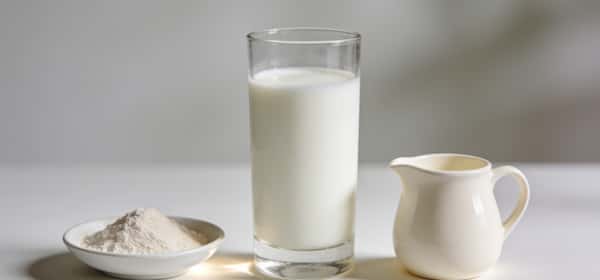
Colostrum and collagen are the two darlings of the supplement aisle right now, and because they’re often sold side by side (sometimes in the same tub), people assume they do roughly the same thing. They don’t. One is a structural protein you take mainly for skin and joints; the other is an immune-and-gut cocktail with a totally different job. Picking between them is easy once you know what each is actually for — so here’s the honest comparison.
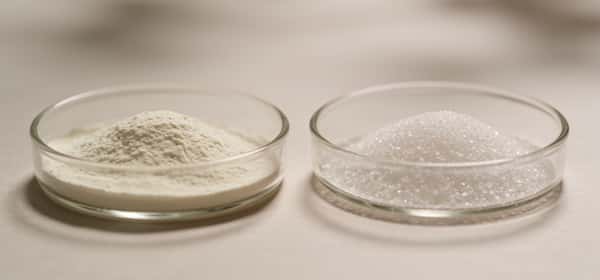
Quick answer: Collagen is a structural protein that gives skin, joints, and connective tissue their strength, and supplementing it has solid evidence for improving skin hydration, elasticity, and wrinkles. Bovine colostrum is the antibody-and-growth-factor-rich first milk cows make after calving, used mainly for gut barrier and immune support. They target different things: collagen for skin and joints, colostrum for gut and immunity. Neither is “better” — it depends on your goal, and they can be taken together. For the basics, see what colostrum is and our collagen benefits guide.
What each one actually is
Collagen is the most abundant protein in your body — the scaffolding of your skin, tendons, ligaments, cartilage, and bones. Supplements provide hydrolyzed collagen (collagen broken into small peptides) that your body absorbs and uses as raw material, and possibly as a signal, to support its own collagen-making. It’s fundamentally a structural-protein story.
Real meals matter more than any supplement. Choose your goal and get your plan.
Powered by DietGenie Eat healthy
 Lose weight
 Gain muscles
 Explore new cuisines
Bovine colostrum is something else entirely. It’s the thick, nutrient-dense fluid a cow produces in the first day or two after giving birth, before regular milk. Its job in nature is to jump-start a newborn’s immune system and gut, so it’s loaded with immunoglobulins (antibodies), lactoferrin, growth factors, and oligosaccharides rather than being a simple protein source.1 That composition is why it’s used for immunity and gut health, not skin firmness.
So they’re not two versions of the same idea. They’re different tools.
What the evidence says for each
This is where the comparison gets clear, because the two have their strongest evidence in completely different places.
Collagen → skin and joints. A systematic review and meta-analysis of 19 trials found that taking hydrolyzed collagen for around 90 days improved skin hydration, elasticity, and wrinkles compared with placebo.2 Collagen also has a reasonable body of evidence for joint comfort. This is the better-established “looks and joints” supplement.
Colostrum → gut and immunity. Colostrum’s strongest data is on the gut barrier — a meta-analysis of randomized trials found it reduced intestinal permeability — and on supporting immune function in athletes under heavy training.3 Its skin evidence, by contrast, is preliminary and indirect.
In other words, each shines in its own lane, and there’s very little overlap.

Colostrum vs collagen at a glance
| Collagen | Bovine colostrum | |
|---|---|---|
| What it is | Structural protein (hydrolyzed peptides) | Antibody/growth-factor-rich first milk |
| Best evidence for | Skin (hydration, elasticity, wrinkles), joints | Gut barrier, immune support in athletes |
| Main components | Amino acids (glycine, proline, hydroxyproline) | Immunoglobulins, lactoferrin, growth factors |
| Take it for | Skin aging, joint comfort | Leaky gut/barrier, immunity, training |
| Dairy? | No (usually bovine/marine protein, dairy-free) | Yes — it’s a dairy product |
Which should you choose?
Match the supplement to your actual goal:
- Want better skin or joint support? Collagen is the clearer, better-evidenced pick. Start with our collagen benefits and how much collagen per day guides.
- Want gut barrier or immune support, or you train hard? Colostrum is the better fit — see colostrum for gut health.
- Dairy allergy? Colostrum is out (it’s dairy); collagen is generally fine.
- Budget-conscious? Collagen tends to be cheaper per serving and has the more robust evidence base, so for general “anti-aging” goals it’s often the more rational spend.
There’s also no rule that says you must choose. Because they do different jobs, taking both — collagen for skin/joints, colostrum for gut/immunity — is perfectly reasonable if both goals matter to you and your budget allows. They don’t compete or cancel out.
A few practical differences
Beyond the headline benefits, a couple of everyday differences are worth knowing before you buy:
- Dietary suitability. Collagen comes from animal sources (usually bovine or marine) but is dairy-free, making it fine for the lactose intolerant. Colostrum is dairy and off-limits for anyone with a milk allergy. If you’re vegan, neither works — both are animal-derived.
- Taste and mixing. Hydrolyzed collagen is famously near-flavorless and dissolves cleanly into coffee or water. Colostrum powder has a milkier taste and doesn’t always mix as smoothly.
- Cost and dosing. Collagen is typically taken at around 2.5–15 g a day and is cheap per serving. Colostrum’s effective dose varies a lot with quality, and concentrated products can cost more — see colostrum dosage.
- Evidence maturity. Collagen has the larger, more consistent body of human trials for its core claims; colostrum’s research, while promising for gut and immunity, is younger and smaller.
None of these make one “win” — they just shape which is the more practical pick for your situation.
Can you take them together?
Yes. There’s no known interaction, and some products even combine them. Just remember you’re stacking two different benefits, not doubling up on one. If you’re taking both for skin specifically, know that the skin evidence sits with collagen — colostrum is the gut/immune half of that pairing, with its skin role still more theoretical, as we cover in colostrum for skin.
Suggested read: Colostrum for Skin: What the Evidence Shows
The bottom line
Colostrum and collagen look like rivals on the shelf, but they’re really teammates with different positions. Collagen is a structural protein with strong evidence for skin hydration, elasticity, and wrinkles, plus joint support — the pick if your goals are how you look and move. Colostrum is an immune-and-gut supplement with its best evidence on the gut barrier and immunity, especially for athletes — the pick if your goals are digestion and resilience.
Choose based on what you actually want to improve, not on which is trendier. And if both skin and gut are on your list, there’s nothing stopping you from using each for what it’s genuinely good at. The one mistake to avoid is buying colostrum expecting collagen’s skin results, or buying collagen hoping for colostrum’s gut and immune effects — that’s where people waste money. Match the supplement to the goal, and either one can be a smart buy.
Arslan A, Kaplan M, Duman H, et al. Bovine Colostrum and Its Potential for Human Health and Nutrition. Front Nutr. 2021;8:651721. PubMed ↩︎
de Miranda RB, Weimer P, Rossi RC. Effects of hydrolyzed collagen supplementation on skin aging: a systematic review and meta-analysis. Int J Dermatol. 2021;60(12):1449-1461. PubMed ↩︎
Hajihashemi P, Haghighatdoost F, Kassaian N, et al. Bovine Colostrum in Increased Intestinal Permeability in Healthy Athletes and Patients: A Meta-Analysis of Randomized Clinical Trials. Dig Dis Sci. 2024;69(4):1345-1360. PubMed ↩︎