Once you’ve decided to try bovine colostrum, the next question is the practical one: how much? It’s a fair thing to be confused about, because product labels suggest wildly different amounts — from a tiny half-gram capsule to a 20-gram scoop — and the studies don’t all agree either. The honest answer is that the “right” dose depends on your goal and the product’s quality, but there are sensible ranges to aim for. Here’s how to figure out yours.
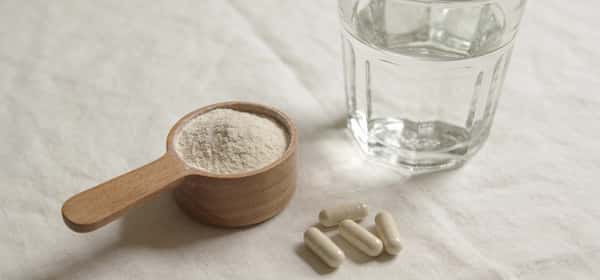
Quick answer: There’s no official recommended dose for bovine colostrum, but research offers useful anchors. Gut-barrier studies often used around 20 grams a day, while immune and general-wellness use tends to land lower, roughly 2 to 10 grams a day. Higher-quality colostrum (with more immunoglobulins) may work at lower doses. Start at the lower end, take it consistently for several weeks, and adjust based on how you respond and what your product’s label specifies. For the bigger picture, see what colostrum is.
Why there’s no single “correct” dose
A few things make colostrum dosing genuinely fuzzy:
Real meals matter more than any supplement. Choose your goal and get your plan.
Powered by DietGenie Eat healthy
 Lose weight
 Gain muscles
 Explore new cuisines
- No official guidelines. Colostrum is a supplement, not a regulated nutrient with a recommended daily allowance, so there’s no authoritative number.
- Quality varies enormously. Colostrum’s value comes from its bioactive content — especially immunoglobulins (IgG), lactoferrin, and growth factors. A concentrated, high-IgG product delivers more “active” colostrum per gram than a cheap, diluted one, so two products at the same gram dose aren’t equivalent.1
- Goals differ. The dose used to protect the gut barrier in hard-training athletes isn’t the same as a small daily “wellness” dose.
So rather than one magic number, think in ranges tied to your purpose.
What the studies actually used
Anchoring to the research helps cut through label confusion:
- Gut barrier / intestinal permeability: trials in this area frequently used higher doses, on the order of 20 grams per day. In one placebo-controlled study, 20 g daily for two weeks reduced exercise-induced gut permeability and intestinal cell damage.2 The meta-analysis confirming colostrum tightens the gut barrier pooled trials in a similar higher-dose range.3
- Immune support: studies in athletes and active people have used a spread of doses, often lower than the gut-barrier trials, and found modest immune effects.4
The pattern: bigger, barrier-focused benefits tend to come from bigger doses, while general immune/wellness use can sit lower.
Sensible dosing ranges
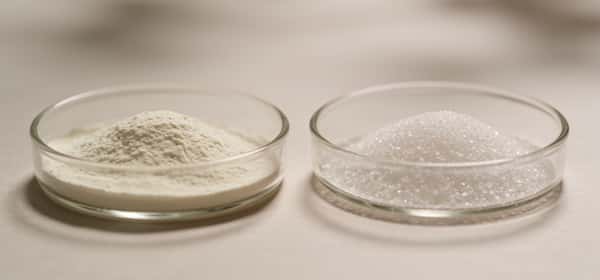
Translating the research into practical targets:
| Goal | Typical daily range | Notes |
|---|---|---|
| General wellness / immune support | 2–10 g/day | Lower end is fine to start; consistency matters more than size |
| Gut barrier support (e.g., athletes) | Up to ~20 g/day | Where the strongest barrier evidence sits |
| Capsule products | Follow label (often 0.5–2 g/serving) | May need several capsules to reach meaningful doses |
A reasonable approach for most people: start around 2 to 5 grams a day, see how you feel over a few weeks, and increase toward the higher end if you’re targeting gut-barrier benefits and tolerating it well. Our colostrum for gut health guide explains why the gut-barrier use case justifies the larger doses.
Powder vs capsules
The format affects how easily you can hit your target:
- Powder is the practical choice if you want the larger gut-study doses — scooping 10 to 20 grams is easy, and it mixes into water or a shake. It’s also usually cheaper per gram.
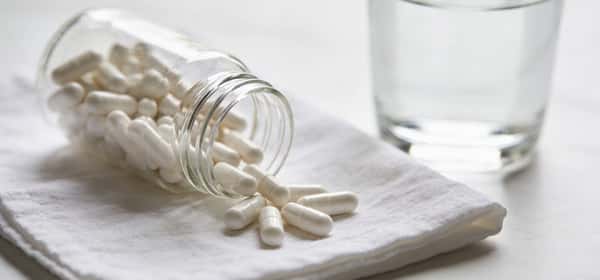
- Capsules are convenient and travel-friendly, but each holds only a small amount (often half a gram to two grams), so reaching a meaningful dose can mean swallowing a lot of them. They suit lower “wellness” doses better.
Timing and how to take it
- Timing: there’s no strong evidence that a specific time of day matters. Many people take it on an empty stomach (first thing in the morning or before training) on the theory that it limits how much gets digested, but this isn’t firmly proven. Pick a time you’ll remember.
- Don’t use boiling liquid. Colostrum’s bioactive proteins can be degraded by high heat, so mix powder into cool or lukewarm water rather than a hot drink.
- Be consistent and patient. The studies ran for weeks. Give any dose at least three to four weeks before judging it.
How long to take it, and do you cycle?
Two common follow-up questions:
- Duration: the studies ran for a few weeks to a couple of months, so think in terms of a sustained trial rather than a one-off. If you’re targeting gut-barrier benefits around hard training, ongoing daily use during heavy training blocks makes sense.
- Cycling: there’s no established need to cycle colostrum (taking breaks), unlike some supplements. If it’s helping and you tolerate it, continuous use is reasonable; if you notice no benefit after a solid 4-to-6-week trial at an adequate dose, that’s a fair point to stop and reassess rather than keep spending.
A simple rule of thumb: give it an honest month at a sensible dose, judge the result, then decide whether it’s earning its place in your routine.
Reading the label like a pro
Because gram-for-gram quality varies, the smartest move is to look past the headline dose:
- Check the IgG (immunoglobulin) percentage. Higher-quality colostrum often states it; more IgG means more of the active stuff per gram.
- Watch for fillers. Cheaper products may be diluted, so a “20 g serving” isn’t necessarily 20 g of real colostrum.
- First-milking, low-heat processed colostrum tends to retain more bioactives.
Quality can matter as much as quantity here — a smaller dose of concentrated colostrum can outperform a larger dose of a diluted one.
Suggested read: Colostrum Side Effects: What to Know Before Taking
The bottom line
There’s no official colostrum dose, but the research gives you clear anchors: lower amounts (around 2 to 10 grams a day) for general immune and wellness use, and higher amounts (up to about 20 grams a day) where the strongest gut-barrier evidence sits. Powder makes the bigger doses practical; capsules suit smaller daily use.
Start low, stay consistent for a few weeks, and scale up toward the gut-barrier range only if that’s your goal and you’re tolerating it well. And don’t fixate on grams alone — a concentrated, high-IgG product at a modest dose can beat a big scoop of diluted powder. Before you start, it’s worth skimming the possible side effects, especially if you have a dairy allergy.
Arslan A, Kaplan M, Duman H, et al. Bovine Colostrum and Its Potential for Human Health and Nutrition. Front Nutr. 2021;8:651721. PubMed ↩︎
March DS, Marchbank T, Playford RJ, Jones AW, Thatcher R, Davison G. Intestinal fatty acid-binding protein and gut permeability responses to exercise. Eur J Appl Physiol. 2017;117(5):931-941. PubMed ↩︎
Hajihashemi P, Haghighatdoost F, Kassaian N, et al. Bovine Colostrum in Increased Intestinal Permeability in Healthy Athletes and Patients: A Meta-Analysis of Randomized Clinical Trials. Dig Dis Sci. 2024;69(4):1345-1360. PubMed ↩︎
Główka N, Durkalec-Michalski K, Woźniewicz M. Immunological Outcomes of Bovine Colostrum Supplementation in Trained and Physically Active People: A Systematic Review and Meta-Analysis. Nutrients. 2020;12(4):1023. PubMed ↩︎