Coconut meat is the white flesh inside a coconut. It’s chewy when fresh, crunchy when dried, and packed with a distinctive tropical flavor.
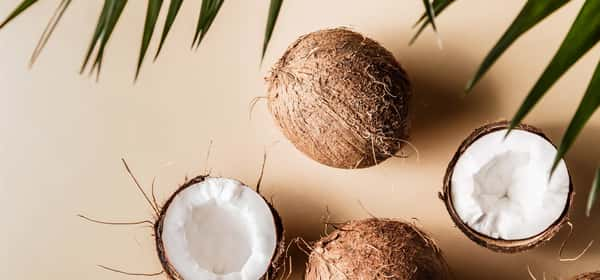
Coconuts grow on coconut palms (Cocos nucifera) in tropical climates. The brown, fibrous husk protects the meat and coconut water inside.
With coconut oil and coconut milk gaining popularity, you might be wondering whether eating the meat itself offers similar benefits. Here’s what the research says.
Choose your goal and get a meal plan full of foods you actually like.
Powered by DietGenie Eat healthy
 Lose weight
 Gain muscles
 Explore new cuisines
Nutrition facts
Coconut meat is calorie-dense and high in fat. One cup (80 grams) of fresh, shredded coconut provides:1
| Nutrient | Amount | % Daily Value |
|---|---|---|
| Calories | 283 | — |
| Protein | 3 g | — |
| Carbs | 10 g | — |
| Fat | 27 g | — |
| Fiber | 7 g | 25% |
| Manganese | — | 60% |
| Copper | — | 44% |
| Selenium | — | 15% |
| Phosphorus | — | 13% |
| Iron | — | 11% |
| Zinc | — | 10% |
The standout nutrients are manganese (supports enzyme function and metabolism) and copper (helps with bone formation and heart health).
About the fat content
Here’s what makes coconut unique: around 89% of its fat is saturated. But it’s not the same saturated fat found in beef or butter.
Most of coconut’s saturated fat comes from medium-chain triglycerides (MCTs). Unlike long-chain fats, MCTs get absorbed directly into your bloodstream and used for quick energy rather than stored as fat.2
The dominant fatty acid is lauric acid, which makes up about 50% of coconut’s fat content. Lauric acid has shown antimicrobial properties in lab studies.3
Fiber content
That same cup of coconut delivers 7 grams of fiber — over 20% of your daily needs. Most of it is insoluble fiber, which adds bulk to stool and keeps things moving through your digestive tract.
Health benefits
Heart health effects
The relationship between coconut and heart health is more nuanced than you might expect.
A 2018 randomized trial compared coconut oil, olive oil, and butter in 91 healthy adults. Coconut oil significantly raised HDL (good) cholesterol compared to butter, with no difference from olive oil in LDL changes.4
A systematic review of 16 clinical trials found that coconut oil increased both LDL cholesterol (by about 10 mg/dL) and HDL cholesterol (by about 4 mg/dL) compared to other vegetable oils.5
The clinical significance? Populations that traditionally consume large amounts of coconut — like certain Pacific Island communities — tend to have low rates of cardiovascular disease. But that context matters: they’re also more physically active and eat different overall diets than Western populations.
Weight management
MCTs behave differently than other fats when it comes to metabolism. A meta-analysis of randomized controlled trials found that replacing long-chain fats with MCTs led to modest reductions in body weight and body fat.6
The mechanisms make sense: MCTs increase satiety, boost calorie burning (thermogenesis), and get used for energy rather than stored. However, coconut oil doesn’t have the same effects as pure MCT oil — it contains a mix of fatty acids, and lauric acid (its main component) behaves more like a long-chain fat in some ways.7
Coconut meat’s fiber also helps with fullness, potentially preventing overeating.
Digestive health
The fiber in coconut supports regular bowel movements and feeds beneficial gut bacteria.
The fat content helps your body absorb fat-soluble vitamins (A, D, E, and K) from other foods eaten at the same meal.
Research also suggests that lauric acid and monolaurin (a derivative) have antimicrobial properties. Lab studies show activity against harmful bacteria including Clostridium difficile and Staphylococcus aureus, as well as the yeast Candida albicans.3
Brain function
MCTs can be converted to ketones, which serve as an alternative fuel source for the brain. This has sparked interest in coconut and MCT oil for cognitive conditions.
A 2025 study in mice found that coconut-derived MCTs improved memory deficits and promoted neurite outgrowth.8 Human research is more limited, but some studies suggest potential benefits for people with mild cognitive impairment or Alzheimer’s disease.
Suggested read: 5 Impressive Health Benefits of Coconut
Potential downsides
Saturated fat concerns
Coconut meat is high in saturated fat, which mainstream dietary guidelines recommend limiting.
However, the saturated fat debate is ongoing. While some large studies link saturated fat intake to increased heart disease risk, coconut’s specific fatty acid profile (dominated by lauric acid) may have different effects than the saturated fat in red meat or dairy.
The American Heart Association still recommends limiting coconut oil. If you have existing heart disease or high cholesterol, discuss coconut consumption with your doctor.
Calorie density
At 283 calories per cup, coconut meat adds up quickly. If you’re watching your weight, portion control matters.
Allergies
Coconut allergies are uncommon but can cause severe reactions in some people. Interestingly, coconut allergy isn’t always linked to tree nut allergies — they’re botanically different.
How to use coconut meat
You can buy coconut meat fresh, frozen, shredded, or dried. Whole coconuts are available in many grocery stores.
To open a fresh coconut: pierce the three “eyes” with a screwdriver or knife, drain the water, then crack the shell with a hammer. Use a spoon or knife to pry out the meat.
Ways to use it:
- Add shredded coconut to oatmeal, yogurt, or smoothies
- Blend into sauces, curries, or dips
- Use as a coating for baked fish or chicken
- Mix into homemade trail mix or granola
- Stir chunks into stir-fries or grain bowls
Watch the sugar
Sweetened shredded coconut contains about 34 grams of sugar per cup, compared to just 5 grams in fresh coconut. Check labels and choose unsweetened versions when possible.
The bottom line
Coconut meat is a nutrient-dense food that’s high in fiber, MCTs, and minerals like manganese and copper.
Research suggests potential benefits for heart health (particularly HDL cholesterol), weight management, and digestion. The MCTs provide quick energy, and lauric acid has antimicrobial properties.
The main downside is its high saturated fat content, which may be a concern if you have cardiovascular risk factors. It’s also calorie-dense, so portion size matters.
For most people, unsweetened coconut meat can be part of a balanced diet — just don’t overdo it.
U.S. Department of Agriculture. FoodData Central: Coconut meat, raw. USDA ↩︎
Clegg ME. Medium-chain triglycerides are advantageous in promoting weight loss although not beneficial to exercise performance. Int J Food Sci Nutr. 2010;61(7):653-679. PubMed ↩︎
Dayrit FM. The Properties of Lauric Acid and Their Significance in Coconut Oil. J Am Oil Chem Soc. 2015;92(1):1-15. PubMed ↩︎ ↩︎
Khaw KT, Sharp SJ, Finikarides L, et al. Randomised trial of coconut oil, olive oil or butter on blood lipids and other cardiovascular risk factors in healthy men and women. BMJ Open. 2018;8(3):e020167. PubMed ↩︎
Neelakantan N, Seah JYH, van Dam RM. The Effect of Coconut Oil Consumption on Cardiovascular Risk Factors: A Systematic Review and Meta-Analysis of Clinical Trials. Circulation. 2020;141(10):803-814. PubMed ↩︎
Mumme K, Stonehouse W. Effects of medium-chain triglycerides on weight loss and body composition: a meta-analysis of randomized controlled trials. J Acad Nutr Diet. 2015;115(2):249-263. PubMed ↩︎
Kinsella R, Maher T, Clegg ME. Coconut oil has less satiating properties than medium chain triglyceride oil. Physiol Behav. 2017;179:422-426. PubMed ↩︎
Feng T, Zhou L, Gao S, et al. Coconut oil derived medium-chain triglycerides ameliorated memory deficits via promoting neurite outgrowth and maintaining gut homeostasis in 5×FAD mice. Food Funct. 2025. PubMed ↩︎