Ask around about natural gout remedies and cherries come up almost every time. It’s one of those folk cures that sounds too simple to be true — eat some cherries, avoid an attack? But unlike most home remedies, this one actually has research behind it, and the findings are surprisingly encouraging. That said, cherries aren’t magic, and it’s worth knowing exactly what they can and can’t do before you rely on them. Here’s the honest picture.
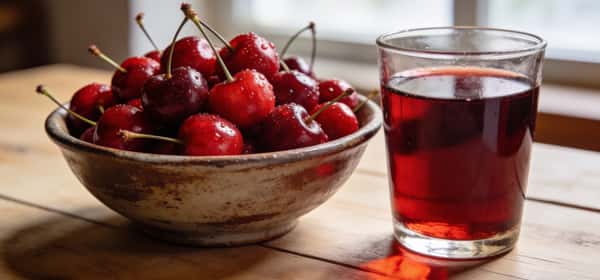
Quick answer: Cherries genuinely appear to help with gout. In a study of over 600 people with gout, eating cherries over a two-day period was linked to a 35% lower risk of a gout attack, and combining cherries with the medication allopurinol lowered the risk by 75%.1 They likely work through anthocyanins — the pigments that make cherries red — which are anti-inflammatory and may help lower uric acid. Fresh cherries, tart cherry juice, and cherry extract all count. They’re a useful, low-risk addition to a gout plan, but they’re a complement to proper treatment, not a replacement for it.
What the research actually shows
This is where cherries earn their reputation over other folk remedies. The key study followed 633 people with gout for a year, tracking their diet and their attacks. The finding was striking: eating cherries in the two days before was associated with a 35% lower risk of a gout attack compared with not eating them. Cherry extract showed a similar benefit, and the effect held up across different groups — men and women, people with and without obesity, and regardless of alcohol or medication use.1
Choose your goal and get a meal plan that considers your joints.
Powered by DietGenie Eat healthy
 Lose weight
 Gain muscles
 Explore new cuisines
Most compelling of all, the benefits stacked with medication: people who combined cherry intake with allopurinol (a common urate-lowering drug) had a 75% lower risk of an attack than those using neither.1 That’s a meaningful effect for a food you can buy at any grocery store. It’s worth being clear about what kind of study this was: it observed people’s real-world habits rather than being a controlled trial, so it shows a strong association rather than absolute proof of cause. But the effect was large, consistent across different groups, and biologically plausible — which is why cherries are taken more seriously than the average folk remedy.
How cherries might work
Cherries seem to help in a couple of complementary ways:
- Anti-inflammatory anthocyanins. The deep red pigments in cherries are potent antioxidants with anti-inflammatory properties, which may calm the joint inflammation that drives a gout attack.
- Lowering uric acid. Some research suggests cherries can modestly reduce uric acid levels, tackling the root cause rather than just the symptom.
The combination — less inflammation and a nudge down in uric acid — is a plausible explanation for why they reduce attacks. Cherries also come with broader health benefits beyond gout, so they’re a worthwhile food regardless.
How much, and which kind?
The studies didn’t pin down a perfect dose, but a reasonable, evidence-informed approach is:
| Form | Rough amount |
|---|---|
| Fresh cherries | About half a cup to one cup a day (10–20 cherries) |
| Tart cherry juice | A small glass daily (unsweetened) |
| Cherry extract/concentrate | Per the product’s directions |
A few practical notes:
- Tart (sour) cherries are often favored for gout and tend to be higher in the active anthocyanins, though sweet cherries were used in the main study too — both appear helpful.
- Go unsweetened. Sugary cherry juice cocktails or sweetened concentrates undo the benefit, since the added sugar raises uric acid. Look for 100% tart cherry juice.
- Consistency matters more than a big one-off dose — the benefit was tied to regular intake around the risk period.
Fresh, juice, or extract — which is best?
All three forms appeared to help in the research, so the best choice is really the one you’ll use consistently. Each has trade-offs:
- Fresh cherries are the most natural option, with fiber and the full package of nutrients intact. The downside is they’re seasonal and can be pricey. Frozen cherries are a great year-round substitute and work just as well.
- Tart cherry juice is convenient and concentrated, making it easy to get a meaningful dose daily — just insist on 100% unsweetened juice, not sweetened “cherry drink.”
- Cherry extract or concentrate packs the anthocyanins into a small dose without the sugar of juice, which suits people watching their calorie or sugar intake.
If you’re managing your weight or blood sugar alongside gout, the extract or a small glass of unsweetened juice avoids the extra sugar that a big bowl of cherries or sweetened juice would add.
What about other berries?
Cherries have the most direct gout research, but they’re not the only fruit worth eating. Other deeply colored berries — blueberries, blackberries, strawberries — share the same family of anti-inflammatory anthocyanins, and strawberries in particular are rich in vitamin C, which modestly lowers uric acid. None has cherries’ specific gout evidence, but a varied mix of berries fits perfectly into a gout-friendly, uric-acid-lowering diet and adds antioxidants without raising your uric acid. Think of cherries as the star and other berries as a helpful supporting cast.
How to make it a habit
Since consistency is what matters, build cherries into your routine rather than relying on remembering:
- Keep a bag of frozen cherries in the freezer and add a handful to yogurt, oatmeal, or a smoothie.
- Have a small glass of unsweetened tart cherry juice with breakfast.
- Snack on fresh cherries when they’re in season instead of reaching for something sugary.
The honest limits
Here’s the reality check that keeps cherries in perspective. They’re a helpful adjunct, not a cure. Cherries can reduce your risk of attacks and complement your treatment, but they don’t lower uric acid enough to control established gout on their own, and they can’t replace urate-lowering medication for people with recurrent attacks. Nor will a handful of cherries stop an acute attack that’s already underway — that needs anti-inflammatory treatment.
So the smart way to use cherries is as one piece of a bigger plan: alongside the other foods that lower uric acid, a sensible gout diet, and whatever medication your doctor prescribes. Used that way, they’re a genuinely worthwhile, low-risk addition. Just don’t stop your medication or skip a doctor’s visit because you’ve started eating cherries.
Suggested read: Foods That Lower Uric Acid Naturally
The bottom line
Cherries are that rare folk remedy that holds up to scrutiny: real research links them to about a third fewer gout attacks, and combined with medication the effect is even stronger. They likely work by calming inflammation and modestly lowering uric acid, thanks to their anthocyanins. Eat around half a cup to a cup of fresh cherries a day, or drink unsweetened tart cherry juice, and keep it consistent. Just hold the right expectation — cherries are a helpful complement to a proper gout plan and medication, not a standalone cure. As additions to a gout diet go, though, few are as easy or as evidence-backed as a daily bowl of cherries.