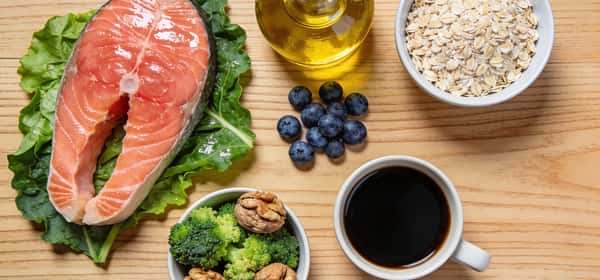
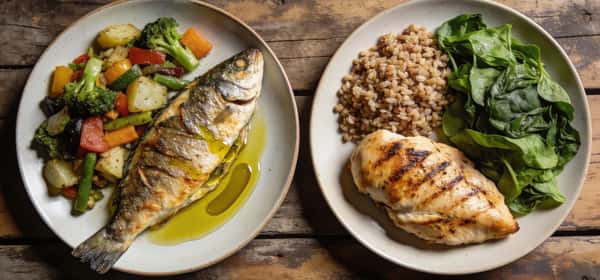
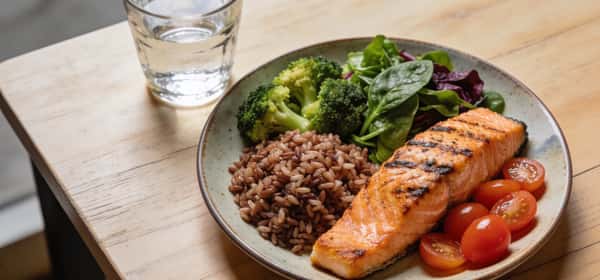
The Blue Zones diet comes from five places where people live unusually long, often into their late 90s and beyond while staying mostly free of chronic disease: Okinawa in Japan, Sardinia in Italy, Ikaria in Greece, the Nicoya Peninsula in Costa Rica, and Loma Linda in California. These aren’t fad-diet regions. They’re real populations that researchers have studied for decades — the term was popularized by Dan Buettner in The Blue Zones — and when you look at what they put on their plates, the same patterns keep showing up. This guide breaks down what they actually eat, what the evidence supports, and what gets oversold.
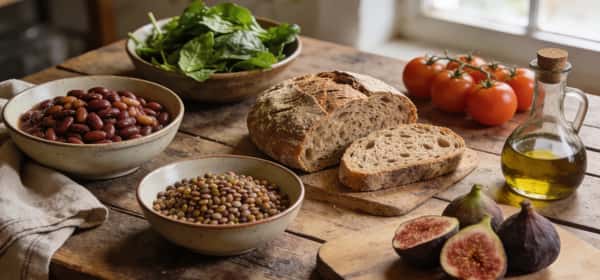
A quick honesty note before we start: the Blue Zones aren’t a single diet. Okinawans eat sweet potatoes and tofu; Sardinians eat sourdough and pecorino; people in Loma Linda are mostly Seventh-day Adventists who lean vegetarian. What they share is a pattern, not a recipe.
Quick answer
- Mostly plants: roughly 90-95% of calories come from plant foods in most Blue Zones
- Beans are the cornerstone: a cup of beans, lentils, or other legumes most days
- Whole grains, not refined: sourdough, barley, brown rice, whole corn
- Meat is occasional: small amounts, a few times a month in many regions, used more as flavoring than as the main event
- Very little processed food and added sugar
- Built around the local environment — cheap, seasonal, home-cooked
- Wine in some zones (Sardinia, Ikaria), with meals and in moderation — not universal
What the five Blue Zones actually eat
The diets differ region to region, but the overlap is striking.
Skip one-size-fits-all diets. Choose your goal and get your plan.
Powered by DietGenie Lose weight
 Gain muscles
 Eat healthy
 Explore new cuisines
| Region | Staple foods | Protein source | Notable habit |
|---|---|---|---|
| Okinawa, Japan | Purple sweet potato, tofu, vegetables | Soy, occasional fish | Eat to 80% full (“hara hachi bu”) |
| Sardinia, Italy | Sourdough, barley, fava beans, vegetables | Beans, goat/sheep dairy | Daily walking on hilly terrain |
| Ikaria, Greece | Greens, beans, potatoes, olive oil | Legumes, occasional fish | Mediterranean-style, lots of herbs |
| Nicoya, Costa Rica | Black beans, corn tortillas, squash | Beans, eggs | “Three sisters” beans-corn-squash combo |
| Loma Linda, USA | Whole grains, nuts, vegetables, legumes | Mostly plant-based, some dairy | Many are vegetarian Adventists |
Notice what’s missing: no region built its longevity on steak, protein shakes, or expensive superfoods. The food is humble and local.
Beans do a lot of the heavy lifting
If there’s one food that defines the Blue Zones, it’s the humble legume. Black beans in Nicoya, fava and chickpeas in Sardinia, soybeans in Okinawa, lentils in Ikaria. Researchers studying the eating patterns of long-lived populations consistently point to legumes as a shared feature, and diet patterns rich in beans and other plant foods are associated with lower mortality and longer healthy life in large cohort studies.1
Beans bring fiber, plant protein, slow-digesting carbohydrate, and a load of polyphenols — plant compounds that may influence the biological mechanisms of aging itself.2 They’re also cheap and filling, which is part of why these diets are sustainable across a whole lifetime rather than a six-week push.
Plant-forward, not strictly vegan
Here’s where the popular telling gets a little ahead of the science. The Blue Zones are overwhelmingly plant-forward, but only Loma Linda has a large genuinely vegetarian population. The others are what you’d call flexitarian: mostly plants, with small amounts of fish, eggs, dairy, or meat woven in. A 2025 review looking specifically at whether vegetarian diets drive Blue Zone longevity found that most of these regions are populated by flexitarians, not strict vegetarians, and cautioned that the evidence claiming vegetarian diets alone extend lifespan is weaker and more biased than it’s often presented.3
The honest takeaway: you don’t have to go vegan to eat like a centenarian. You do have to make plants the foundation and treat meat as occasional.
This overlaps heavily with the Mediterranean diet, which isn’t a coincidence — Ikaria and Sardinia are Mediterranean. If you want a practical entry point, a Mediterranean breakfast built around whole grains, olive oil, and fruit is a good first move.
Suggested read: What Predicts Longevity? The Evidence-Based Drivers
How they eat, not just what
The food matters, but the habits around it matter just as much.
- Hara hachi bu: Okinawans traditionally stop eating at about 80% full, a built-in form of mild calorie moderation
- Front-loaded calories: larger meals earlier in the day, lighter in the evening
- Slow, social meals: food is eaten with family and community, not alone at a desk
- Home cooking: very little restaurant or packaged food
- Natural fasting windows: many traditions include religious fasts or simply long gaps between dinner and breakfast
That last point connects to the broader research on intermittent fasting and fasting generally. Blue Zone eaters didn’t call it that, but long overnight fasts and modest calorie intake are baked into how they live.
What you can borrow today
You don’t need to move to a Greek island. The transferable parts are clear:
- Eat a cup of beans most days — soups, stews, salads, dips, whatever you’ll actually eat
- Make plants 80-90% of your plate — vegetables, fruit, whole grains, nuts, legumes
- Cut way back on processed food and added sugar — this is arguably the biggest lever
- Use meat as a side, not the center — a few times a week, smaller portions
- Cook at home and eat with people — the social side isn’t decoration, it’s part of the effect
- Stop eating before you’re stuffed — the 80% rule travels well
- Stay active in ordinary ways — walking, gardening, manual chores, not just gym sessions
These are small changes that compound over decades, which is exactly how the Blue Zones work. None of it is dramatic. That’s the point.
What gets oversold
Be a little skeptical of the marketing that’s grown up around the Blue Zones brand. A few things worth keeping straight:
- No single “miracle food.” It’s the overall pattern, not the purple sweet potato or the specific wine
- Genetics and environment matter too. These people also move all day, have tight social networks, and low chronic stress. Diet is one ingredient
- Supplements aren’t the lesson. Nobody in Okinawa got to 100 by taking longevity pills. The food was whole, not powdered
- Wine is optional. Two zones drink it, three largely don’t. It’s not the active ingredient
If anything, the strongest message from the Blue Zones is how boring the food is: beans, greens, whole grains, a bit of fish, eaten slowly with people you love. Diet works alongside movement and connection, which is why pairing better eating with regular exercise gets you closer to the full picture than any one habit alone.
Suggested read: AIP Diet Guide: What to Eat, Avoid, and How It Works
Bottom line
The Blue Zones diet is mostly plants, heavy on beans and whole grains, light on meat and processed food, and eaten in modest portions with other people. It overlaps strongly with the Mediterranean pattern and with the broader evidence that plant-forward eating supports a longer, healthier life. You don’t need to go fully vegetarian, buy exotic ingredients, or follow a strict plan — you need to shift the foundation of your plate toward plants and keep it that way for the long haul. The magic isn’t in any one food. It’s in a simple pattern repeated for a lifetime, supported by movement and community.
Hu FB. Diet strategies for promoting healthy aging and longevity: An epidemiological perspective. Journal of Internal Medicine. 2023;295(4):508-531. PubMed | DOI ↩︎
Davinelli S, Medoro A, Hu FB, Scapagnini G. Dietary polyphenols as geroprotective compounds: From Blue Zones to hallmarks of ageing. Ageing Research Reviews. 2025;108:102733. PubMed | DOI ↩︎
Grammatikopoulou MG, Gkouskou KK, Gkouvi A, Bogdanos DP, Lambrinoudaki I, Goulis DG. Vegetarian diets for longevity: friend or foe? Maturitas. 2025;202:108711. PubMed | DOI ↩︎