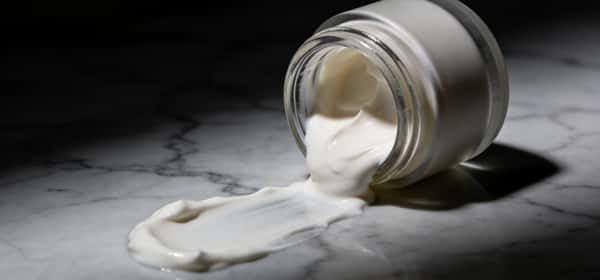
This is the most contested question in the whole beef tallow trend, and the comment sections are a war zone. Some people swear tallow cleared their lifelong acne; others say it triggered the worst breakout of their life. Both are telling the truth about their own skin — which is exactly why you need to understand the underlying science rather than trust any single testimonial. Here’s an honest look at whether beef tallow helps or hurts acne, and who should think twice.
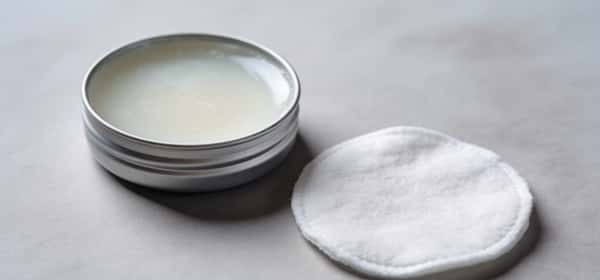
Quick answer: For acne-prone skin, beef tallow is a risky choice. It’s a rich, occlusive fat high in oleic acid, and acne develops when pores get clogged by excess oil and dead skin cells, so layering a heavy, potentially pore-clogging fat onto breakout-prone skin can make things worse. Some people with dry, non-acne skin tolerate it well, and a minority with acne report improvement — but there’s no clinical evidence that tallow treats acne, and its properties point more toward caution than benefit. If you have active acne, proven treatments are a far safer bet. For the full overview, see beef tallow for skin.
How acne actually forms
To judge tallow fairly, you need to know what drives acne in the first place. It comes down to four interacting factors:1
Glow starts with what you eat. Choose your goal and get your plan.
Powered by DietGenie Eat healthy
 Lose weight
 Gain muscles
 Explore new cuisines
- Excess oil (sebum) — overactive oil glands, often driven by hormones.
- Clogged pores — dead skin cells and oil blocking the follicle.
- Bacteria — Cutibacterium acnes (formerly P. acnes) multiplying in the blocked, oil-rich environment.
- Inflammation — the redness and swelling that turn a clog into a pimple.
The key takeaway: acne is partly a problem of too much oil and blockage in the pores. So the obvious question for tallow is whether adding more fat on top helps or hurts that picture.
The comedogenicity problem
“Comedogenic” means pore-clogging, and it’s the central concern with tallow for acne.
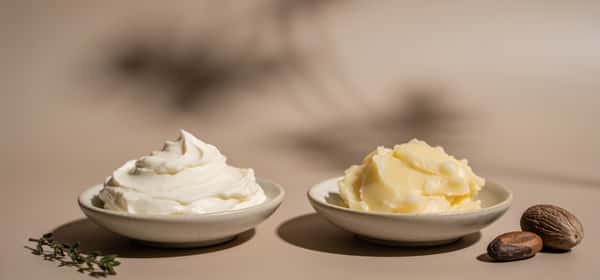
Heavy, occlusive fats can sit in and over pores. On dry, clear skin that’s often fine — even soothing. But on acne-prone skin, where pores are already inclined to clog, adding a thick, fatty layer can contribute to exactly the blockage that starts a breakout. Beef tallow is a rich, saturated-and-oleic fat, which puts it on the more comedogenic end of the spectrum for susceptible skin.
There’s no official, reliable comedogenicity score for beef tallow specifically (those ratings are inconsistent even for well-studied oils), but its composition — heavy, occlusive, oleic-acid-rich — is the profile that tends to be problematic for people who break out easily.
The oleic acid angle
Here’s where the fatty-acid science matters again. Skincare oils vary in their ratio of linoleic acid to oleic acid, and this ratio influences both barrier health and breakout risk.
A dermatology review of natural oils found that oils higher in oleic acid can be more irritating and detrimental to the skin barrier, whereas higher-linoleic oils tend to be better tolerated.2 Interestingly, people with acne-prone skin often have relatively lower linoleic acid in their sebum to begin with, so piling on a high-oleic fat like tallow may not be doing acne-prone skin any favors. This is part of why lighter, linoleic-rich oils are generally considered friendlier for breakout-prone skin than heavy, oleic-rich ones.
So why do some people say it cleared their acne?
Because skin is individual, and a few things could explain the success stories:
- They didn’t actually have acne-prone skin. Some “acne” is really dryness, irritation, or a damaged barrier — and a rich moisturizer can calm that, making skin look clearer.
- They switched away from harsher products. Ditching stripping cleansers and over-exfoliation for a simple balm can improve skin regardless of the balm being tallow.
- Barrier repair. If a compromised barrier was driving their irritation, sealing it with any good occlusive could help.
- Genuine individual tolerance. A minority of acne-prone people may simply tolerate tallow fine.
None of these prove tallow treats acne — they suggest the improvement often comes from context (gentler routine, better hydration) rather than tallow having anti-acne power. And for every success story, there’s someone whose pores clogged.
What to do if you have acne
If you’re dealing with breakouts, the sensible path:
- Be cautious with tallow. Given its comedogenic profile, it’s not a first choice for acne-prone skin. If you really want to try it, patch-test on a small area for a few weeks and watch closely — and see beef tallow side effects first.
- Use proven treatments. Ingredients with real evidence (like retinoids and others) and dermatologist guidance beat experimental balms. Our remedies for acne guide covers the basics.
- Look at diet and hormones. Acne pathogenesis links to hormones, insulin, and IGF-1, and reducing high-glycemic carbs and dairy may help some people.1 See hormonal acne diet.
- Consider lighter options. If you want a natural oil, lighter, higher-linoleic choices are generally gentler on acne-prone skin than heavy tallow or coconut oil.
Signs tallow is breaking you out
If you do try tallow despite the cautions, know what a negative reaction looks like so you can stop early:
- Small, uniform bumps (closed comedones) appearing across the areas you applied it — the classic sign of a comedogenic reaction, distinct from random hormonal spots.
- More whiteheads or blackheads than usual after a week or two of use.
- Breakouts concentrated where you applied the most product, like the cheeks or forehead.
- A “purge” that doesn’t end. People sometimes blame an initial breakout on “purging,” but true purging from a pore-clearing active is short-lived; a heavy occlusive like tallow doesn’t have a mechanism to purge, so ongoing breakouts are more likely just clogging.
If you see these, the fix is simple: stop the tallow, simplify your routine, and give your skin a few weeks to settle.
Suggested read: Beef Tallow Side Effects: Risks and Who Should Avoid
The bottom line
Beef tallow for acne is, on balance, a gamble that the science suggests you’ll often lose. Acne is partly a disorder of clogged, oily pores, and tallow is a heavy, occlusive, oleic-acid-rich fat — exactly the kind of thing that can worsen blockages in breakout-prone skin. The viral “it cleared my acne” stories are real for those individuals, but they’re usually explained by context (a gentler routine, calming a dry or damaged barrier) rather than tallow being an acne treatment, and there’s no clinical evidence that it treats acne at all.
If your skin is dry and not acne-prone, tallow may suit you fine. If you actually have acne, treat tallow as risky, lead with proven treatments, and only experiment with careful patch testing. When the cost of being wrong is a face full of clogged pores, caution beats hype.
Cong TX, Hao D, Wen X, Li XH, He G, Jiang X. From pathogenesis of acne vulgaris to anti-acne agents. Arch Dermatol Res. 2019;311(5):337-349. PubMed ↩︎ ↩︎
Vaughn AR, Clark AK, Sivamani RK, Shi VY. Natural Oils for Skin-Barrier Repair: Ancient Compounds Now Backed by Modern Science. Am J Clin Dermatol. 2018;19(1):103-117. PubMed ↩︎