Beef kidney has a bit of a reputation problem. Most people picture a strong smell, a gray slab at the back of the butcher’s case, or maybe a soggy pie from a bad pub. But underneath the intimidating image sits one of the most mineral-rich foods you can put on a plate. Ounce for ounce, it delivers a nutrient load that puts most muscle cuts to shame, and it does it with very few calories. If you’ve been curious about eating nose-to-tail, or you just want cheap nutrition from an underrated cut, kidney deserves a second look.
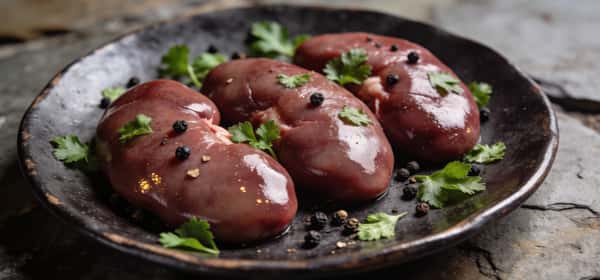
Quick answer: Beef kidney is a lean, low-calorie organ meat that’s exceptionally high in selenium and vitamin B12, with solid amounts of riboflavin, protein, iron, copper, and vitamin A. It’s also a natural source of DAO, an enzyme that helps break down histamine. The one real catch: it’s among the highest-purine foods there is, so anyone with gout or high uric acid should limit or avoid it.
What makes beef kidney nutrition stand out
Kidney is filtering tissue, not storage tissue, and that shapes its nutrition. It’s leaner than a steak and far leaner than beef liver benefits would suggest for its cousin — kidney carries less fat and fewer calories while still concentrating minerals in a big way. You get a complete protein, meaning all nine essential amino acids, plus a stack of micronutrients that are hard to hit through muscle meat alone.
Choose your goal and get a meal plan full of foods you actually like.
Powered by DietGenie Eat healthy
 Lose weight
 Gain muscles
 Explore new cuisines
The headline nutrient is selenium. A single serving can push well past 100% of the daily value, sometimes several times over, which is unusual for any whole food. After that comes vitamin B12 in genuinely enormous amounts, riboflavin (B2), and a respectable dose of iron and copper. It also carries some vitamin A, though noticeably less than liver, which makes kidney easier to eat regularly without stacking up too much retinol.
Here’s roughly what you’re working with per 100 grams of cooked beef kidney, using standard food-composition figures:
| Nutrient | Amount (per ~100g cooked) | Notes |
|---|---|---|
| Calories | ~135 kcal | Lean for the nutrient payload |
| Protein | ~26 g | Complete protein |
| Fat | ~4 g | Low, mostly from the tissue itself |
| Selenium | ≈ 140 mcg | Often well over 100% DV |
| Vitamin B12 | ≈ 30 mcg | Extremely high |
| Riboflavin (B2) | ≈ 4 mg | Covers a full day and then some |
| Iron | ≈ 5 mg | Heme iron, well absorbed |
Numbers shift a little with the exact cut and cooking method, but the pattern holds: a lot of nutrition for very little on the calorie ledger.
Selenium: the reason kidney is worth eating
If beef kidney had one job on your plate, it would be selenium. This trace mineral runs several systems your body can’t do without. It’s a building block of glutathione peroxidase, one of your main antioxidant enzymes, which mops up oxidative damage before it piles up. It also feeds thyroid function — the enzymes that convert thyroid hormone into its active form depend on selenium to work.
Most people get enough selenium from a mixed diet, but soil levels vary by region, and some folks run low without realizing it. A few servings of kidney a month will bury any shortfall. If you want the deeper picture on what this mineral does and how much you actually need, we’ve covered the health benefits of selenium separately. Just don’t overdo it — selenium is one of those nutrients where more is not better, and kidney is potent enough that you don’t need a giant portion to hit your target.
Vitamin B12 and the case for organ meats
Beef kidney is a B12 powerhouse. A single serving can cover many times your daily requirement, which matters more than it sounds. B12 keeps your nerves insulated, helps make red blood cells, and drives the methylation reactions your DNA relies on. Run short over months or years and the damage can be quiet at first, then hard to reverse.
This is where organ meats earn their keep. B12 comes almost entirely from animal foods, and levels tend to run low on plant-based diets unless people supplement carefully.1 Kidney, along with liver and other organ meats, is one of the richest natural sources going. If you eat meat only occasionally, or you’re rebuilding stores after a stretch of low intake, it’s an efficient way in. For a broader menu, our roundup of high vitamin B12 foods lays out the alternatives, but few of them match kidney gram for gram.
Suggested read: Foods to Avoid With Gout: The High-Purine List
The DAO angle: kidney and histamine
Here’s a genuinely interesting quirk. Kidney tissue is a natural source of diamine oxidase, usually shortened to DAO — the enzyme your gut uses to break down histamine from food. People with histamine intolerance sometimes take DAO supplements, many of which are derived from animal kidney, to help clear dietary histamine before it triggers symptoms like flushing, headaches, or digestive upset.
Worth being straight about this: eating kidney is not a proven treatment for histamine intolerance, and the DAO in a cooked portion behaves differently from a standardized supplement taken before a meal. Cooking and digestion change the picture. So file this under fascinating nutritional feature, not medical advice. Still, it’s a neat reminder that organ meats carry functional compounds you won’t find listed on a plain nutrition label.
How to cook beef kidney without the funk
The smell is the thing that scares people off, and it’s fixable. That sharp ammonia note comes from urea working through the tissue. Two moves handle most of it. First, trim out the white core — the tough connective webbing and fat in the center — because that’s where a lot of the strong flavor concentrates. Second, soak the trimmed pieces in cold water, milk, or water with a splash of vinegar for anywhere from thirty minutes to a couple of hours, changing the liquid once or twice. That soak pulls out the harshness and leaves you with something far milder.
From there you’ve got two classic routes:
- Low and slow: steak-and-kidney pie or stew, where the kidney simmers with beef, onions, and stock until everything turns tender and savory. This is the traditional British use for a reason — long cooking mellows the flavor completely.
- Hot and fast: devilled kidneys, where you sear small pieces quickly over high heat with mustard, butter, and a little sharpness. Overcook them and they turn rubbery, so this method rewards a light touch.
If beef kidney still tastes too assertive for you, lamb kidney is smaller, milder, and a friendlier entry point. Plenty of people work up to beef from there.
Honest cautions: gout, uric acid, and cholesterol
Now the part that matters most, and the reason this cut isn’t for everyone. Beef kidney is among the highest-purine foods measured anywhere.2 When your body breaks down purines, the end product is uric acid, and for some people that uric acid crystallizes in the joints and causes gout. A large prospective study in men found that higher intake of meat, and organ meats especially, tracked with a meaningfully increased risk of gout.3
So if you have gout, hyperuricemia, or a history of uric-acid kidney stones, kidney is a food to limit hard or skip entirely — it’s one of the worst offenders on the list. Our guide to the best diet for gout walks through which foods to prioritize and which to avoid, and kidney sits firmly in the avoid column there.
Kidney is also relatively high in cholesterol, which is worth noting even though dietary cholesterol matters less for most people than it once did. And because it’s such a dense iron source, anyone with hemochromatosis or iron overload should be cautious — if you’re managing the opposite problem and need to raise levels, our list of high iron foods covers gentler options too.
For a healthy person with no gout risk, none of this is a dealbreaker. Occasional servings — say, a portion every week or two rather than daily — give you the mineral payoff without pushing purines or cholesterol into problem territory.
Suggested read: Organ Meats: Benefits, Nutrition & How to Start
The bottom line
Beef kidney is a lean, cheap, seriously mineral-dense food that punches far above its calorie count. The selenium and B12 numbers alone make it one of the most nutrient-efficient things you can eat, and the DAO angle is a fun bonus for the curious. Tame the smell with a trim and a soak, cook it low and slow or hot and fast, and you’ve got a genuinely rewarding cut. Just respect the purine problem: if gout or high uric acid is on your radar, this is the one organ meat to leave alone. For everyone else, an occasional serving is an easy win.
Jensen CF, et al. Vitamin B12 levels in children and adolescents on plant-based diets: a systematic review and meta-analysis. Nutr Rev. 2023;81(8):951-966. PubMed ↩︎
Kaneko K, Aoyagi Y, Fukuuchi T, et al. Total purine and purine base content of common foodstuffs for facilitating nutritional therapy for gout and hyperuricemia. Biol Pharm Bull. 2014;37(5):709-721. PubMed ↩︎
Choi HK, Atkinson K, Karlson EW, et al. Purine-rich foods, dairy and protein intake, and the risk of gout in men. N Engl J Med. 2004;350(11):1093-1103. PubMed ↩︎