Most people only meet anchovies as a divisive pizza topping or a mysterious ingredient in Caesar dressing. But these tiny, intensely flavored fish are a genuine nutritional powerhouse — packing the same omega-3, protein, and calcium punch as their cousin the sardine, with even less mercury, into a fish small enough to eat by the handful. If you’ve written anchovies off as just a salty garnish, here’s why they deserve a real place in your diet.
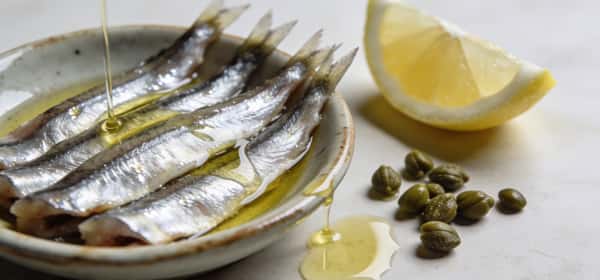
Quick answer: Anchovies are tiny, oily fish rich in omega-3 fatty acids (EPA and DHA), high-quality protein, calcium (from their soft, edible bones), iron, and selenium. Because they’re among the smallest and shortest-lived fish, they’re extremely low in mercury — one of the safest seafood choices there is. Their main benefits mirror other oily fish: support for heart and brain health. The one big catch is sodium — most anchovies are salt-cured or packed in salt, so they’re high in salt and best used in modest amounts. Used well, they’re a flavor-packed, nutrient-dense addition to your diet. For the broader small-fish picture, see sardines benefits.
What’s in an anchovy
Despite their tiny size, anchovies are nutritionally mighty — and like sardines, you eat the whole little fish, bones and all, so you get the full spectrum:
Choose your goal and get a meal plan full of foods you actually like.
Powered by DietGenie Eat healthy
 Lose weight
 Gain muscles
 Explore new cuisines
- Omega-3 fatty acids (EPA and DHA) — the long-chain omega-3s linked to heart and brain health.
- High-quality protein — a lot, relative to their size.
- Calcium — from the soft, edible bones, a rare non-dairy animal source; see calcium-rich foods.
- Iron and selenium — minerals many diets fall short on.
- Niacin and vitamin B12 — for energy metabolism and nerve health.
For such a small fish, that’s a dense nutritional payload.
The health benefits
Anchovies’ benefits track those of other oily fish, anchored by their omega-3 content:
- Heart health. Eating oily fish is associated with a lower risk of fatal heart disease, and the EPA and DHA in anchovies are central to that benefit.1
- Brain and anti-inflammatory support. The same omega-3s are building blocks for the brain and help temper inflammation.
- A protein and mineral boost. They add quality protein, iron, and calcium to dishes where you might not expect it — a few anchovies melted into a sauce quietly upgrade the nutrition.
In short, anchovies deliver the well-evidenced oily-fish benefits in an especially concentrated, easy-to-add form.
The mercury advantage — even better than most
If sardines are low in mercury, anchovies are lower still. Mercury accumulates up the food chain, building up most in large, long-lived predators. Anchovies sit at the very bottom — they’re tiny, short-lived, and feed on plankton — so they accumulate almost no mercury, making them one of the safest seafood choices for frequent eaters.2 That’s a real plus if you want to eat fish often without contaminant worries.
The sodium catch
Here’s the one genuine downside, and it’s worth taking seriously. Most anchovies you buy are salt-cured or packed in salt (that’s what gives them their intense, savory punch), which makes them high in sodium.
A few practical points:
- Use them in modest amounts. A little goes a long way — a few anchovies add huge umami flavor without needing a large portion.
- Rinse or soak salt-packed anchovies to reduce the saltiness (and sodium) if you’re watching your intake.
- Watch your overall salt if you have high blood pressure or are sodium-sensitive.
- Fresh anchovies (where available) are much lower in sodium than cured ones, if you want the nutrition without the salt.
Because they’re typically eaten in small quantities, the sodium is manageable for most people — but it’s the reason anchovies are more of a flavorful accent than a main-course fish.
How to use anchovies
The trick with anchovies is that they don’t have to taste “fishy” — used right, they melt away and leave behind savory depth:
- Melt them into sauces and dressings — they dissolve into pasta sauces, Caesar dressing, and dips, adding rich umami without obvious fishiness.
- On toast or pizza for those who love the bold flavor.
- In place of salt as a seasoning that brings nutrition along with the savoriness.
- Whole, marinated (boquerones) as a tapas-style snack — milder and less salty than the cured brown ones.
This “stealth nutrition” quality makes anchovies an easy way to sneak omega-3 and minerals into everyday cooking.
Fresh, cured, and oil-packed: what’s the difference?
Not all anchovies are the salty brown fillets you picture. The form changes both flavor and nutrition:
- Salt-cured brown anchovies (the classic tinned/jarred fillets) are intense, umami-rich, and high in sodium — best used in small amounts as a seasoning.
- Oil-packed anchovies are similar but the oil mellows them slightly; drain them to cut some fat and salt.
- White anchovies / boquerones are marinated in vinegar rather than heavily salted — milder, less fishy, lower in sodium, and lovely as a snack or tapa.
- Fresh anchovies, where you can find them, are mild and low in sodium, and can be grilled or fried whole like tiny sardines.
If the strong, salty cured version isn’t for you, the vinegar-marinated or fresh styles are a much gentler way in — with the same underlying nutrition.
Anchovies vs other small fish
Anchovies sit in the same family of cheap, low-mercury, nutrient-dense oily fish as sardines, mackerel, and herring. The main practical difference is that anchovies are usually eaten in small, salty amounts as a flavoring, while sardines and herring are eaten as a more substantial portion. Rotating among them gives you variety in taste and spreads your nutrients around — see sardines vs salmon for how small fish compare to the famous big one.
Suggested read: Mackerel Nutrition: Benefits and the Mercury Catch
The bottom line
Anchovies are far more than a polarizing pizza topping. These tiny fish pack omega-3s, protein, calcium from their edible bones, and useful minerals into one of the lowest-mercury seafood options you can eat — delivering the well-established heart and brain benefits of oily fish in a concentrated, flavor-packed form.
The one real caveat is sodium, since most anchovies are salt-cured, so use them in modest amounts (or rinse them) and they fit easily into a healthy diet. Their genius is “stealth nutrition” — melt a few into a sauce or dressing and you upgrade both flavor and nutrition without anyone noticing the fish. For such a small, cheap ingredient, anchovies punch well above their weight. If you’ve avoided them for years, try melting one or two into your next pasta sauce — you may never notice the fish, but your meal quietly gains omega-3, protein, and a savory depth no amount of salt could match. To see how the small oily fish compare overall, start with sardines benefits.